

About
Learn about the Geoscience Profession Program.
The Geoscience Profession Program connects people to trusted resources, data, and tools that support the geoscience workforce, strengthen education and training, inform policy and decision making, and advance understanding of the profession.
About the Program
The Geoscience Profession Program at AGI serves as a hub for information about the geoscience workforce, education, and societal needs. We curate and develop resources, data, and applications that help students, educators, employers, professionals, and decision makers understand and strengthen the geoscience enterprise.
Data & Insights
Delivering trusted data and analysis on the geoscience workforce, education, and programs.
Resources & Tools
Providing tools, dashboards, and guidance to support decision making and career pathways.
Collaboration
Working with partners across academia, government, industry, and professional societies.
Impact
Informing policy, strengthening the workforce, and advancing the geoscience profession.
Program Staff
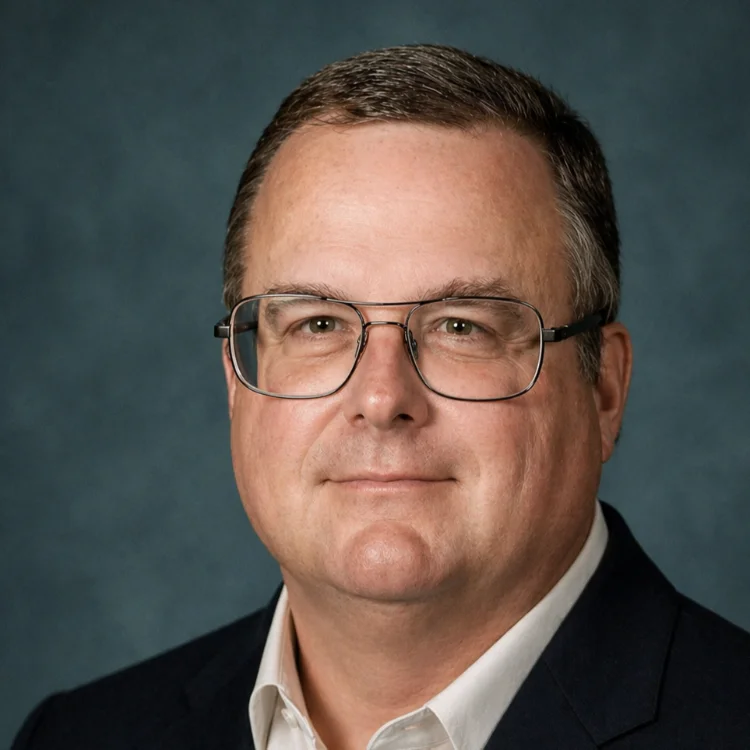
Christopher M. Keane
Director, Geoscience Profession & Higher Education
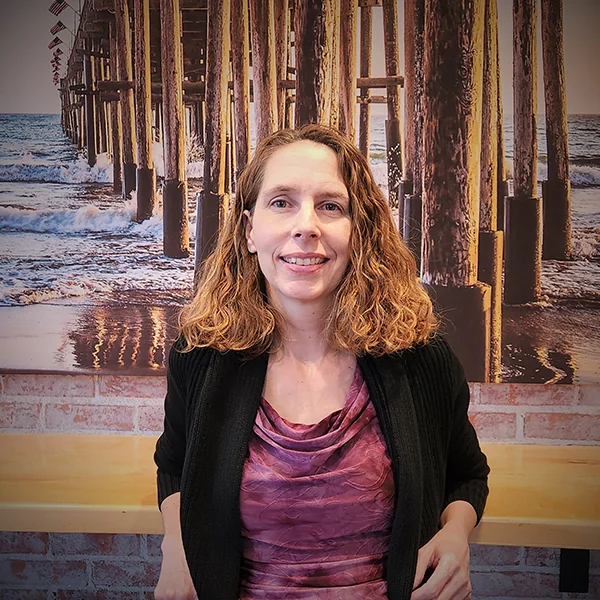
Leila M. Gonzales
Director, Geoscience Intelligence
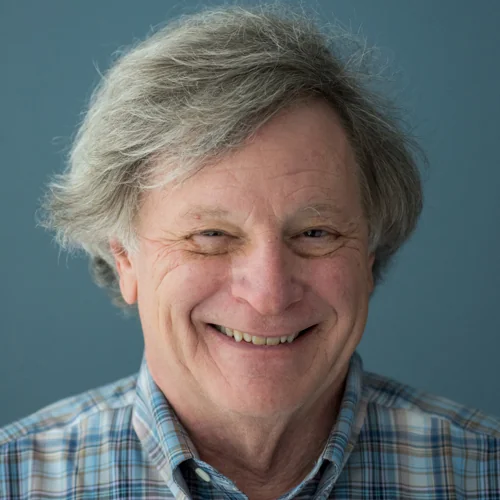
Richard L. Bernknopf
Senior Economics Associate
Selected Publications
Bernknopf, R., Gonzales, L., & Keane, C., (2026). How does hazard exposure influence job choice? Evaluating time-dependent tradeoffs between salary and hazard risks. arXiv:2608.24811.
Gonzales, L. M., Keane, C. M., & Bernknopf, R. L. (2026). The gap between attitudes and action within the US geoscience community’s response to natural hazards. Geoscience Communication, 9(1), 35-67. doi: 10.5194/gc-9-35-2026
Keane, C., & Bernknopf, R. (2025). Chapter 11: An economic model of general geological mapping applications. In Economic Analysis of the Costs and Benefits of Geological Mapping in the United States of America from 1994 to 2019. American Geosciences Institute.
Bernknopf, R., Kuwayama, Y., Zaitchik, B., Rodell, M., Getirana, A., Thorstensen, A., & Shahreen, S. (2025). An economic impact assessment of the use of earth observation information in flood hazard communication. Natural Hazards, 121(15), 17913-17933. doi: 10.1007/s11069-025-07499-3
Asrat, A., Keane, C., Meriaux, C. A., Mhopjeni, K., Nickless, E., Boland, M., & Adiyaman Lopes, O. (2025). Challenges and needs of African geoscience research. Nature Geoscience. 18(10). doi: 10.1038/s41561-025-01808-y
Bernknopf, R., Steinkruger, A., Pesek, S., & Kuwayama, Y. (2025). Satellite-based remote sensing can enable cost-effective conservation of Eastern North Pacific blue whales: A value of information analysis. Biological Conservation, 309, 111328. doi: 10.1016/j.biocon.2025.111328
Keane, C., & Gonzales, L. (2025). The unfulfilled potential of U.S. geoscience: Strategic gaps in climate adaptation and hazard mitigation efforts. EGU General Assembly 2025. doi: 10.5194/egusphere-egu25-3324
Gonzales, L., & Keane, C. (2024). Harnessing disruption for change: Transforming the geosciences through innovation and collaboration. Geological Society of America Abstracts with Programs. 56(5). doi:10.1130/abs/2024AM-401404
Gonzales, L. M., & Keane, C. M. (2024). Preparing the geoscience workforce for a resilient future: Skills, perspectives, and emerging opportunities. AGU Fall Meeting Abstracts.
Gonzales, L., & Keane, C. (2023). Impacts of COVID-19 on the geoscience enterprise: How permanent will academic program and workforce changes be? American Geosciences Institute.
Mosher, S., Ryan, J., & Keane, C. (2023). Vision and change in the geosciences: Shaping the future of graduate geoscience education. American Geosciences Institute.
Charbonneau, L., Keane, C. M., & Gonzales, L. M. (2022). A living history reflection on the shaping of the future geoscience profession by COVID-19. AGU Fall Meeting Abstracts.
Gonzales, L., Keane, C., & Charbonneau, L. (2022). Identifying alignment and gaps in skills development for students and new graduates: Insights from the Geoscience COVID-19 Impacts Study. Geological Society of America Abstracts with Programs, 54(5). doi: 10.1130/abs/2022AM-377023
Bernknopf, R., Kuwayama, Y., Gibson, R., Blakely, J., Mabee, B., Clifford, T. J., Quayle, B., Epting, J., Hardy, T., & Goodrich, D. (2021). Monetising the savings of remotely sensed data and information in Burn Area Emergency Response (BAER) wildfire assessment. International Journal of Wildland Fire, 30(1), 18-29. doi: 10.1071/WF19209
Keane, C., & Gonzales, L. (2021). Macroscopic impact trends from the pandemic on geoscience programs. Geological Society of America Abstracts with Programs, 53(6). doi: 10.1130/abs/2021AM-367150
Keane, C., Gonzales, L., & Robinson, D. (Eds.). (2022). Status of recent geoscience graduates 2021. American Geosciences Institute.
Mosher, S., & Keane, C. (Eds.). (2021). Vision and change in the geosciences: The future of undergraduate geoscience education. American Geosciences Institute.
Bernknopf, R., Brookshire, D., Macauley, M., Jakeman, G., Kuwayama, Y., Miller, H., Richardson, L., & Smart, A. (2016). Societal benefits: Methods and examples for estimating the value of remote sensing information. In S. Morain, M. Renslow, & A. Budge (Eds.), Manual of Remote Sensing (4th ed., pp. 869–910). American Society for Photogrammetry and Remote Sensing. doi: 10.14358/MRS/Chapter8
Kuwayama, Y., Thompson, A., Bernknopf, R., Zaitchik, B., & Vail, P. (2019). Estimating the impact of drought on agriculture using the U.S. Drought Monitor. American Journal of Agricultural Economics, 101(1), 193–210. doi: 10.1093/ajae/aay037
Bernknopf, R., Broadbent, C., Adhikari, D., Mamun, S., Tidwell, V., Babis, C., & Pindilli, E. J. (2019). Multi-resource analysis: A proof of concept study of natural resource tradeoffs in the Piceance Basin, Colorado, using the Net Resources Assessment (NetRA) decision support tool. U.S. Geological Survey Scientific Investigations Report 2019-5086. doi: 10.3133/sir20195086
Keane, C. (2018). Immersive integration of geoscience on the way to the new way of work. Geological Society of America Abstracts with Programs. 50(6). doi: 10.1130/abs/2018AM-319590
Keane, C., & Mars, M. (2018). The extent of geologic map data’s impact on the U.S. economy. Geological Society of America Abstracts with Programs, 50(6). doi: 10.1130/abs/2018AM-316758
Keane, C., & Wilson, C. E. (2018). The mid-21st century geophysics workforce: How today’s trends across geoscience impact geophysics human resources of the future. SEG Technical Program Expanded Abstracts, 4829–4833. doi: 10.1190/segam2018-2992425.1
Mandler, B. E., Rose, C. A., Gonzales, L. M., & Boland, M. A. (2016). Bridging the gap: Tailor-made information products for decision makers. AGU Fall Meeting Abstracts.
Gonzales, L. M., Wood, C., & Boland, M. A. (2015). Connecting geoscience information and decision makers. AGU Fall Meeting Abstracts.
Allison, M. L., Keane, C., & Robinson, E. (2016). EarthCube — moving to an enterprise governance for interdisciplinary collaboration for geoscience cyberinfrastructure. Geological Society of America Abstracts with Programs. 48(7). doi: 10.1130/abs/2016AM-286602
Gonzales, L. M., Wood, C., Boland, M. A., & Rose, C. A. (2015). Navigating the boundary of science for decision making at the state and local level. AGU Fall Meeting Abstracts.
Szymanski, D. W., Boland, M. A., Gonzales, L. M., & Wood, C. (2015). Teaching non-majors to communicate the importance of geoscience for policymaking through service-learning and civic engagement. Geological Society of America Abstracts with Programs, 47(7).
Bernknopf, R., & Amos, P. (2014). Measuring earthquake risk concentration for hazard mitigation. Natural Hazards, 74(3), 2163–2192. doi: 10.1007/s11069-014-1299-9
Baru, C., Allison, M. L., Fox, P., Keane, C., Keller, G. R., & Richard, S. (2012). GET21: Geoinformatics Training and Education for the 21st Geoscience Workforce. EGU General Assembly 2012.
Global change faces the geoscience profession
Gonzales, L., Keane, C., & Venus, J. (2011). Global change faces the geoscience profession. EAGE Recruitment Special: 8-13.
Gonzales, L., & Keane, C. (2011). Status of the geoscience workforce 2011. American Geological Institute.
Gonzales, L. M., & Keane, C. M. (2010). Who will fill the geoscience workforce supply gap? Environmental Science & Technology, 44(2), 550–555. doi: 10.1021/es902234g
Dynamics of the U.S. Geoscience Workforce
Gonzales, L., & Keane, C. (2009). Dynamics of the U.S. geoscience workforce. EAGE Recruitment Special, 14–19.
Bernknopf, R., Wein, A., St-Onge, M. R., & Lucas, S. B. (2007). Analysis of improved government geological map information for mineral exploration: Incorporating efficiency, productivity, effectiveness, and risk considerations (Version 1.0). U.S. Geological Survey Professional Paper 1721 / Geological Survey of Canada Bulletin 593. doi: 10.3133/pp1721
Bernknopf, R., Rabinovici, S. J. M., Wood, N. J., & Dinitz, L. B. (2006). The influence of hazard models on GIS-based regional risk assessments and mitigation policies. International Journal of Risk Assessment and Management, 6(4–6), 369–387. doi: 10.1504/IJRAM.2006.009537
Bernknopf, R., Brookshire, D., McKee, M., & Soller, D. (1997). Estimating the social value of geologic map information: A regulatory application. Journal of Environmental Economics and Management, 32, 204–218. doi: 10.1006/jeem.1996.0963
Bernknopf, R., Brookshire, D. S., & Thayer, M. A. (1990). Earthquake and volcano alerts: An economic evaluation of risk perception changes. Journal of Environmental Economics and Management, 18(1), 35–49. doi: 10.1016/0095-0696(90)90050-9
Bernknopf, R. L., Campbell, R. H., Brookshire, D. S., & Shapiro, C. D. (1988). A probabilistic approach to landslide hazard mapping in Cincinnati, Ohio, with applications for economic evaluation. Environmental & Engineering Geoscience, 25(1), 39–56. doi: 10.2113/gseegeosci.xxv.1.39
Partner with Us
AGI works with organizations across government, academia, and industry to develop resources and advance the geoscience profession.
Learn more about partnershipsStay Informed
Sign up for updates on new resources, data releases, and program news.
Subscribe to updates