Status of the Geoscience Workforce
Analysis of workforce conditions, employment trends, and the structure of the geoscience profession.
Browse collection

Working, learning, and living in the geosciences.
Collection
Browse project reports and publications from AGI's Geoscience Profession program.
Search our collection of reports on a wide variety of geoscience topics.
Jump directly into AGI's flagship report series.
Analysis of workforce conditions, employment trends, and the structure of the geoscience profession.
Browse collectionFindings on early career outcomes, education pathways, and workforce transitions for recent geoscience graduates.
Browse collectionA robust vision developed by the academic and employer communities for transforming undergraduate and graduate geoscience education.
Browse collectionFoundational AGI publications connecting geoscience to hazards, resources, land use, and broader societal issues.
Browse collection46 results
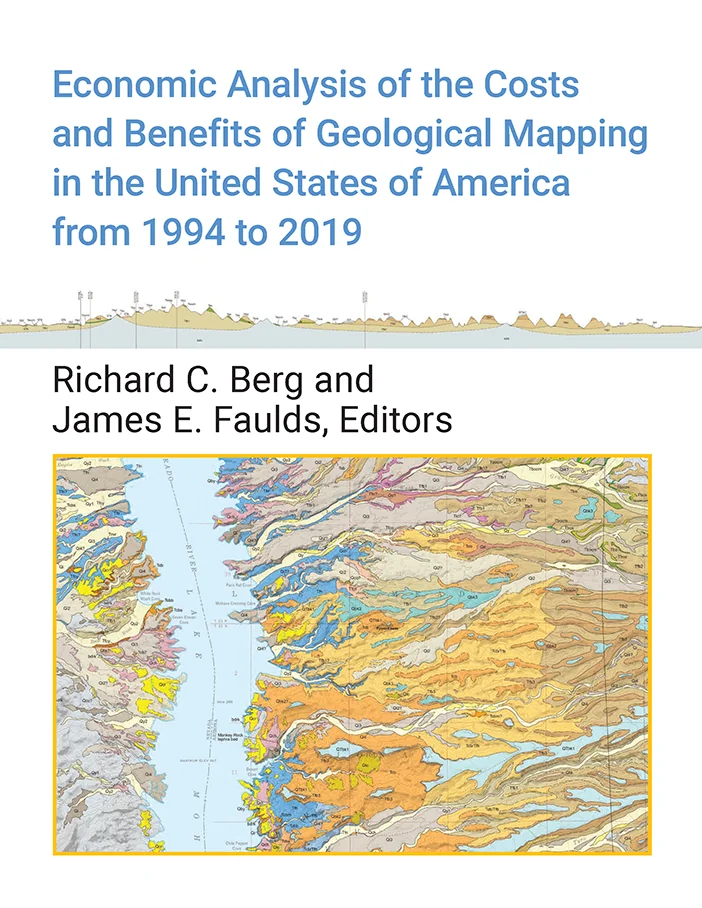
This report provides the first economic analysis of geological mapping conducted for the entire United States. Globally, this is the largest and most comprehensive jurisdictional economic assessment for geological mapping ever conducted. It is timely given substantial investment by the federal government in geological mapping since the early 1990s, with significantly enhanced funding since 2019. An important question is the degree to which this public investment has yielded tangible results. Four different approaches were employed to analyze the costs, benefits, and economic impacts of geological mapping, and all consistently demonstrated large returns on investment and significant societal benefits.

The geoscience community has the knowledge, experience, and ingenuity to address a wide range of societal needs. We study the complex geologic, marine, atmospheric, and hydrologic processes that sustain life and support a thriving society. The geosciences are positioned to support policy-makers across the range of challenges they face in supporting our nation. The Critical Needs effort is a geoscience community initiative organized by the American Geosciences Institute as part of its federating function. Every four years, aligned with new presidential campaigns, the community has drafted policy documents to help the new administration and congress understand the ways the geosciences can support the nation’s needs. With the 2024 cycle, we are endeavoring to make the Critical Needs documents living entities that will be continuously updated as the needs of the nation evolve.
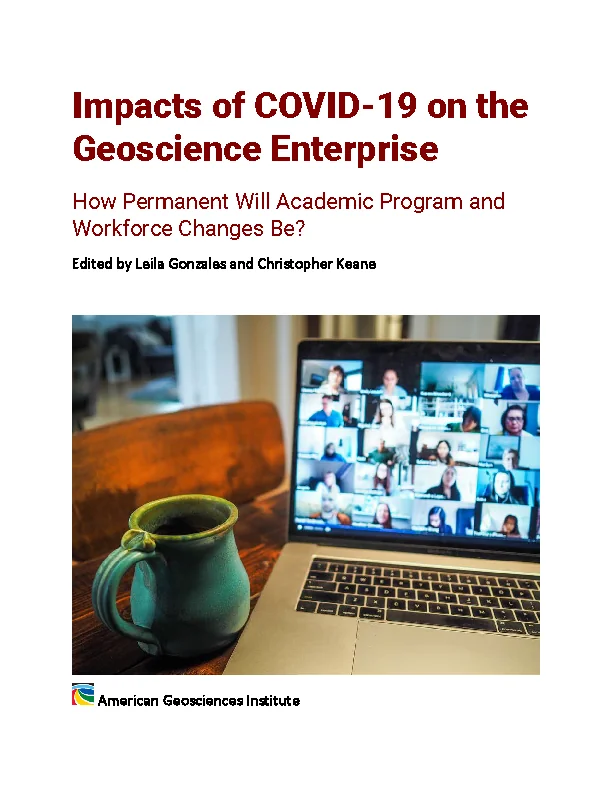
In May 2020, the American Geosciences Institute launched an NSF-funded study to investigate the short- and long-term impacts of the COVID-19 pandemic on the geoscience workforce and academic programs, comparing pre- and post-pandemic environments. The multi-year study, which concluded in December 2022, utilized longitudinal surveys, oral history interviews, and webinars to examine pandemic-related changes across five key cohorts, including employers, academic faculty, students, and recent graduates. The research highlighted lasting effects on geoscience programs, workforce skills gaps, career trajectories, and opportunities in digital learning, aiming to provide insights for improving future crisis response and recovery planning.
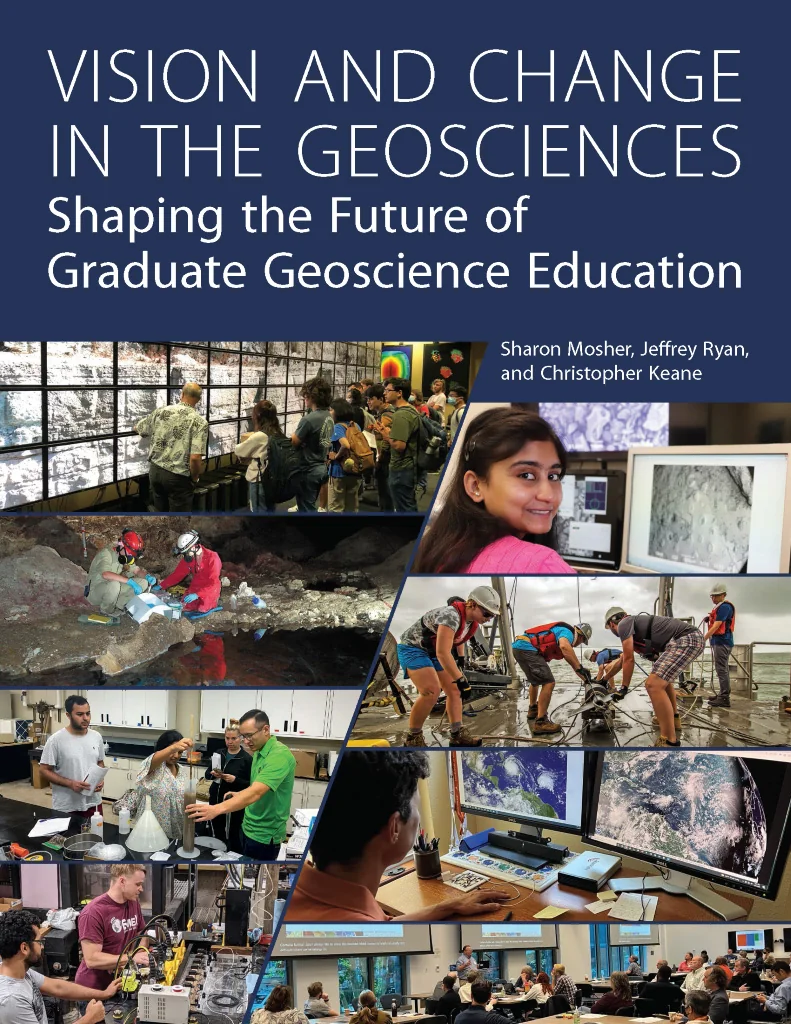
This report builds on Vision and Change in the Geosciences: The Future of Undergraduate Geoscience Education by identifying strategies for transformative change in graduate geoscience education. It emphasizes the need for change to ensure the long-term growth of the profession, examines the current state of the geoscience workforce and graduate enrollments, and highlights universal skills and competencies essential for future careers. The report provides guidance on integrating these skills into graduate programs, improving mentoring, fostering change through case studies, and engaging external stakeholders such as employers, alumni, professional societies, and funding agencies.
This report provides an overview of the demographics, activities, and experiences of geoscience degree recipients during the 2020-2021 academic year. This research draws attention to student preparation in the geosciences, their education and career path decisions, as well as examines some of the questions raised about student transitions into the workforce. This year’s survey also explores the concept and skill preparation of the graduates, aligned with the Vision and Change in the Geosciences report.
This NSF-sponsored report explores three key issues in undergraduate geoscience education: the essential concepts, skills, and competencies needed for success in graduate school or the workforce; the most effective teaching practices and technologies for enhancing student learning; and strategies for recruiting, retaining, and supporting a diverse community of geoscience majors while equipping K–12 teachers to foster a well-informed public and a robust geoscience workforce.
This report highlights areas of policymaking in which the geosciences play a significant role. Developed collaboratively by representatives of AGI Member Societies, it aims to represent the current priorities of the geoscience community. We focus on the many ways in which geoscience knowledge not only helps society but facilitates its ability to thrive. In addition, we emphasize the need to consider the whole earth system, which consists of many sub-systems that interact with one another, sometimes creating complex feedbacks. With this systems approach in mind, we have led with the climate change section as an exemplar of the interdisciplinary systems of our planet, which has effects that span across many sectors of the economy and throughout our lives.
This report is based on original data collected by AGI as well as from federal data sources, professional membership organizations, and industry. The report integrates all of these various data sources into a comprehensive view of the human and economic parameters of the geosciences, including supply and training of new students, workforce demographics and employment projections, to trends in geosciences research funding and economic indicators.
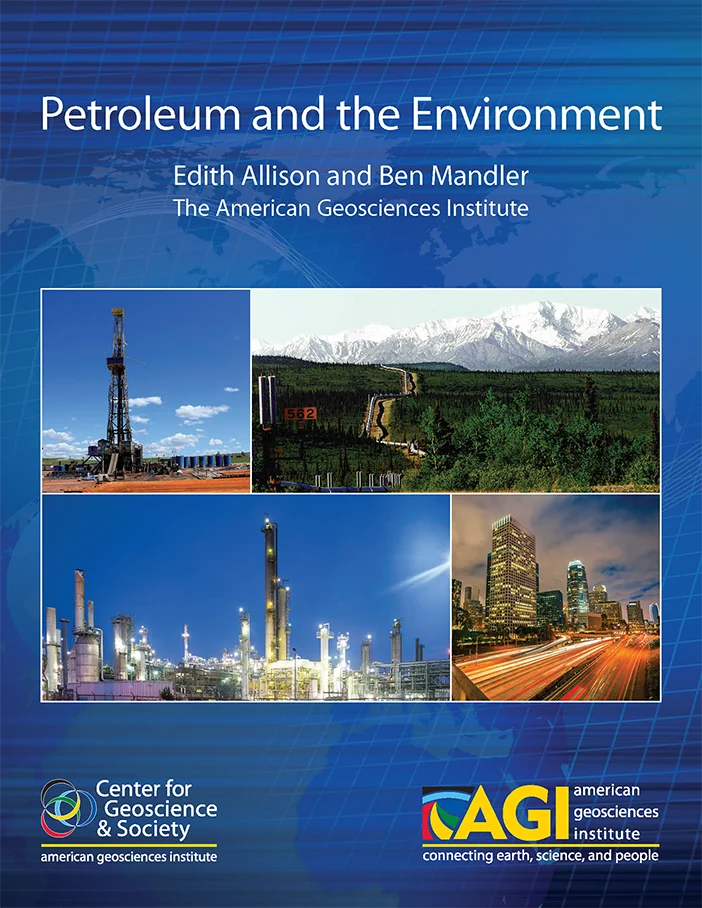
This publication provides a completely rewritten and expanded update to the original Petroleum and the Environment, published in 2003 as part of the AGI Environmental Awareness Series. Taking the form of 24 standalone but complementary factsheets and case studies, Petroleum and the Environment provides a coherent, impartial look at the range of environmental questions relating to oil and gas operations in 2018. Particular emphasis is placed on the current scientific understanding of each topic, as well as technological developments, regulations, sources of uncertainty, effective mitigation strategies, and areas of particular concern or progress. Just as importantly, Petroleum and the Environment contains a rich bibliography of primary data sources, high-quality analyses, regulatory information, and much more, allowing interested readers to pursue any topic to their own satisfaction.
This report provides an overview of the demographics, activities, and experiences of geoscience degree recipients during the 2016-2017 academic year. This research draws attention to student preparation in the geosciences, their education and career path decisions, as well as examines some of the questions raised about student transitions into the workforce. This is the fifth consecutive year of this survey and report, and with this release, we are starting to detail emerging trends in the experiences of postsecondary geoscience students.
The American Geosciences Institute (AGI) — with generous support from AGI’s Center for Geoscience and Society, the Payne Institute for Earth Resources at the Colorado School of Mines, and AGI member societies, including the Geological Society of America, the American Institute of Professional Geologists, the Association of American State Geologists, the International Association of Hydrogeologists – U.S. National Chapter, the National Association of State Boards of Geology (ASBOG), and the National Ground Water Association — recently convened an open meeting of expert speakers and interested individuals from academia, consulting, professional societies, and local, state and federal agencies to discuss the use, monitoring, and management of groundwater in the United States. The assembled group at this second-ever Critical Issues Forum focused on experiences from the High Plains Aquifer (HPA) region. The aim of the forum was to foster open and honest conversation about lessons learned in the region. This report provides an overview of the key lessons and ideas that emerged during the forum, and outlines approaches identified as being potentially beneficial in helping states and municipalities fulfill their own designated groundwater management goals.
This report examines the demographics, preparation, and career paths of geoscience graduates during the 2015-2016 academic year, highlighting trends in workforce readiness and transitions. Low participation in advanced quantitative courses beyond Calculus II persists, with availability often influenced by the type of institution, raising concerns about workforce preparedness, as advanced math skills are critical for sustained employment in certain industries. While nearly all graduates gain research or field experience, internship participation remains low despite its importance for skill development and networking; collaboration between departments, industries, and societies is needed to provide internship-like experiences. Notably, the oil and gas industry’s hiring shift to master’s graduates, driven by an industry downturn, has increased job opportunities for bachelor’s graduates in fields like environmental services and non-profits, reshaping entry-level geoscience employment trends.
This report is based on original data collected by AGI as well as from federal data sources, professional membership organizations, and industry. The report integrates all of these various data sources into a comprehensive view of the human and economic parameters of the geosciences, including supply and training of new students, workforce demographics and employment projections, to trends in geosciences research funding and economic indicators. This edition highlights the issues facing institutions of higher education as they prepare future geoscientists and the current economic and personnel issues facing the geoscience workforce.
This report examines the demographics, preparation, and career paths of geoscience graduates from the 2014–2015 academic year, with trends echoing findings from previous years. Concerns persist about graduates’ quantitative skills, with declines in statistics coursework and higher-level math proficiency potentially impacting employment and career advancement. While internships remain crucial for professional development, limited opportunities appear to hinder participation, and the environmental services industry surpassed oil and gas as the top employer for bachelor’s graduates, signaling a shift in workforce dynamics.
Traditionally, a Master’s degree has been the primary credential for employment and career advancement in the geosciences, but the discipline faces a projected net deficit of 135,000 geoscientists in the next decade. To address this gap, AGI and AAG conducted a study, funded by the NSF, to assess how Master’s programs prepare students for the workforce, focusing on career motivations, curriculum effectiveness, and alignment of skills with non-academic employer requirements. This report highlights key findings on students’ career decisions, preparation, and advising practices, as well as the skills and competencies valued by employers, emphasizing the importance of producing well-trained geoscientists to meet growing societal demands.
The geoscience community has the knowledge, experience, and ingenuity to address a wide range of societal needs. We study Earth’s systems, the complex geologic, marine, atmospheric, and hydrologic processes that sustain life and the economy. Geoscience expertise allows us to better understand and predict the interactions between people and Earth’s systems; such expertise is essential to developing solutions to critical economic, environmental, health, and safety challenges. The American Geosciences Institute (AGI) connects Earth, science, and people by serving as a unifying force for the geoscience community. On behalf of the geoscientists represented by the 51 member societies of AGI, we invite you to join us in a dialogue on how to achieve our shared interests in meeting America’s critical needs. This document outlines high-level actions to address major policy issues where the geosciences play a significant role.
The American Geosciences Institute (AGI) convened a meeting of experts to analyze the potential for a methane-dominant economy in the U.S. This first-of-its-kind Critical Issues Forum brought geoscientists, economists and other natural gas experts from academia, industry, government and nongovernmental organizations (NGOs) together to consider issues of supply, demand and environmental health and public safety related to natural gas, as well as the barriers to and enablers of a potential methane economy. The goal was not to formulate a singular position or suggest specific policy, but rather to foster open, frank dialogue about a critically important issue and to explore how the varied interests in a methane future might best find compromise to advance our common energy goals. This report offers an overview of the key conceptual ideas that arose in the forum and outlines the suggested approaches that different stakeholder groups can take to advance the conversation on energy in the U.S.
This report examines the demographics, preparation, and career paths of geoscience graduates from the 2013-2014 academic year, with a larger sample size reflecting the community more accurately. Key findings include a continued trend of most graduates completing only up to Calculus II, a decline in statistics coursework, and challenges in workforce readiness, as many graduates lack internships and face difficulty finding employers willing to hire inexperienced candidates. While more bachelor’s and master’s graduates plan to attend graduate school or seek employment in geosciences, limited graduate program capacity and workforce challenges highlight areas for improvement, with ongoing AGI studies aiming to enhance educational and career pathways for future graduates.
This report is based on original data collected by AGI as well as from federal data sources, professional membership organizations, and industry. The report integrates all of these various data sources into a comprehensive view of the human and economic parameters of the geosciences, including supply and training of new students, workforce demographics and employment projections, to trends in geosciences research funding and economic indicators. This edition also expands coverage of community colleges and integrates the results from the Geoscience Student Exit Survey.
This report analyzes the demographics, education, and career paths of geoscience graduates from spring 2013, highlighting the role of academic programs and departments in preparing students for the workforce. Key findings include the closing gender gap, continued underrepresentation of minorities, and a plateau in students’ quantitative skill development at Calculus II. While field and research experiences are widely available, low participation in internships at the bachelor’s and doctoral levels raises concerns, despite their importance for workforce transition, with the petroleum industry being particularly effective at recruiting graduates. AGI plans future studies, including a longitudinal survey, to provide deeper insights into the geoscience workforce pathway and enhance opportunities for future graduates.
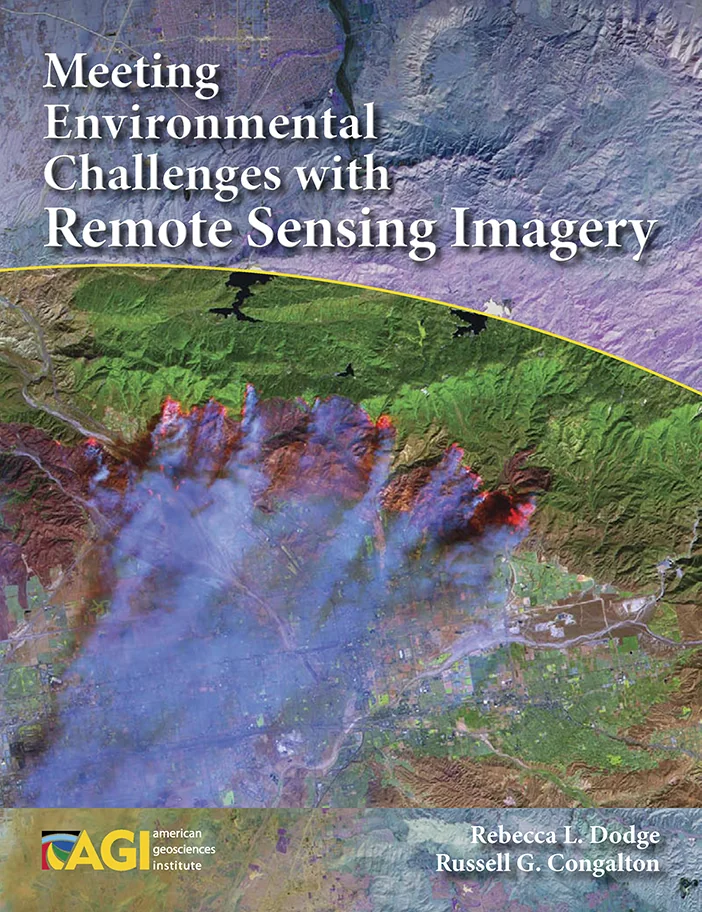
Meeting Environmental Challenges with Remote Sensing Imagery explains what remote sensing imagery is and how it is obtained, processed, and analyzed. This book, published in 2013 and the eleventh in the Environmental Awareness Series, is over 80 pages long and includes 22 case studies that illustrate how remote sensing imagery is applied to meeting challenges presented by natural hazards such as severe weather and volcanic eruptions, surface and groundwater quality assessment, agriculture and forest management, climate variability, and resource development. AGI’s publishing partners for this book are AmericaView, the U. S. Geological Survey (USGS), and the American Society for Photogrammetry and Remote Sensing (ASPRS).
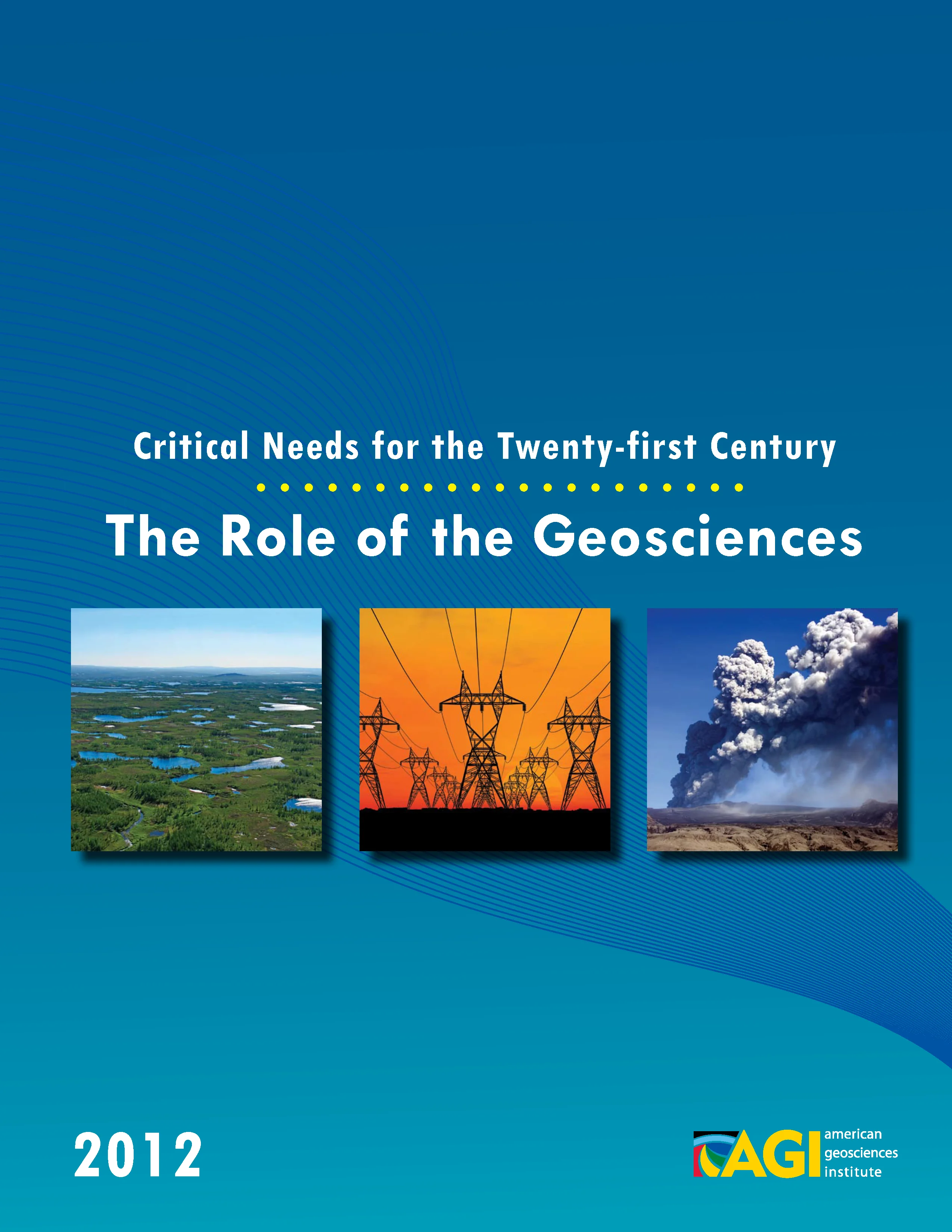
The AGI Geoscience Policy program with the guidance and input of AGI’s Member Societies has updated its 2008 Critical Needs document that was prepared for the last presidential election. The updated document provides a list of eight critical needs followed by policy recommendations to help the nation meet these needs. With a burgeoning human population, rising demand for natural resources and a changing climate, it is critical to more fully integrate Earth observations and Earth system understanding into actions for a sustainable world.
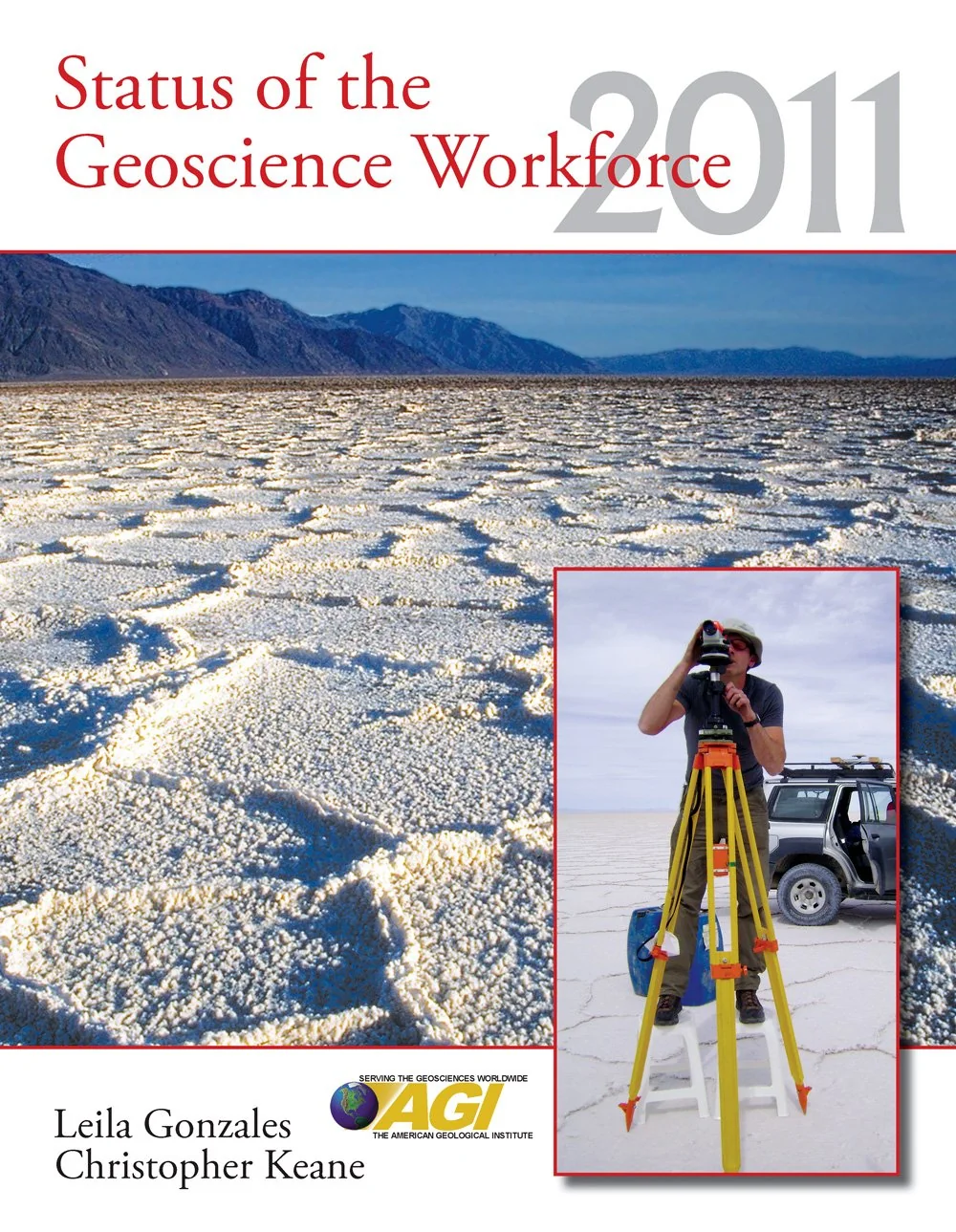
This report offers a comprehensive benchmark of the geoscience profession, synthesizing data from AGI, federal sources, professional organizations, and industry. It examines the supply and training of new students, workforce demographics, employment projections, and trends in research funding and economic indicators. This analysis provides a holistic view of the current state and future outlook of the geoscience workforce.
This report analyzes changes in the number and funding of NSF Graduate Fellowships from 2000 to 2009, comparing geoscience awards to other STEM fields. It also examines the academic backgrounds of geoscience NSF fellows, their research fields, and institutional affiliations. The findings provide insights into trends and distinctions in fellowship awards within the geosciences.
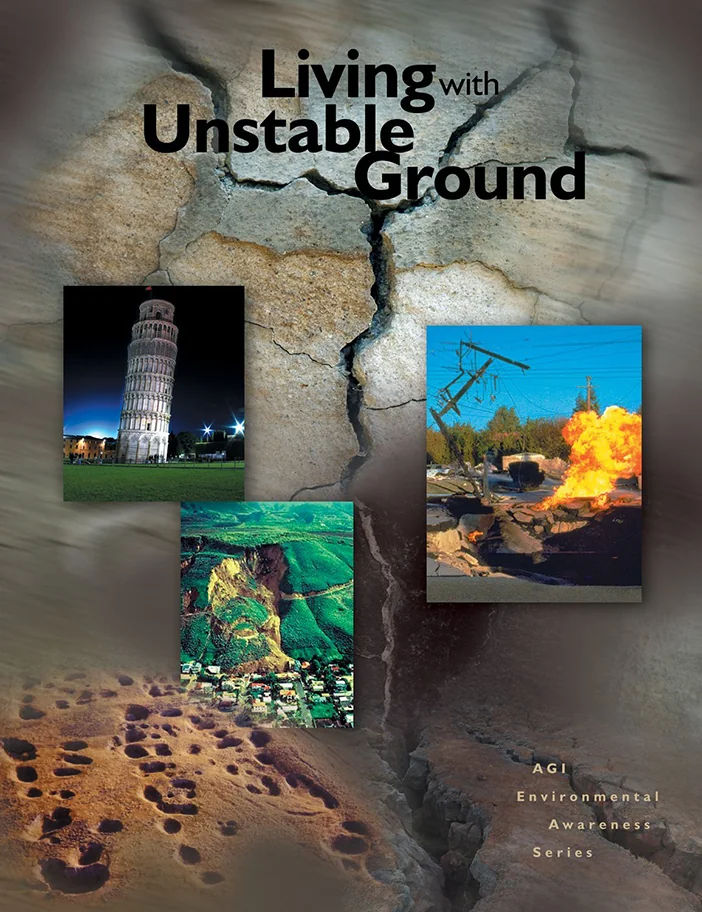
Living with Unstable Ground, the 10th publication in AGI’s Environmental Awareness Series, is a practical guide and will increase your awareness and understanding of how you can build safely in areas with unstable ground and what society can do to reduce the impact of unstable ground. Most of us take the stability of the ground for granted. However, many ongoing natural processes and human activities, and occasionally complex combinations of both, displace the ground. Whether ground displacements are large and catastrophic or small and slow, their cumulative impact during the lifetimes of humans or civilizations may be large and destructive. As the demand for land grows and humans increasingly modify their environment, more and more people will be exposed to these instabilities and suffer the consequences. This publication was produced by the American Geological Institute in cooperation with Association of Environmental & Engineering Geologists, Applied Technology Council with support from the ATC Endowment Fund, and the U.S. Geological Survey. This book was published in 2009.
In response to concerns about the viability of geoscience programs amid economic downturn-related cutbacks in 2008–2009, the American Geological Institute conducted a survey as part of the 2009 Directory of Geoscience Departments update. The survey included five questions addressing the impacts of the downturn on geoscience departments, with results providing a snapshot of these effects as of March 2009. The report includes an analysis of the impacts internationally and within the U.S., with a regional breakdown by institution type.
This report examines the initial employment of geoscience Ph.D. graduates from April 2005 to December 2006, focusing on those who remained in the U.S. The survey, conducted by AGI and AGU with data collection and analyses by AIP, was conducted as part of a multidisciplinary effort coordinated by the Commission on Professionals in Science and Technology (CPST) and supported by the Alfred P. Sloan Foundation and the National Science Foundation (NSF). The survey builds on efforts started in 1996 to track geoscience Ph.D. employment trends, and has evolved to provide a comprehensive view of geoscience graduates across Earth, atmospheric, ocean, and space sciences.
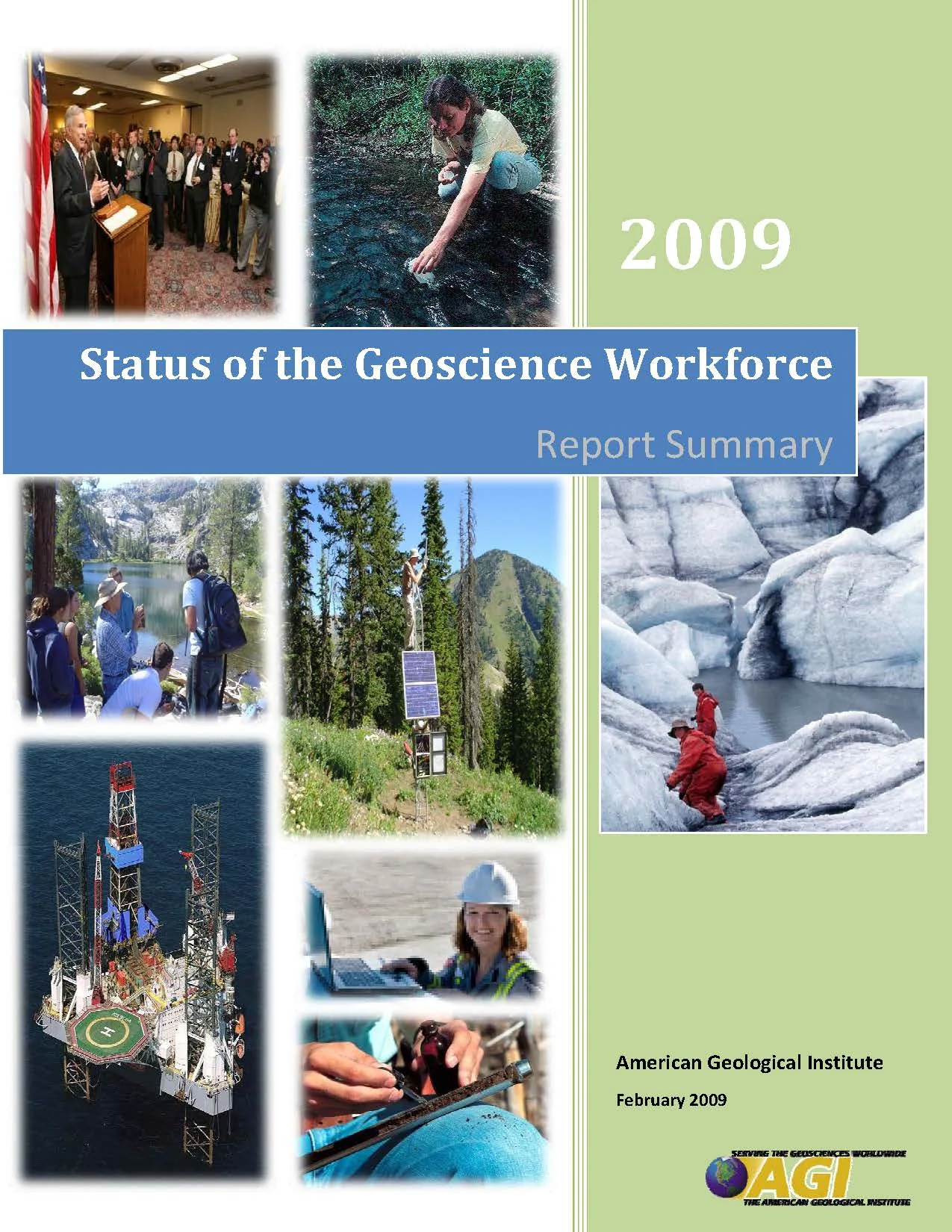
Measurement, analysis, and reporting of all aspects of the geoscience workforce system are critical for decision makers to successfully support building the future capacity for geoscience in the United States. This report presents the first benchmark of the status of the geoscience profession. It includes analyses of the supply of the future geoscience workforce, the status of the current geoscience workforce, and of economic indicators of geoscience industries. The report is based on original data collected by the American Geological Institute, and on existing data from federal data sources, professional membership organizations, and industry data sources. It provides a framework for identifying the strengths and weaknesses in the geoscience human capital system.
AGI’s Geoscience Policy program with the guidance and input of AGI’s Member Societies produced the 2008 Critical Needs document which provides a list of seven critical needs followed by policy recommendations to help the nation meet these needs.
Traditional summer field camps, once central to undergraduate geoscience education, have declined significantly, with the number of departments offering them dropping by over half in the past 20 years due to rising costs and departmental restructuring. Concerns about this trend prompted a 2006 forum, where academia, industry, and professional societies emphasized the importance of field experiences as a vital and hands-on component of geoscience education. To support this discussion, AGI conducted a census of U.S. geoscience departments, analyzing changes in the number of field camps, as well as their tuition costs, duration, and credit offerings.
Decision makers in academia, industry, and government are increasingly concerned about shortages in the science, engineering, and technology (SET) workforce, particularly in the geosciences, where impending retirements and a booming commodities market have created significant pressure to fill positions. The petroleum industry alone expects to replace over 50% of its geoscience workforce in the next decade, and similar shortages are reported across all geoscience sectors, with more job openings than qualified graduates to fill them. To better understand the career decisions of geoscience students, the American Geological Institute conducted a survey in 2006, and this report presents its findings.
Coal and the Environment covers issues related to coal mining and combustion, as well as the methods, technology, and regulation currently in use, or planned for the future, to meet our nation’s energy needs, while caring for the environment around us. Coal is our most important domestic fuel resource. It accounts for nearly 25% of our country’s total primary energy production and produces half of our electric power. The objective in writing about coal is to relate the mining and use of this vital energy resource to the environmental concerns that affect our society. The publication includes an 18” x 24” double-sided poster with information about the mining cycle, from exploration through land reclamation.
Introductory geoscience courses are a key point of public exposure to the field and are often considered important for recruiting majors, though increased enrollments in these courses have not led to more geoscience majors. With the number of geoscience majors declining since the 1980s, some departments face institutional pressure to boost introductory course enrollments. This report, based on AGI’s second survey for the 2004-2005 academic year, builds on the baseline established in 2003-2004, examining total enrollments, average course sizes, and student loads across various institutions to identify emerging trends.
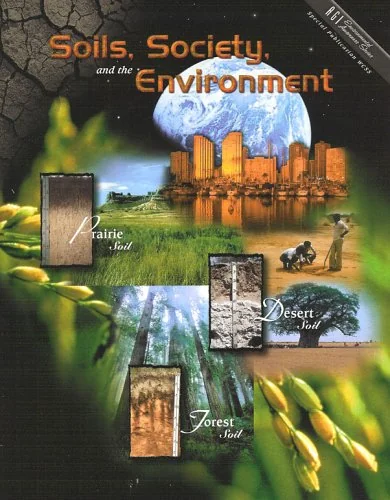
Soils, Society, and the Environment focuses mainly on soil as society’s primary source of food and fiber (such as cotton and wood). Growing plants in soil is the only known way to produce large quantities of these necessities, and the implications of that fact are profound. How societies manage their soils can directly impact their environments and may even be a determining factor in a society’s long-term success or failure. This publication provides a global view of soil resources and was prepared in conjunction with the 18th World Congress of Soil Science to be held July 9-15, 2006, in Philadelphia. The American Geological Institute produced the 64-page book in cooperation with the Soil Science Society of America, the USDA Natural Resources Service and the U.S. Geological Survey. The publication includes an 18” x 24” double-sided poster with information about the World Congress of Soil Science on the front and an activity for students on the back. This book was published in 2005.
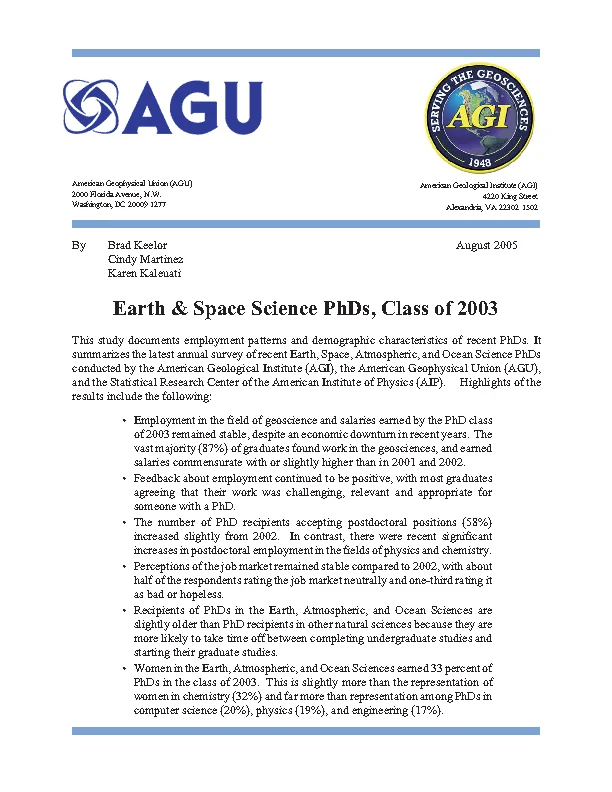
This study summarizes employment patterns and demographics of recent PhDs in Earth, Space, Atmospheric, and Ocean Sciences based on a survey by AGI, AGU, and AIP. Findings show that 87% of the class of 2003 secured geoscience-related jobs with stable or slightly higher salaries compared to previous years, and most graduates reported their work as challenging and relevant. Notably, women earned 33% of PhDs in these fields, surpassing their representation in other natural sciences and engineering disciplines.
The American Geological Institute surveyed U.S. geoscience departments on enrollment in introductory geoscience courses, finding 137,180 students in 241 departments and estimating total enrollment at approximately 385,000, or 2.3% of the 2003-2004 higher education population. Bachelor-focused departments teach most introductory students, while Ph.D.-granting departments handle higher per-department loads, and community colleges contribute about 10% of introductory instruction, raising structural concerns for the discipline. The analysis revealed no significant relationship between introductory course enrollment and the number of geoscience majors, challenging the idea that these courses are a primary recruitment tool for the field.
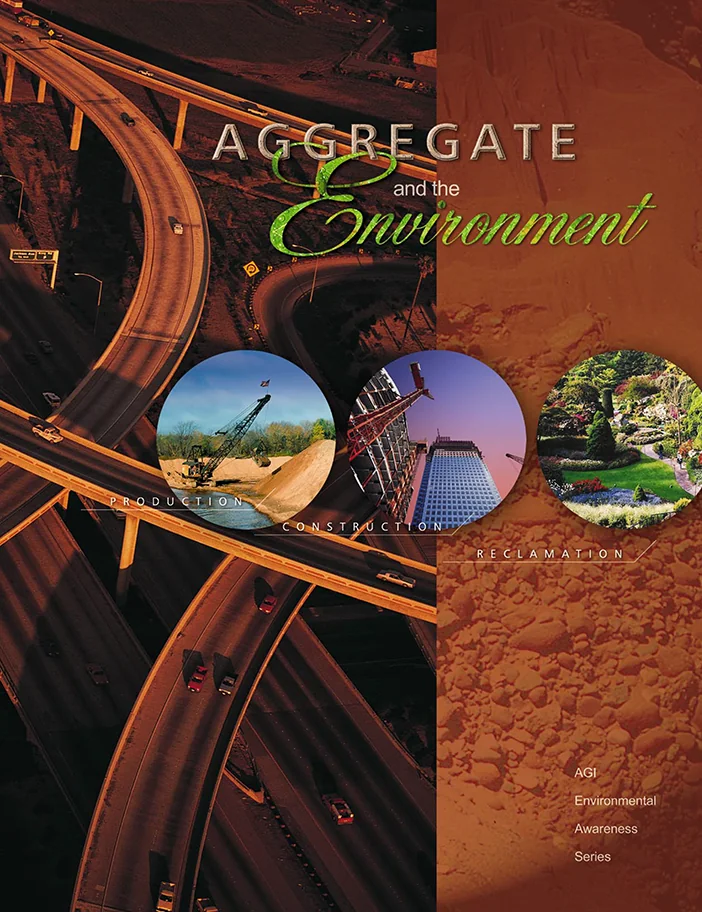
Aggregate and the Environment is designed to help understand our aggregate resources. This book explains the importance, origins, processing, environmental concerns, how those concerns are addressed, and the policies and regulations related to aggregate production. Publishing partner for this book is the US Geological Survey. This book was published in 2004 and is accompanied by an aggregate poster.
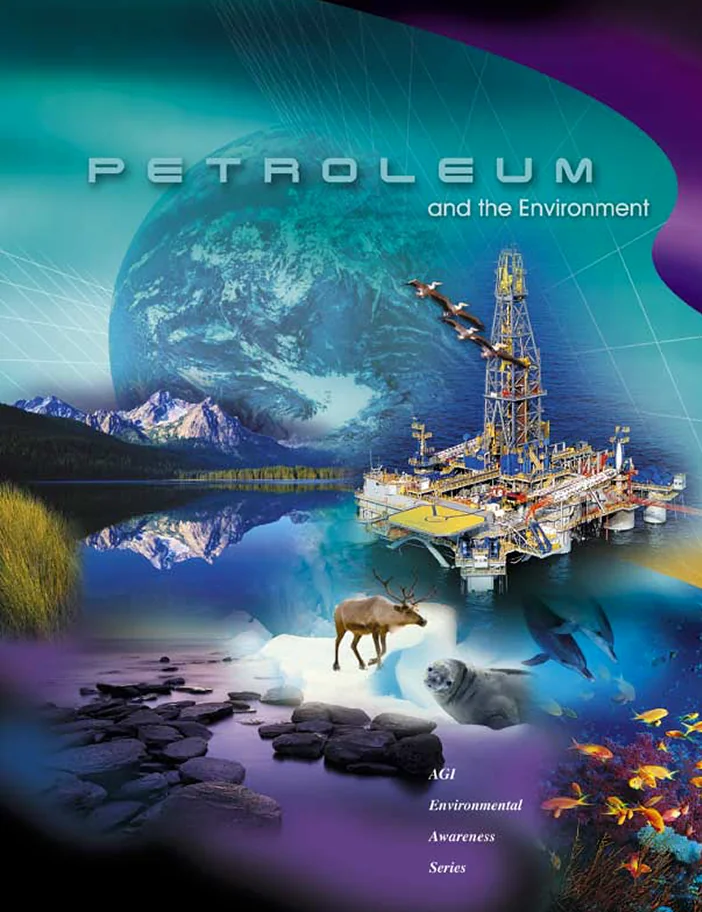
Petroleum and the Environment provides an introduction to the major environmental concerns associated with petroleum exploration, production, transportation, and use. It helps to understand petroleum importance, where it comes from, how it is processed for our use, the policies and regulations designed to safeguard natural resources, and global energy needs. Publishing partners for this book are the American Association of Petroleum Geologists Foundation, Bureau of Land Management, Minerals Management Service, USDA Forest Service, U.S. Department of Energy, and the USGS. This book was published in 2003 and is accompanied by a poster and related educational activities. It is part of the AGI Environmental Awareness Series.
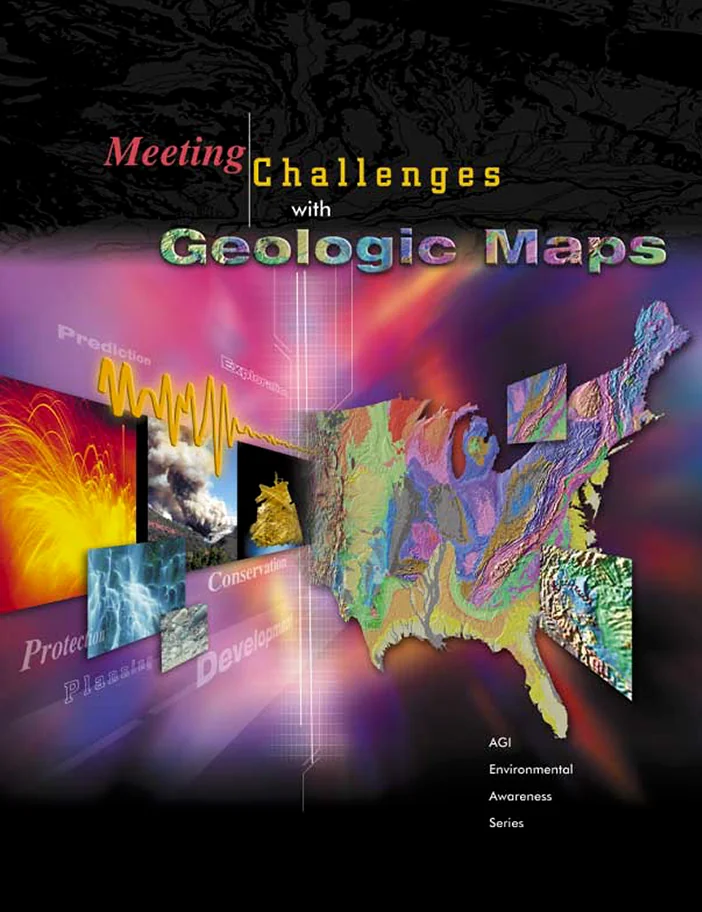
Meeting Challenges with Geologic Maps provides information about the value and usefulness of geologic maps. This book explains the meaning of the colors, patterns, and symbols on geologic maps, and provides sixteen examples that show how geologic maps are helping to delineate fragile habitat and ecosystems, protect agains natural hazards, and find needed resources. Publishing partners for this book are the American Association of State Geologists, the Geological Society of America, the National Park Service, and the USGS.
For most geoscience employment sectors outside academia and research, a master’s degree is the preferred credential for new hires. To explore the significance of this degree, AGI conducted a survey of U.S. geoscience master’s programs, aiming to provide insights for departments and students. The survey differentiates between “terminal” master’s programs, which stand alone or run parallel to other degrees, and those that serve as a pathway to a Ph.D.
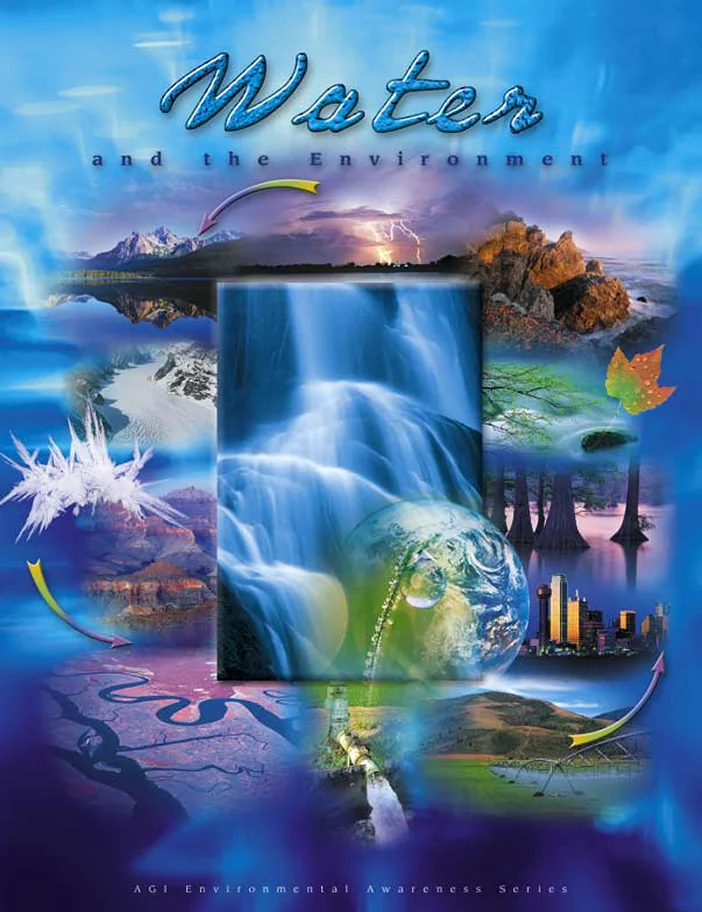
Water and the Environment, the 5th publication in the AGI Environmental Awareness Series, provides information about water and its importance; where water comes from; water-related environmental concerns; water protection, policies and regulations; and our future needs for water. After all, water – not oil or minerals - is the most controlling resource on Earth. Its distribution, quantity, availability, and quality are the controls for the development of agriculture, industry, rural, urban, and municipal use. This richly illustrated, non-technical publication is appropriate for the general public, educators, and policymakers. This booklet was published in 2002 and is accompanied by a poster and related educational materials. Produced in cooperation with the Bureau of Reclamation, National Park Service, U.S. Army Corps of Engineers, USDA Forest Service, and the U.S. Geological Survey.
This report analyzes responses from 347 U.S. geoscience departments (46% response rate) and incorporates additional data from AGI sources, the Directory of Geoscience Departments, GeoRef, and the Demographic and Compensation Survey of North American Geoscientists, 2000. It examines topics such as geoscience enrollments, degrees granted, employment trends of recent graduates, faculty ranks and specialties, research funding, theses and dissertation topics, employment by category, and the demographics of the geoscience profession.
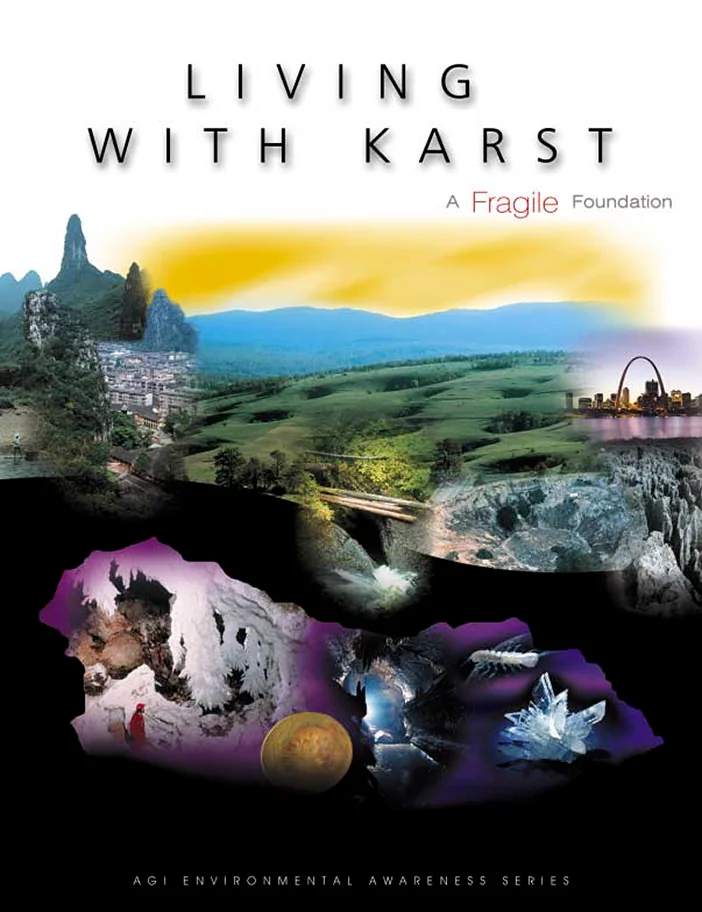
Living With Karst: A Fragile Foundation describes the origins and distribution of karst, the resources provided by karst terrains, and the environmental concerns associated with development, recreation, and land use around karst. AGI’s publishing partners for this booklet are the National Speleological Society, American Cave Conservation Association, National Park Service, Bureau of Land Management, U. S. Fish and Wildlife Service, the Illinois Basin Consortium (State geological surveys of Illinois, Indiana, and Kentucky), the U. S. Geological Survey, and the U. S. Forest Service. This booklet was published in 2001 and is accompanied by a poster and related educational materials. It is part of the AGI Environmental Awareness Series.
This report summarizes the findings of the AGI peer review panel, convened to assess models of PCB fate and transport in the lower Fox River, Wisconsin, at the request of de maximis, inc., St. Charles, IL. Support for the peer review process was provided by the Fox River Group through de maximis, inc. The report summarizes the panel’s analysis of the two primary models, and details the regional geology and history, model capabilities, and key recommendations for future efforts. Appendices provide reviewer comments reflecting individual panelist perspectives.
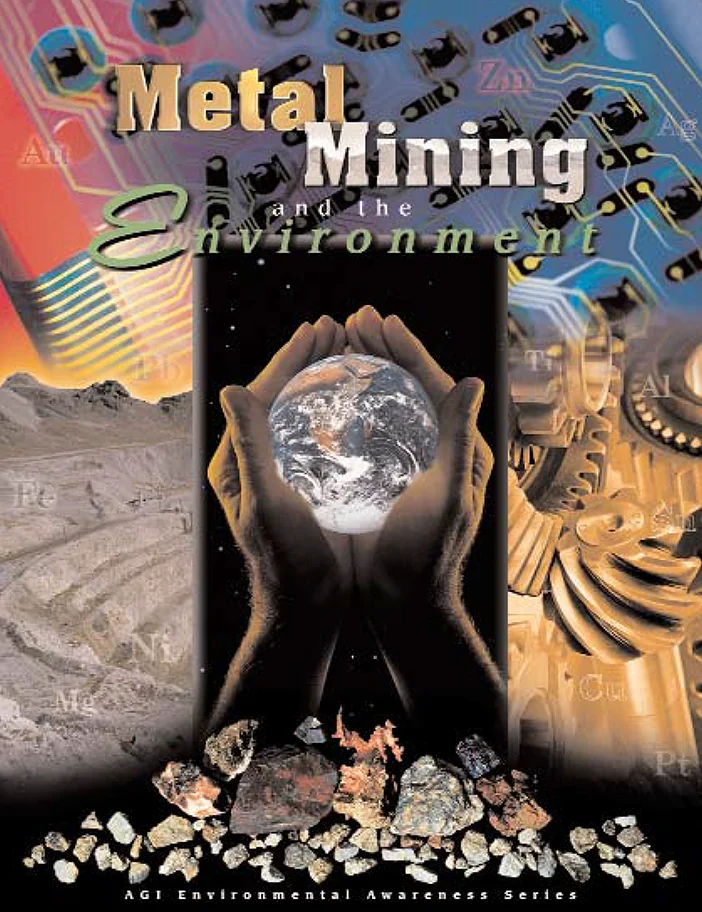
Metal Mining and the Environment describes the natural sources of metals, why metals are important to society, how mining and related mineral processing extracts metals from the Earth, the environmental concerns that are associated with metal extraction, and how these environmental concerns can be prevented or mitigated. The publishing partners are the U. S. Geological Survey, the Society of Economic Geologists, and the Society for Mining, Metallurgy, and Exploration. Distribution partners are the Arizona Mining Association, Nevada Mining Association, Colorado Geological Survey, and National Energy Institute. This booklet was published in 1999 and is accompanied by a poster and related educational materials. It is part of the AGI Environmental Awareness Series.
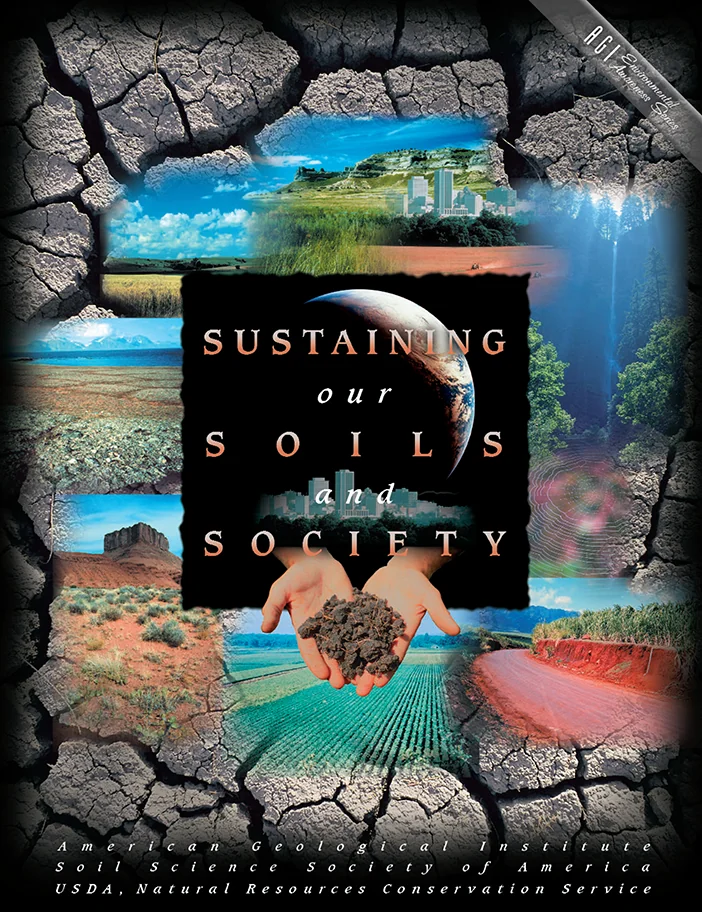
Sustaining Our Soils and Society describes soils, their importance to society, soil-forming processes, and strategies for sustained usage of soils. It was published in 1998 in cooperation with the Soil Science Society of America and the U. S. Department of Agriculture’s Natural Resource Conservation Service. Extensive color illustrations combine with the text to effectively communicate the nature of soils, soil forming processes, and their importance to mankind. A poster, related educational materials, and a bookmark complement the booklet. It is part of the AGI Environmental Awareness Series.
No records matched that search.