Data Brief Collection

Data Briefs

Archive of AGI data briefs and short-format workforce, education, and profession snapshots, including the legacy Geoscience Currents series.

This collection preserves the long-running Geoscience Currents series and AGI’s Workforce Data Briefs a searchable archive of PDF data briefs. For the latest workforce and profession data, please visit the Profession Data page.

Collection Items

Browse the items included in this collection.

224 results

Brief 2022-11-21

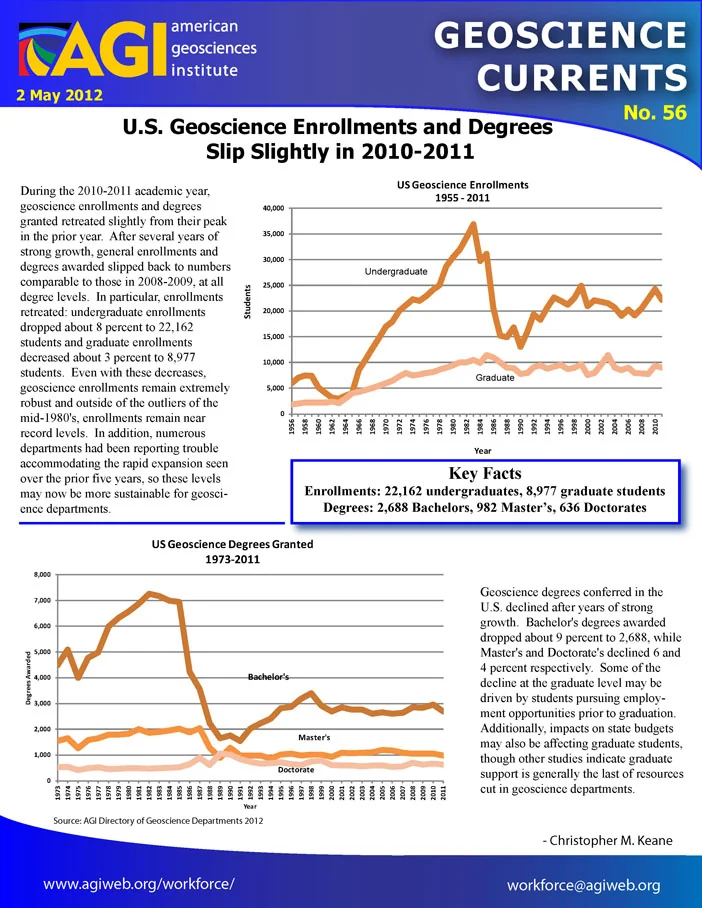
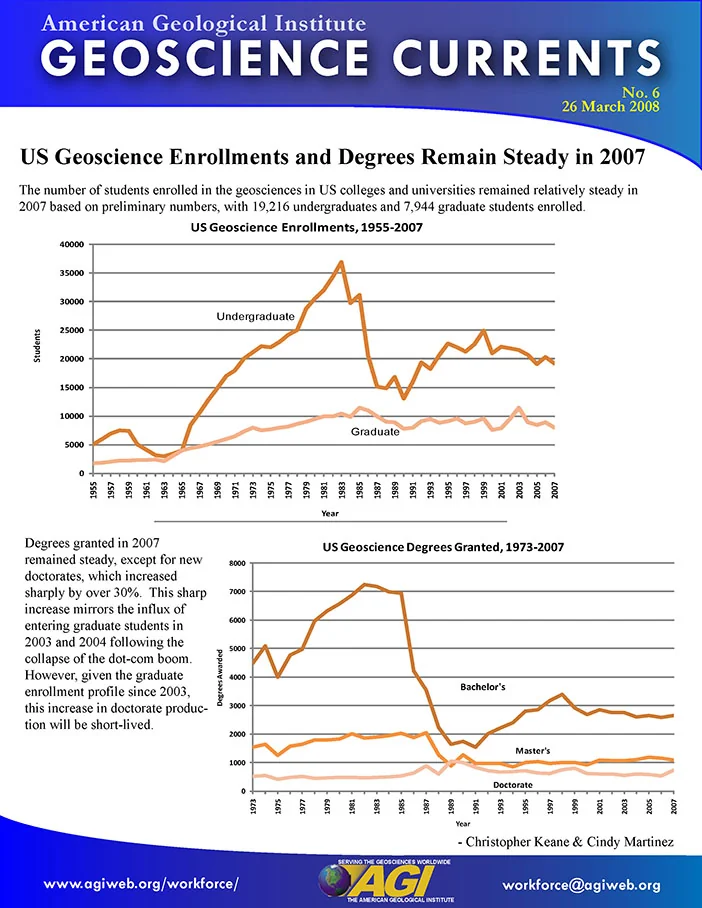
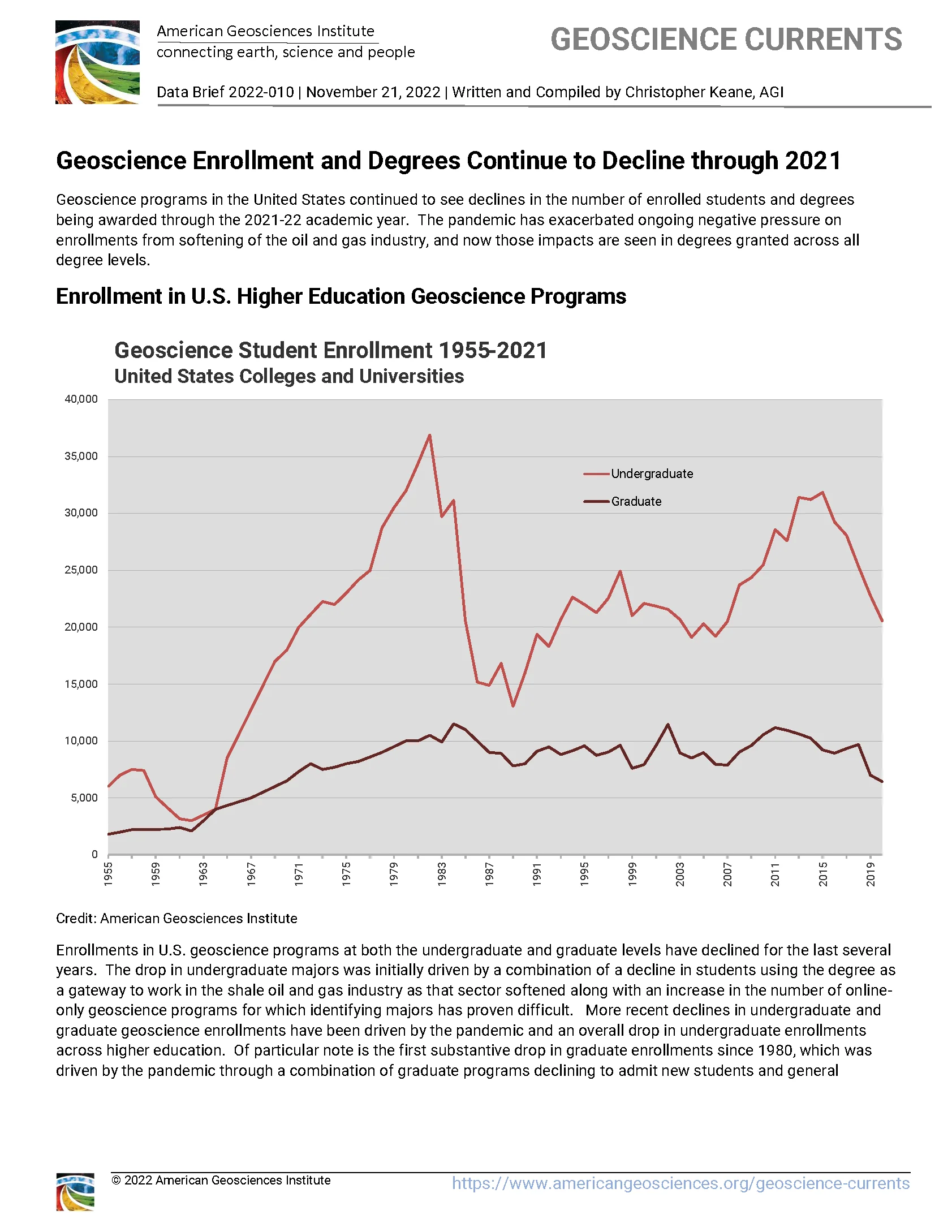
U.S. Geoscience Enrollments and Degrees through 2021

Geoscience programs in the United States continued to see declines in the number of enrolled students and degrees being awarded through the 2021-22 academic year. The pandemic has exacerbated ongoing negative pressure on enrollments from softening of the oil and gas industry, and now those impacts are seen in degrees granted across all degree levels.

Profession Data
Brief 2022-11-18

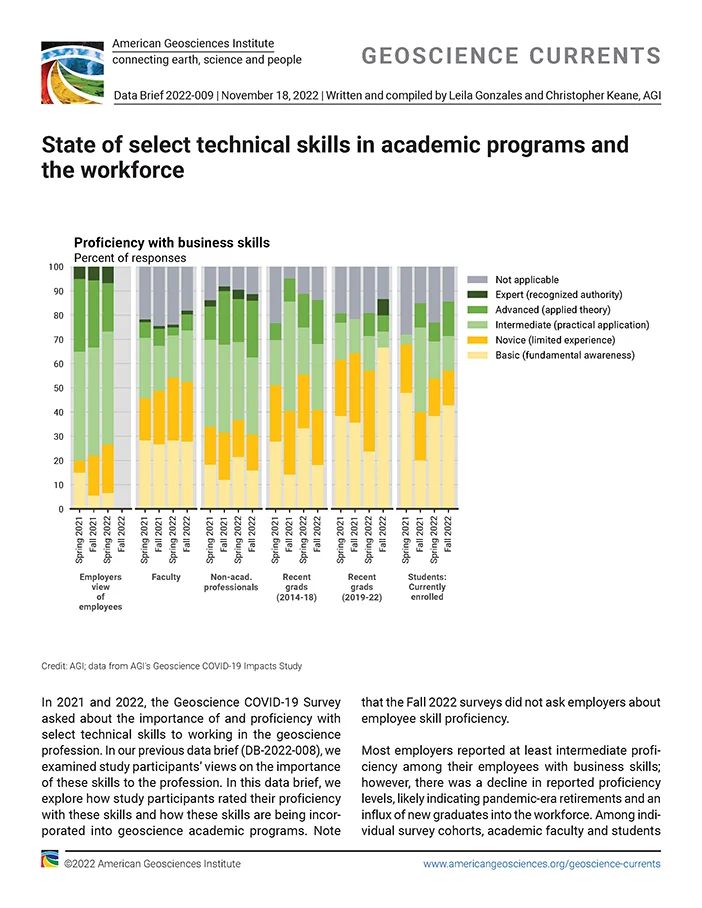
State of select technical skills in academic programs and the workforce

The Geoscience COVID-19 Survey found that employers reported varying levels of proficiency among their employees with select technical skills, including business, database management, graphic design, data visualization, and programming. Academic faculty and students showed similar levels of proficiency with some skills, while non-academic professionals demonstrated higher proficiency in others. The incorporation of these skills into academic programs varied by skillset, with some departments reporting a decline in teaching certain skills, such as data visualization.

Profession Data
Brief 2022-08-22

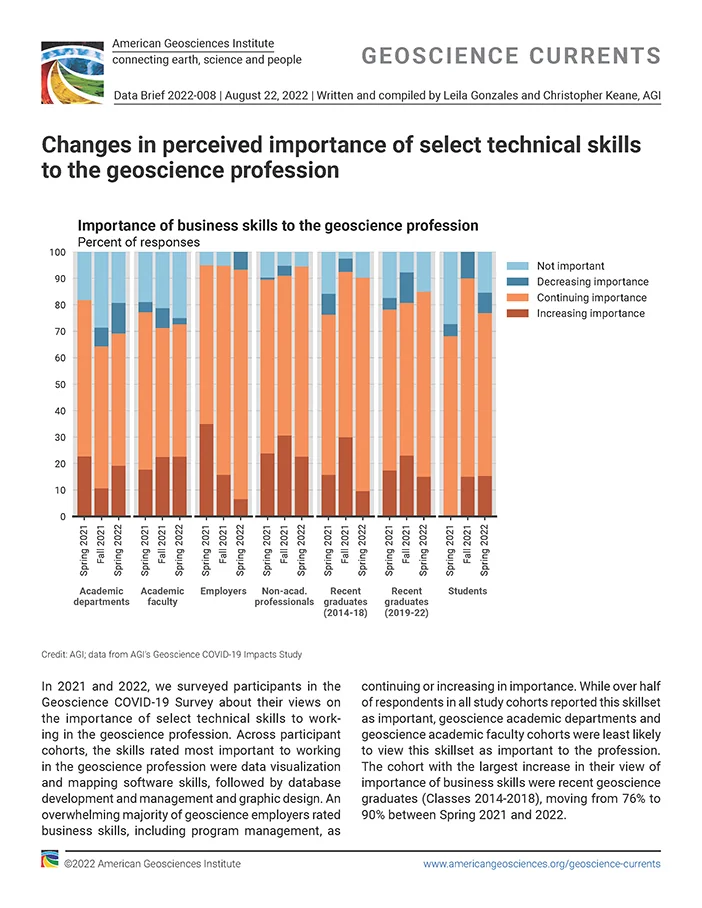
Changes in perceived importance of select technical skills to the geoscience profession

Results from our 2021 and 2022 Geoscience COVID-19 Surveys revealed that technical skills such as data visualization and mapping, database management, and graphic design were considered increasingly important across geoscience cohorts. Business skills, particularly program management, were also emphasized by geoscience employers and recent graduates. Emerging skills like machine learning, AI, and programming were increasingly valued, especially by students and recent graduates, although academic departments were less likely to view these skillsets as critical to the profession.

Profession Data
Brief 2022-06-27

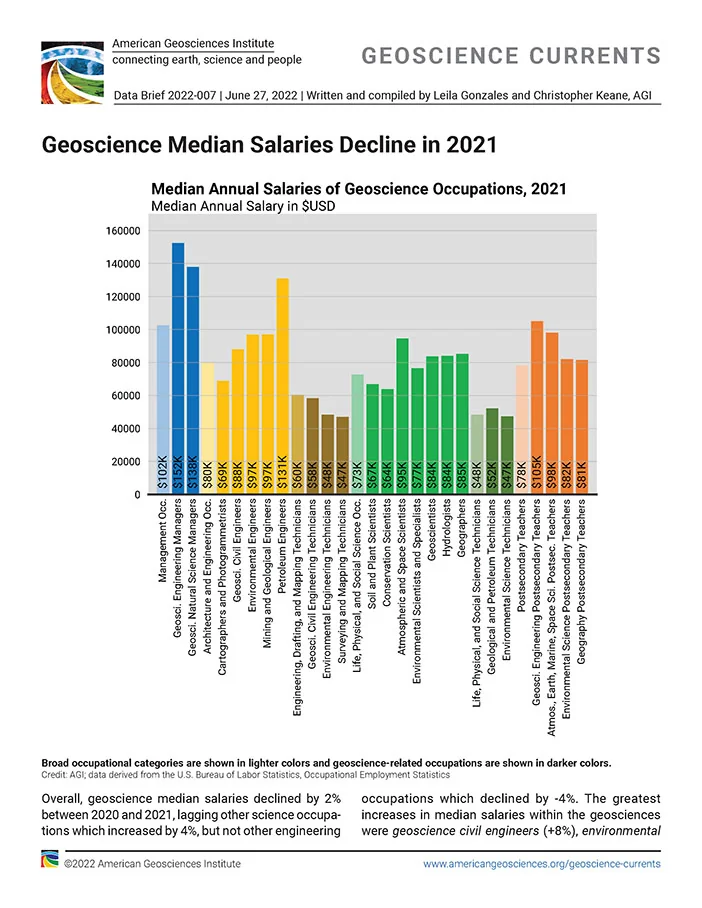
Geoscience Median Salaries Decline in 2021

Overall, geoscience median salaries declined by 2% between 2020 and 2021, lagging other science occupations which increased by 4%, but not other engineering occupations which declined by 4%. The greatest increases in median salaries within the geosciences were geoscience civil engineers, environmental engineers, and mining and geological engineers. The largest declines in salaries were for geoscientists, environmental engineering technicians, and atmospheric and space scientists.

Profession Data
Brief 2022-06-17

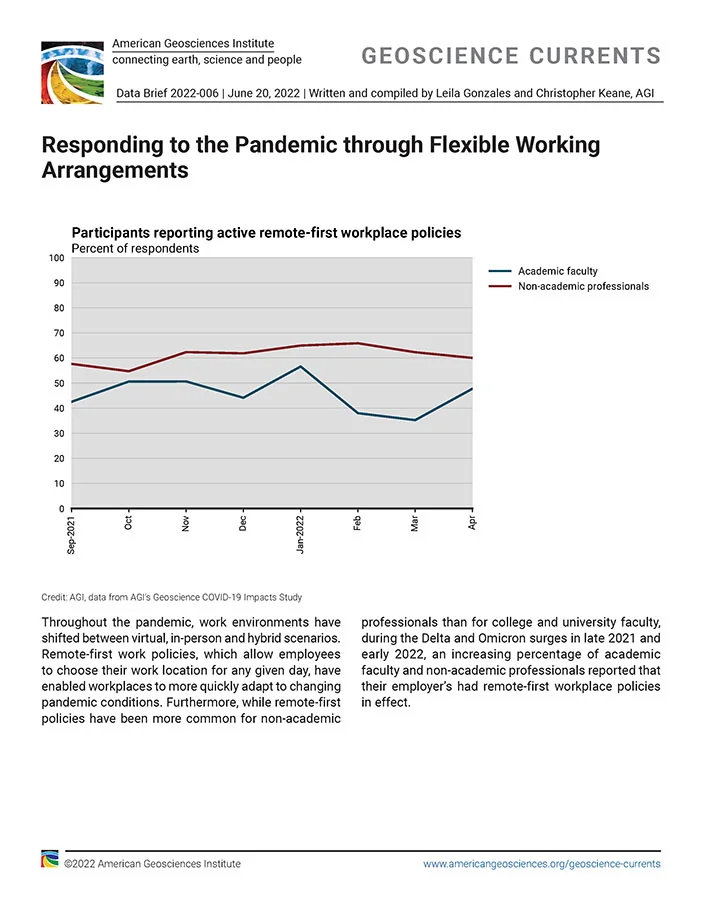
Responding to the Pandemic through Flexible Working Arrangements

During the pandemic, work environments shifted between virtual, in-person, and hybrid scenarios, with remote-first policies becoming more common. Academic faculty transitioned away from remote work as a primary environment starting in Fall 2021, while non-academic professionals returned to in-office work shortly after vaccine roll-out in early 2021. Remote work remains a prominent option for both groups, however, with academic faculty working remotely less often than non-academic professionals.

Profession Data
Brief 2022-05-23

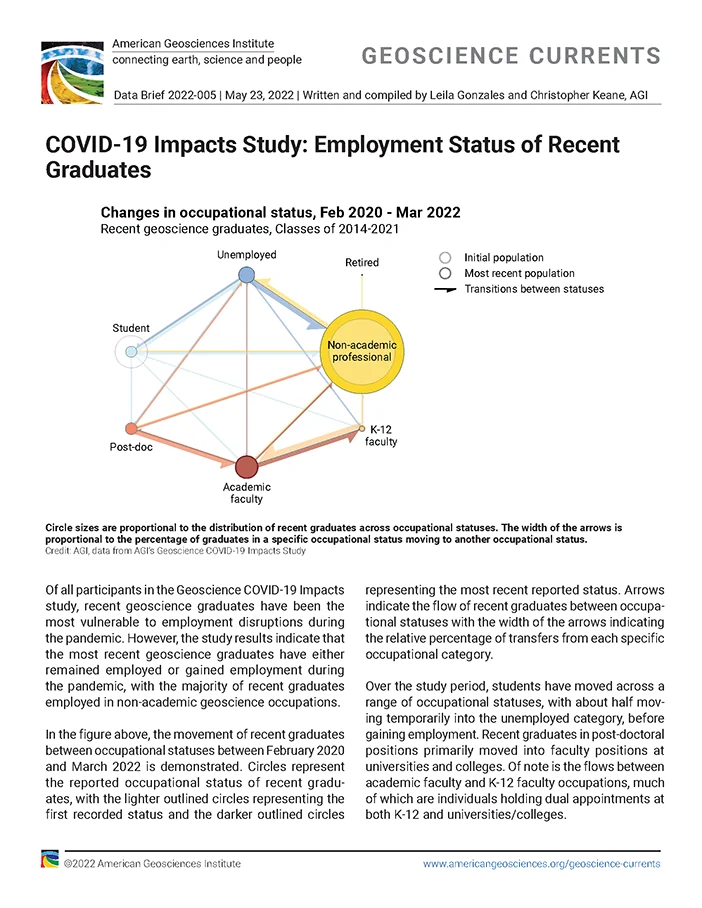
COVID-19 Impacts Study: Employment Status of Recent Graduates

Recent geoscience graduates faced employment disruptions during the pandemic but remained employed or gained employment in non-academic occupations. Those who earned their degrees between 2014 and 2018 had the most stable employment situation. Employment rates among recent graduates have increased since 2020, with peaks in unemployment coinciding with economic shutdowns and summer graduations.

Profession Data
Brief 2022-05-06

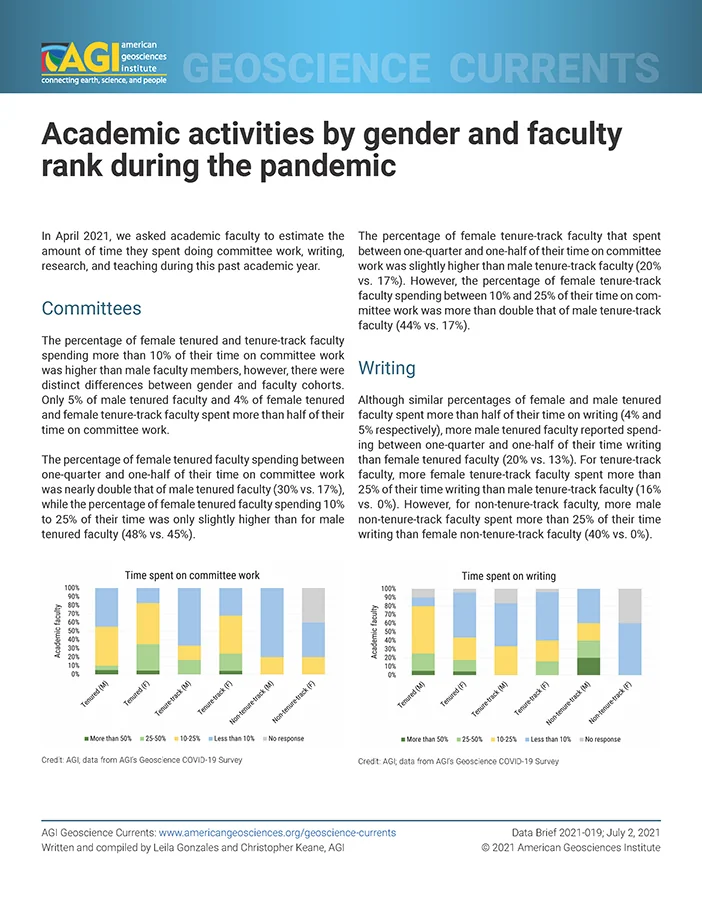
Pandemic Impacts to Instructional Formats through March 2022

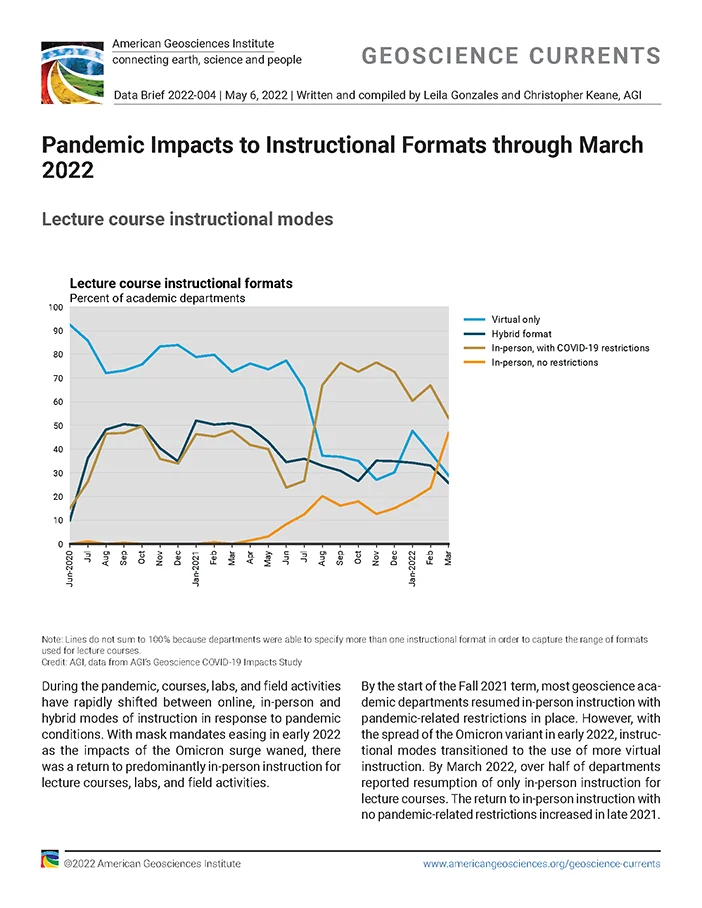
The COVID-19 pandemic led to rapid shifts in instructional modes for geoscience courses, labs, and field activities, with many departments initially adopting virtual or hybrid formats but returning to predominantly in-person instruction as mask mandates eased. By March 2022, over half of departments reported resuming only in-person instruction for lecture courses, while most lab sections and field activities were also conducted in a single format. The integration of virtual instructional modes declined substantially during the pandemic, with a brief uptick in early 2022 but overall remaining at around 40% for courses by March 2022.

Profession Data
Brief 2022-02-14

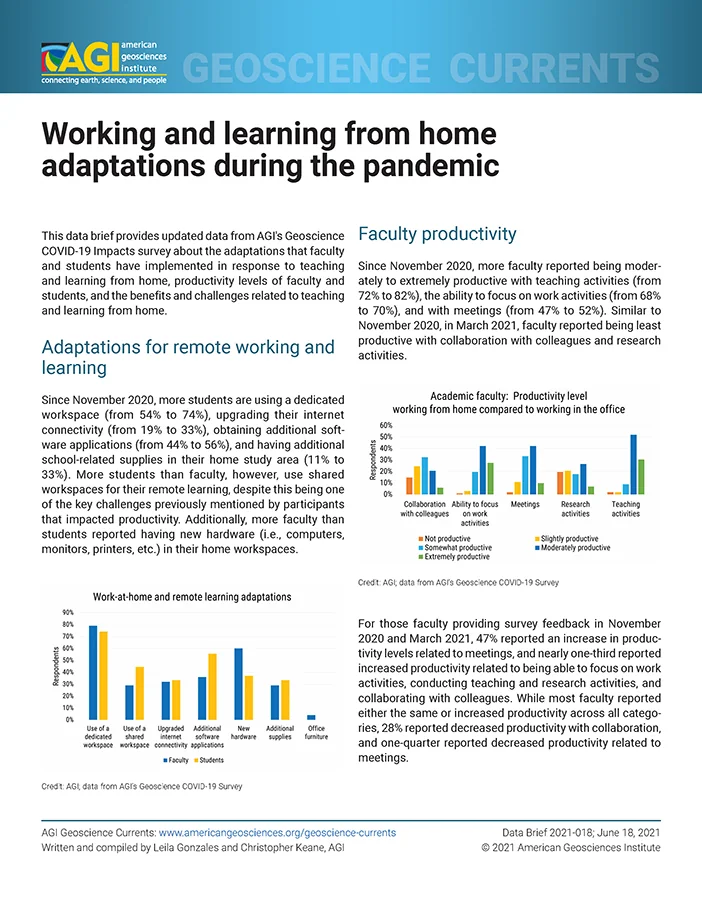
COVID-19 Impacts on Geoscience Business Staffing Through 2021

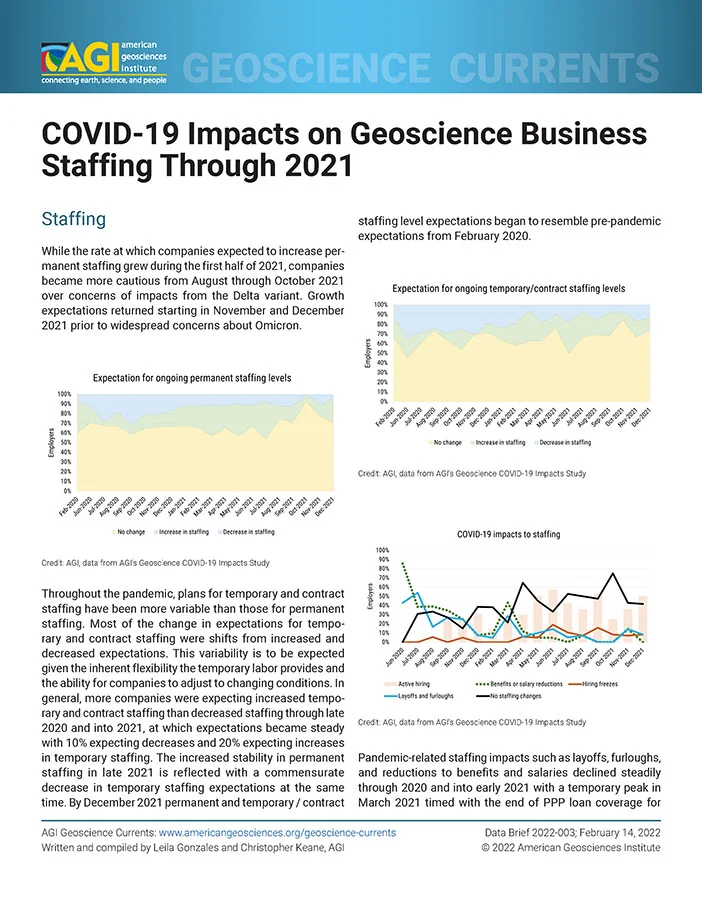
In 2021, employers' staffing expectations fluctuated, with interest in hiring rising early in the year, fading by August due to Delta variant concerns, and rebounding in November before Omicron surfaced. By year-end, most employers had lifted travel and fieldwork restrictions and adopted flexible remote and in-office policies. Recruitment challenges diminished by mid-year, with employers seeking hires skilled in project management, data visualization, mapping software, and database management, while noting improved employee proficiency in virtual platforms, data visualization, and complementary technical skills, though virtual collaboration remained a challenge.

Profession Data
Brief 2022-01-17

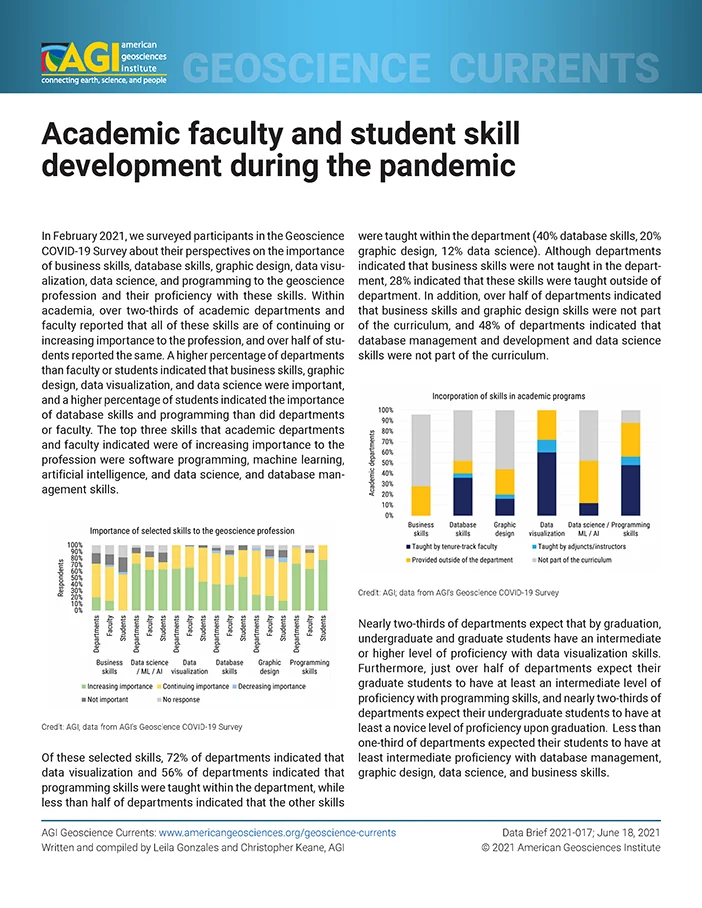
COVID-19 Impacts on Geoscience Business Operations Through 2021

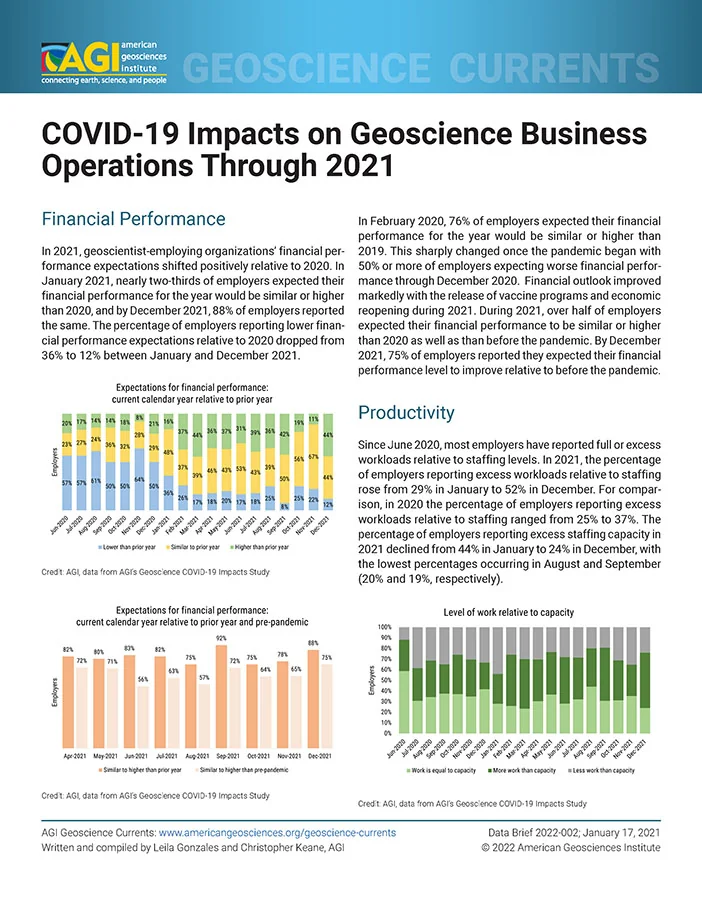
In 2021, financial performance expectations for geoscientist-employing organizations improved compared to 2020, with most reporting full or excess workloads and minimal pandemic-related impacts to operations. However, supply chain disruptions persisted for at least 30% of employers throughout the year. While remote work offered benefits, the lack of in-person interactions remained a key challenge, and supply chain concerns were the only pandemic-driven issue that did not decline significantly.

Profession Data
Brief 2022-01-07

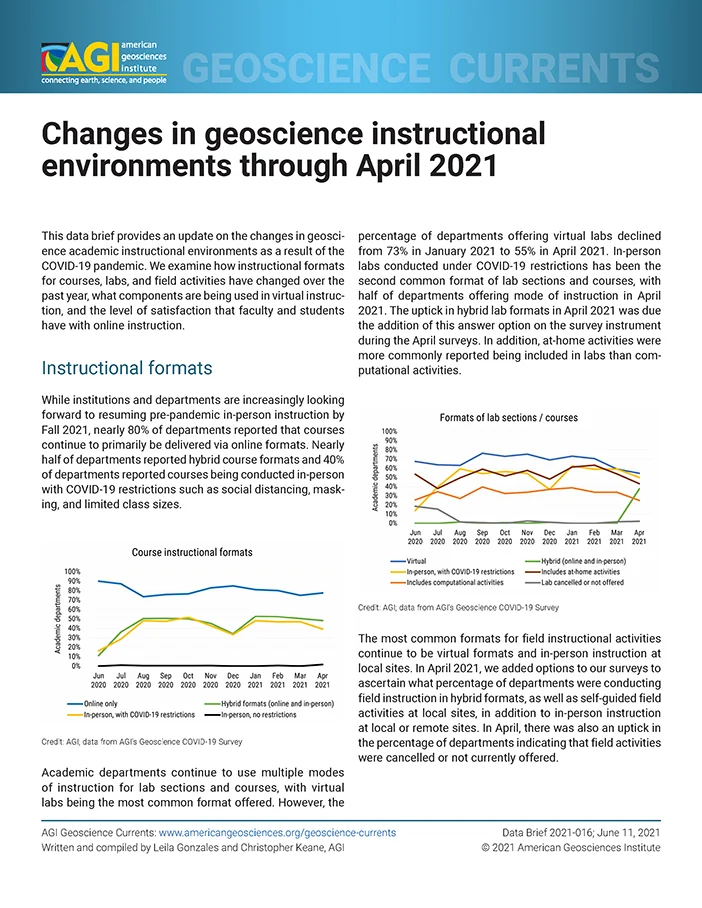
Geoscience Employment Growth Continues Through 2021

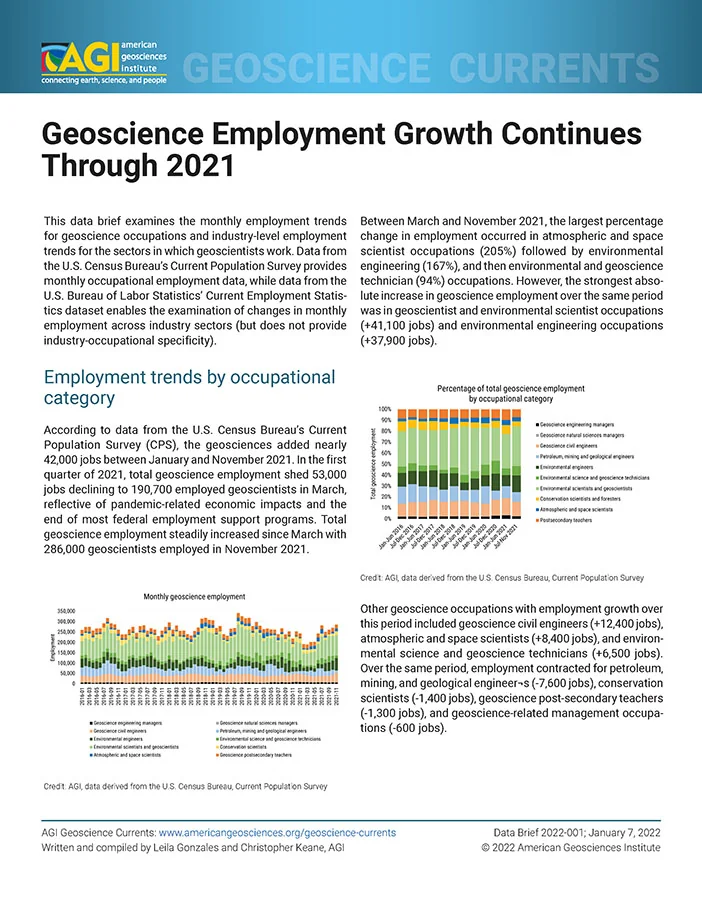
The geoscience occupations added nearly 42,000 jobs between January and November 2021, with the largest percentage change in employment occurring in atmospheric and space scientist occupations. Industry-level employment trends showed most sectors gaining employment, with technical consulting and management services experiencing the strongest gains. The labor supply and demand ratios indicate that the professional and business services sector rebounded quickly from pandemic-induced unemployment shocks, while the mining and oil and gas sector remains impacted by the ongoing soft energy market.

Profession Data
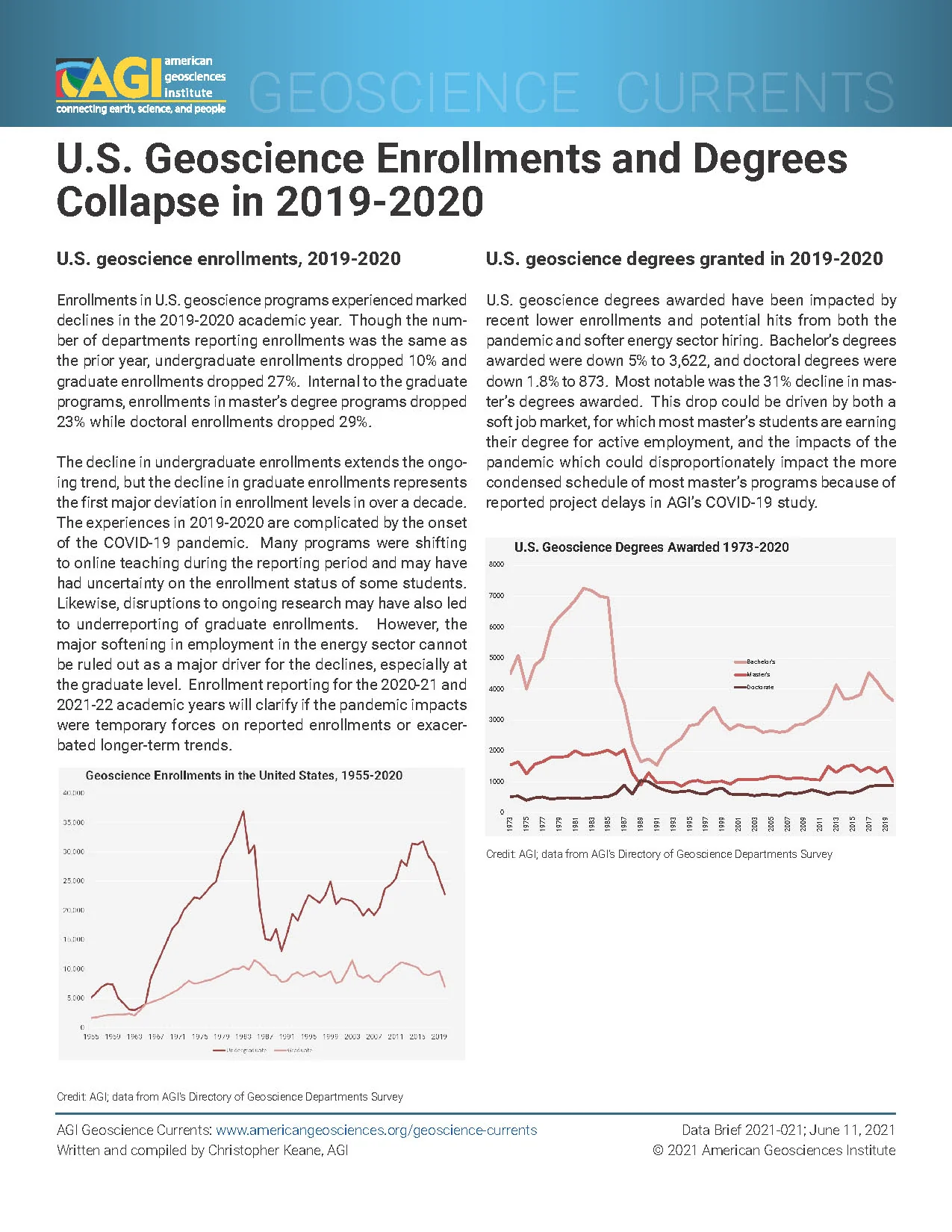
Brief 2021-11-01

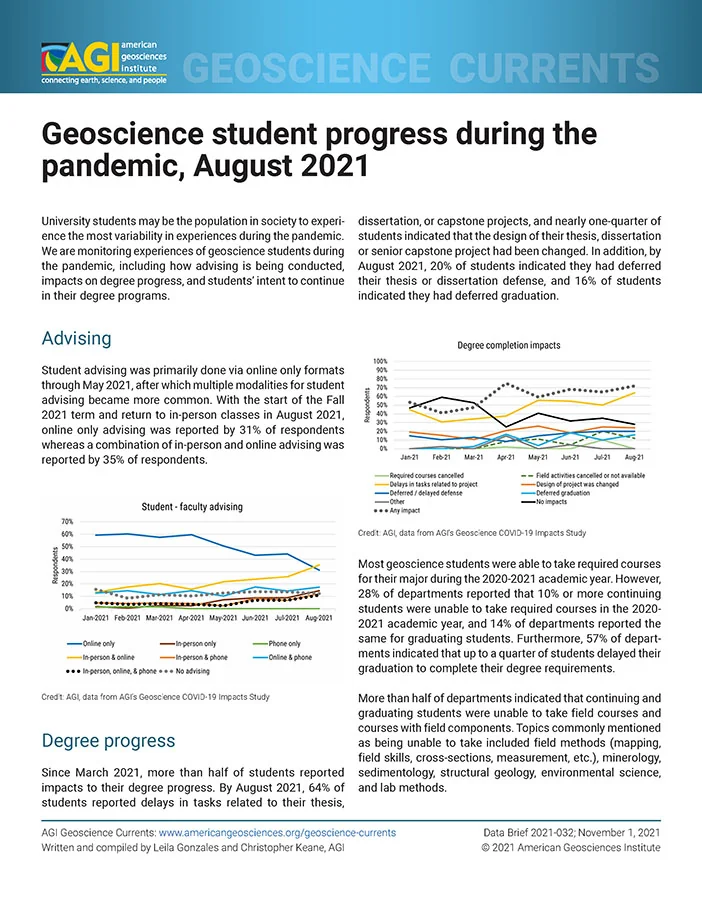
Geoscience student progress during the pandemic, August 2021

University students, particularly geoscience students, experienced significant variability in their experiences during the pandemic, with impacts on advising, degree progress, and field courses. Many departments adapted to support students by accepting substitutes for courses, waiving credit requirements, and offering alternative learning opportunities. Despite these challenges, most geoscience students indicated an intent to continue full-time with their studies, with about two-thirds of respondents planning to stay in school beyond the next academic term.

Profession Data
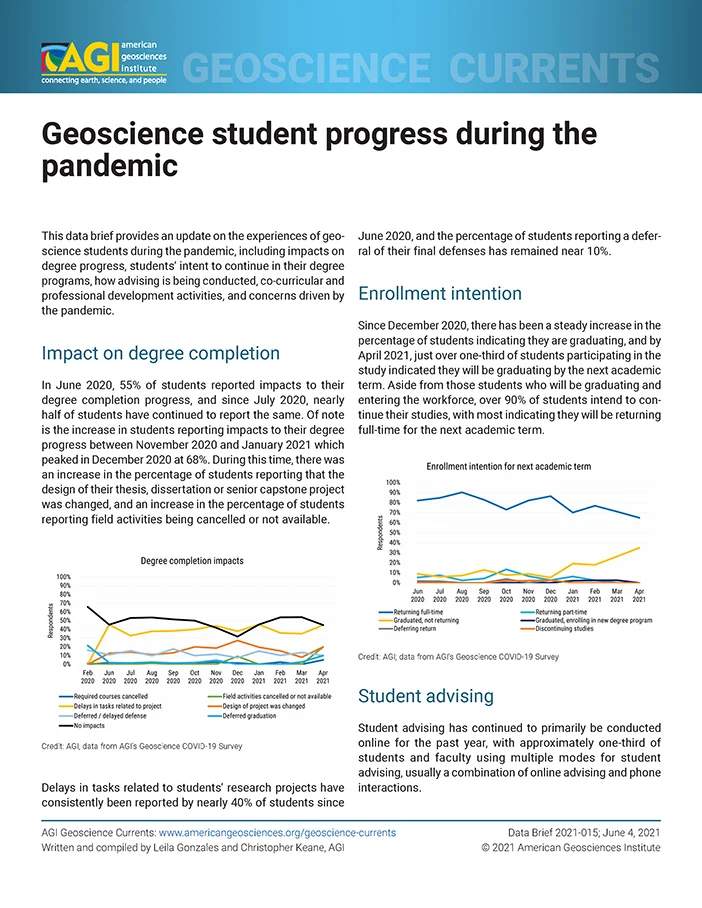
Brief 2021-10-25

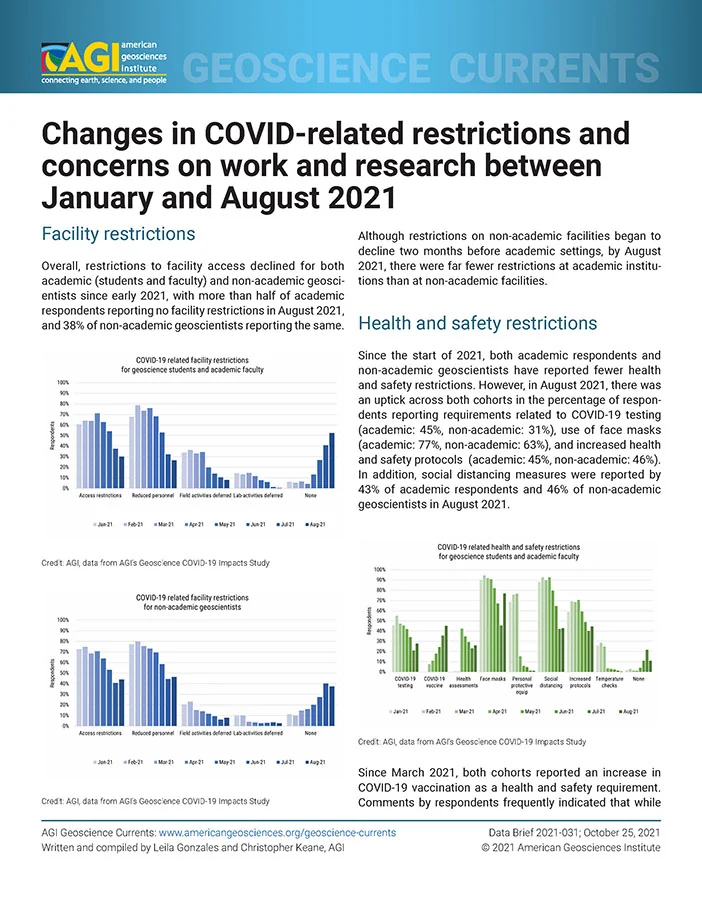
Changes in COVID-related restrictions and concerns on work and research between January and August 2021

Restrictions to facility access eased for both academic and non-academic geoscientists since early 2021, with more than half of academic respondents reporting no facility restrictions in August 2021. Health and safety restrictions also eased, but there was an uptick in COVID-19 testing, face mask use, and increased health protocols. Meeting and travel restrictions eased, while concerns about workplace safety remained a major issue for both academics and non-academic geoscientists.

Profession Data
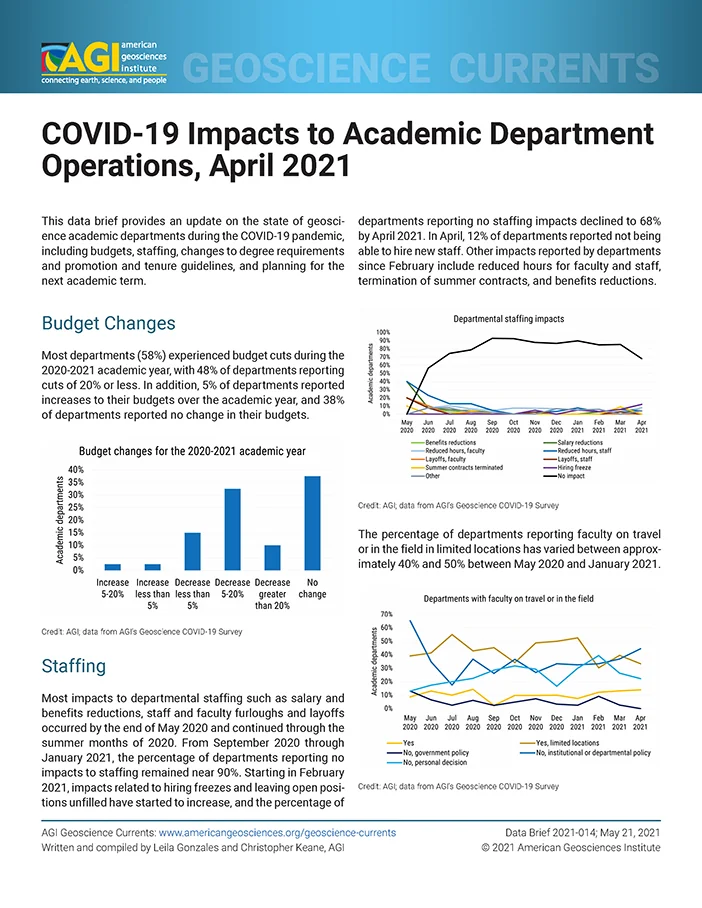
Brief 2021-10-22

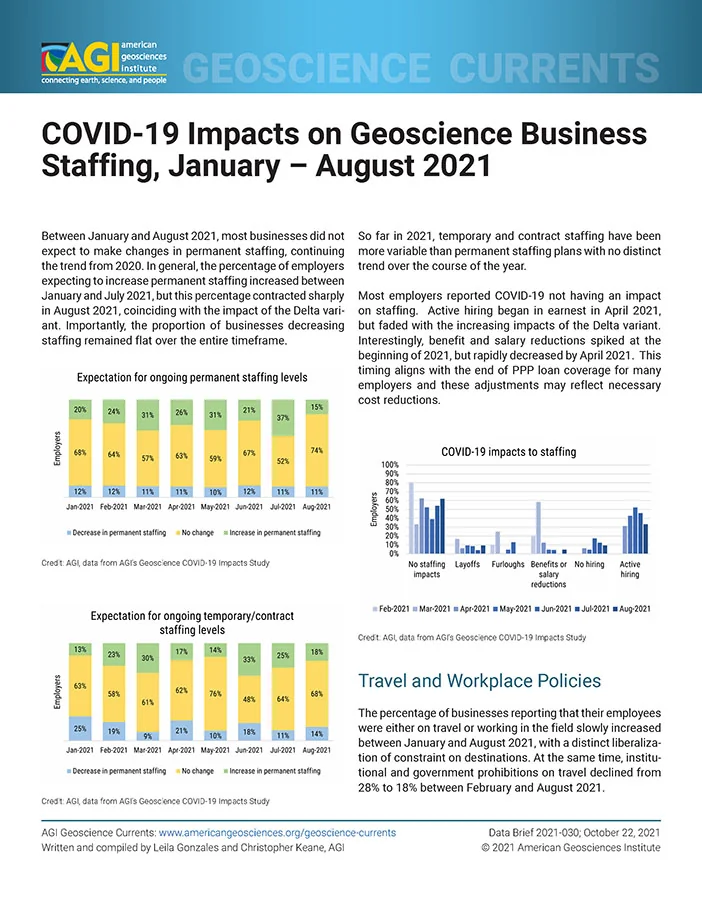
COVID-19 Impacts on Geoscience Business Staffing, January – August 2021

The percentage of employers expecting to increase permanent staffing increased between January and July 2021, but contracted sharply in August 2021 due to the impact of the Delta variant. Active hiring began in earnest in April 2021, but faded with the increasing impacts of the Delta variant. Workplace policies shifted to a combination of remote and in-person work, with allowances for field and lab work. Hiring peaked over the summer months, contracting in the last quarter of the year. In addition, challenges in hiring talent were noted by employers, particularly as it related to recruitment and onboarding.

Profession Data
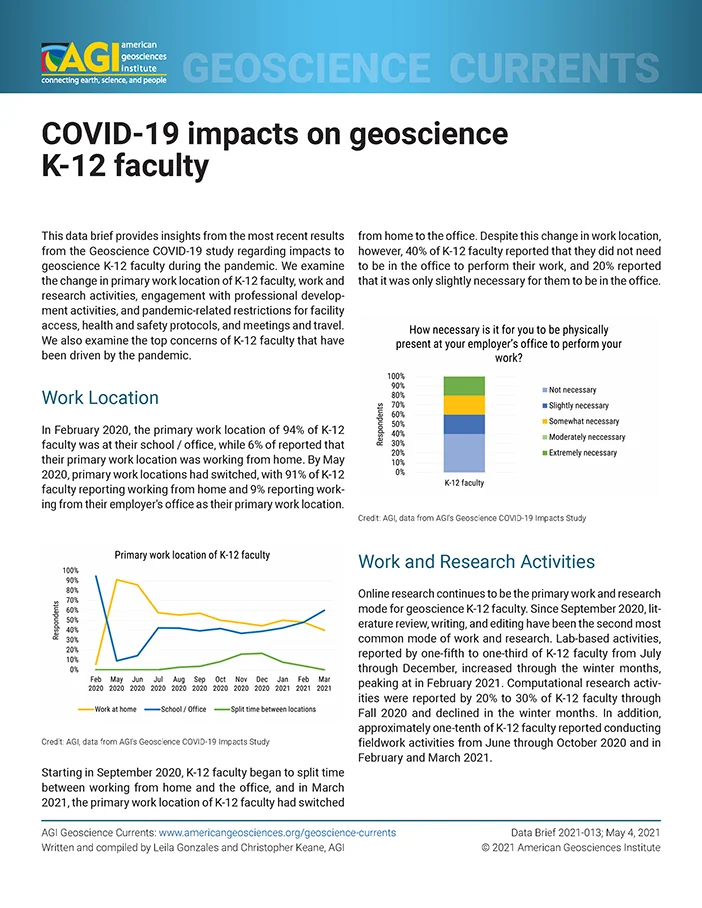
Brief 2021-10-18

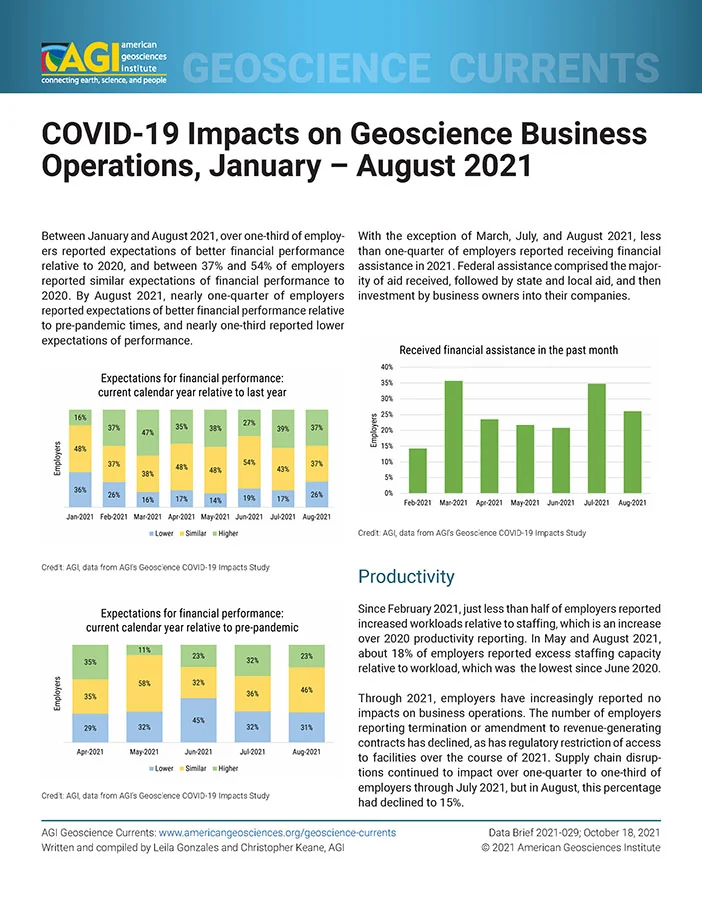
COVID-19 Impacts on Geoscience Business Operations, January – August 2021

In 2021, geoscience employers had mixed financial outlooks, with some expecting better performance than pre-pandemic levels while others anticipated declines. High workloads persisted, though business challenges began to ease, despite ongoing supply chain disruptions. Employers prioritized investments in remote work resources and health and safety protocols, with workplace safety remaining a top concern for one-third of employers in August 2021.

Profession Data
Brief 2021-10-15

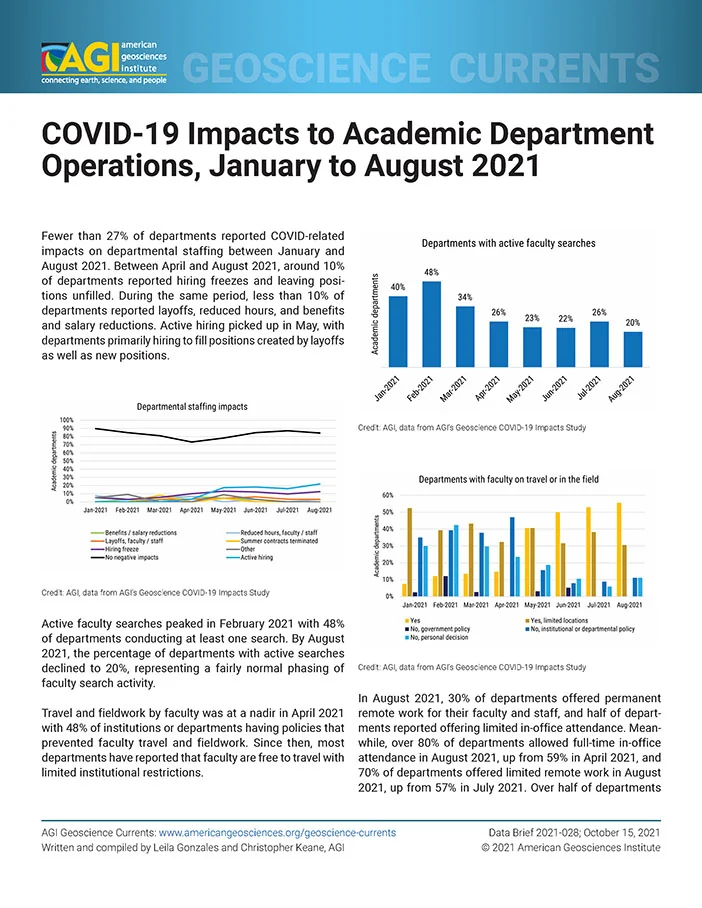
COVID-19 Impacts to Academic Department Operations, January to August 2021

Fewer than 27% of departments reported COVID-related impacts on staffing between January and August 2021, with active hiring picking up in May. By August 2021, most departments had relaxed travel restrictions, offered remote work options, and allowed full-time in-office attendance. Concerns about workplace safety and recruiting for Fall 2021 have increased, particularly with the spread of the Delta variant.

Profession Data
Brief 2021-10-11

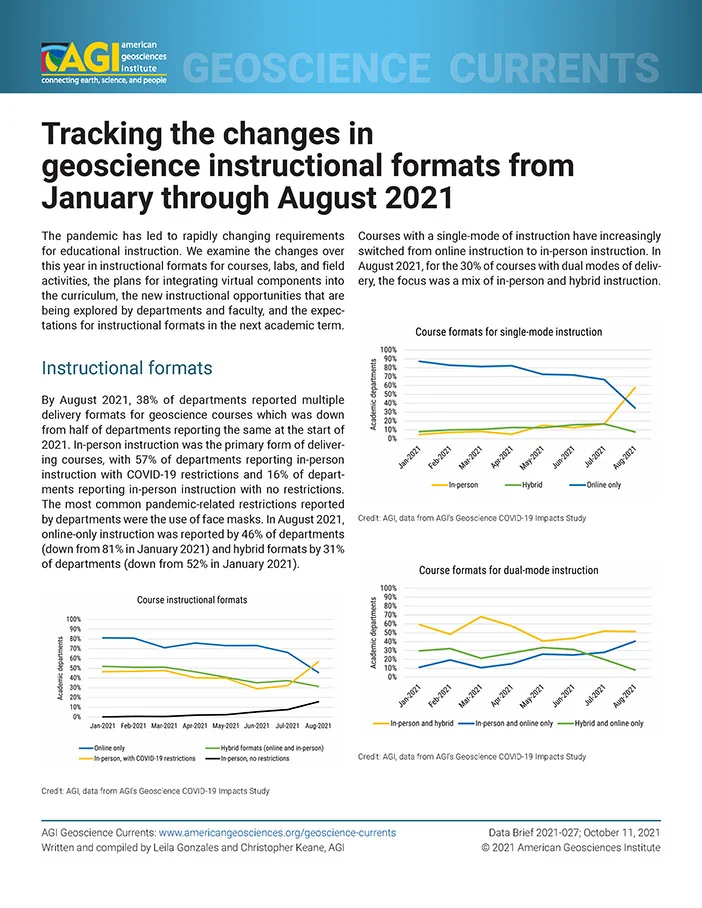
Tracking the changes in geoscience instructional formats from January through August 2021

The COVID-19 pandemic has led to significant changes in educational instruction, with departments reporting a shift towards in-person instruction, hybrid formats, and virtual components being integrated into curricula. The majority of departments plan to continue using virtual labs and field activities as supplementary materials, but not as replacements for in-person experiences. Expectations for the next academic term vary, with some departments expecting a return to normal operations, while others anticipate in-person instruction with pandemic-related restrictions.

Profession Data
Brief 2021-10-08

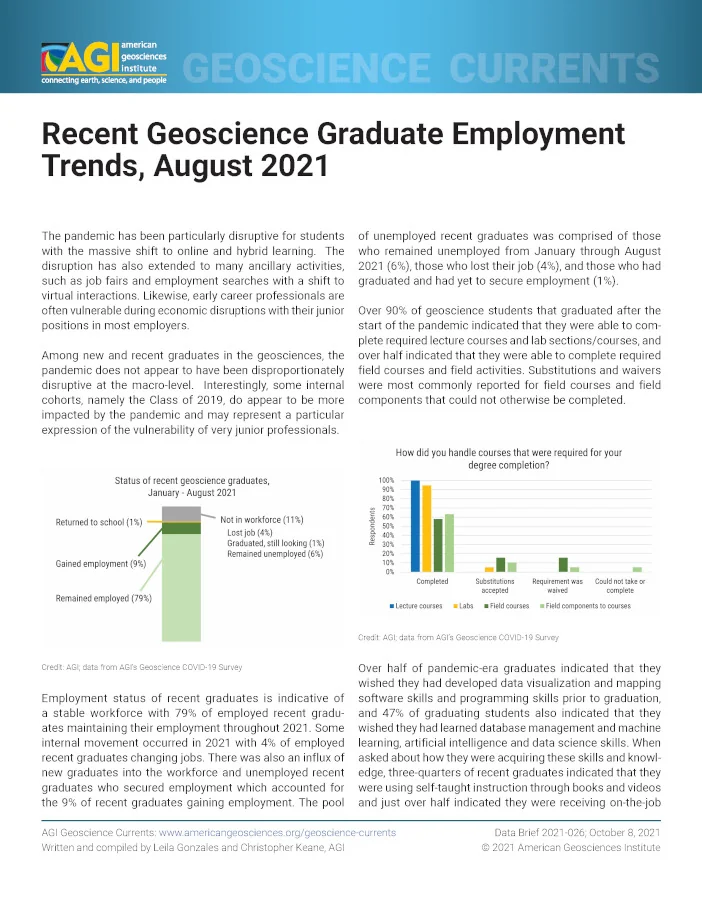
Recent Geoscience Graduate Employment Trends, August 2021

As of August 2021, employment rates for recent geoscience graduates varied by graduation year: 96% for 2014–2018 graduates, 72% for 2019 graduates, 81% for 2020 graduates, and 60% for 2021 graduates. The majority of employed recent graduates maintained their positions throughout 2021, with only 4% changing jobs and 4% experiencing job loss. Additionally, over half of graduates expressed a desire to have developed skills in data visualization, mapping software, programming, database management, and machine learning prior to graduation, with many now pursuing self-instruction or on-the-job training to acquire these competencies.

Profession Data
Brief 2021-10-04

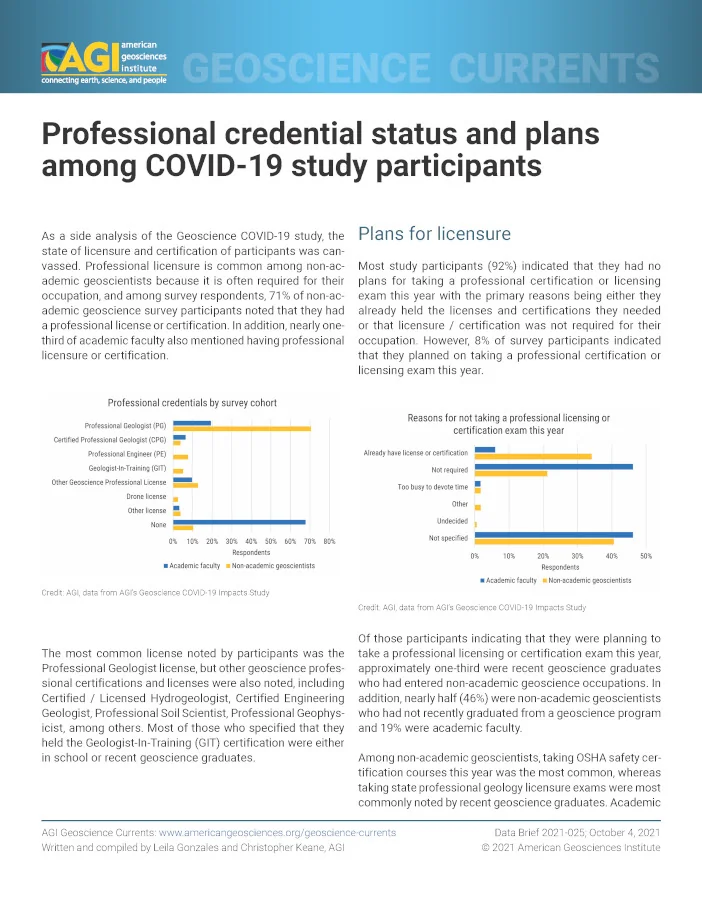
Professional credential status and plans among COVID-19 study participants

Professional licensure is prevalent among non-academic geoscientists, with 71% holding a license or certification, and about one-third of academic faculty also reporting licensure. The most common credential among participants was the Professional Geologist license. While most reported no challenges in meeting exam or certification requirements, some cited difficulties with preparation and scheduling.

Profession Data
Brief 2021-10-01

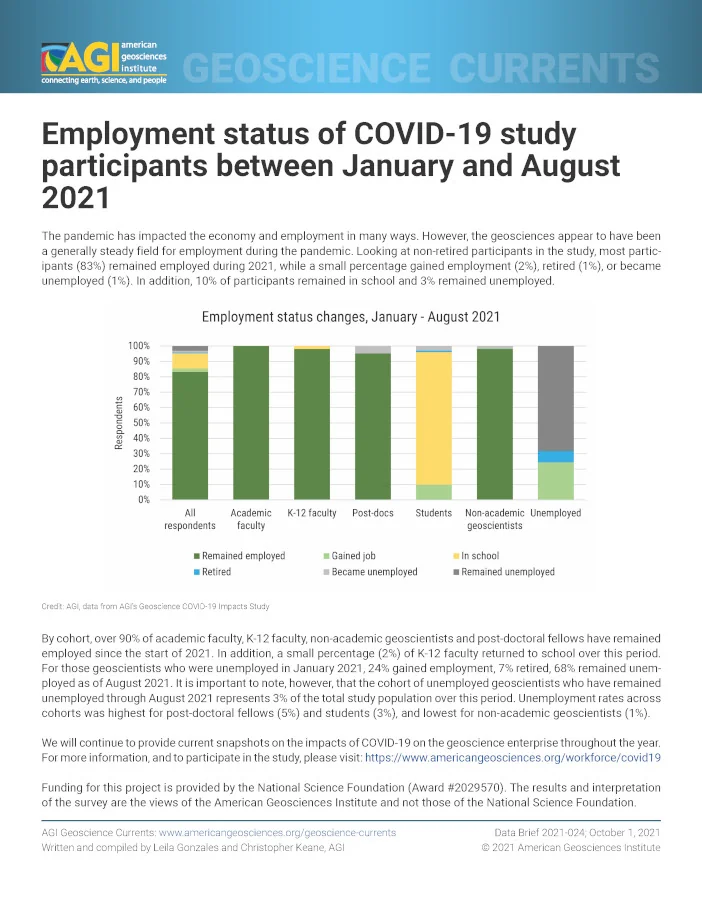
Employment status of COVID-19 study participants between January and August 2021

The geosciences field has been relatively stable in terms of employment during the pandemic, with over 90% of academic faculty, K-12 faculty, non-academic geoscientists, and post-doctoral fellows remaining employed since January 2021. Unemployment rates varied across cohorts, with post-doctoral fellows and students experiencing higher rates compared to non-academic geoscientists.

Profession Data
Brief 2021-09-03

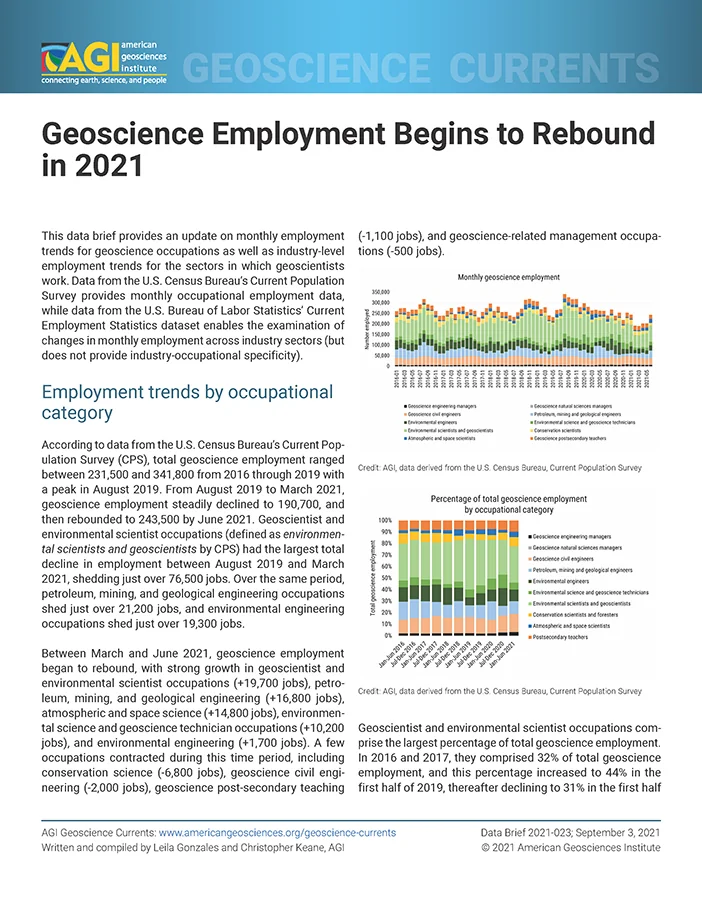
Geoscience Employment Begins to Rebound in 2021

Geoscience employment declined between August 2019 and March 2021, with geoscientist and environmental scientist occupations experiencing the largest decline, but rebounded to 243,500 by June 2021. Industry sectors such as local government and profes­sional, scientific and technical consulting experienced significant gains in employment between June 2020 and 2021. The pandemic had a significant impact on these trends causing large fluctuations in local government employment, as well as volatility in the higher education sector from with campus closures, declining enrollments, layoffs and slower hiring.

Profession Data
Brief 2021-08-27

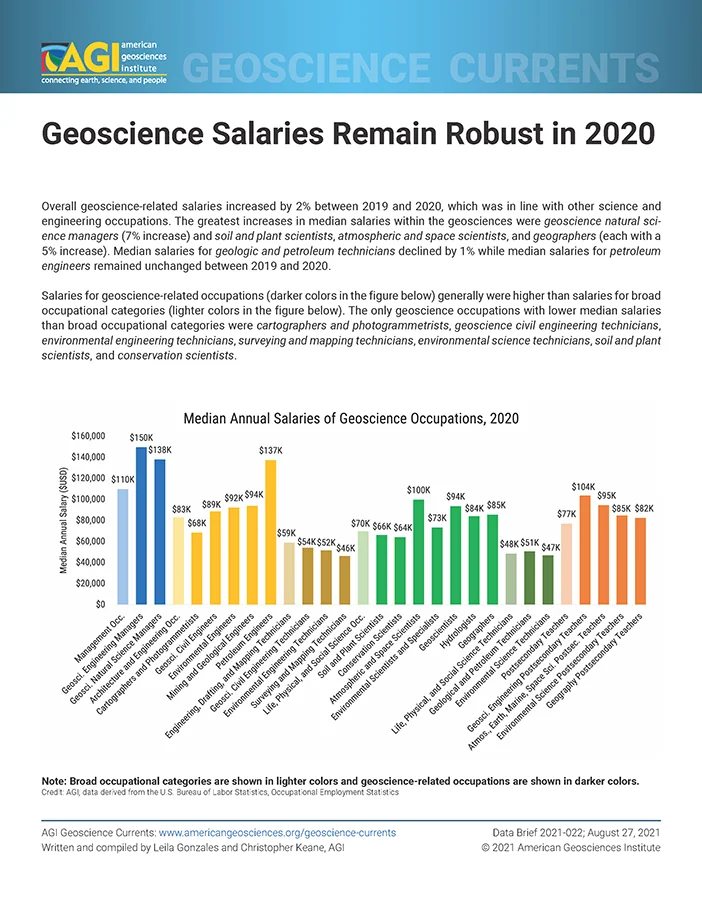
Geoscience Salaries Remain Robust in 2020

In 2020, geoscience-related salaries increased by 2%, aligning with trends in other science and engineering fields. Notably, geoscience natural science managers saw a 7% salary increase, while soil and plant scientists, atmospheric and space scientists, and geographers each experienced a 5% rise. However, geologic and petroleum technicians faced a 1% salary decline, and petroleum engineers' salaries remained unchanged. Generally, geoscience occupations offered higher median salaries compared to broader occupational categories, with exceptions including cartographers, photogrammetrists, and certain technician roles.

Profession Data
Brief 2021-07-09

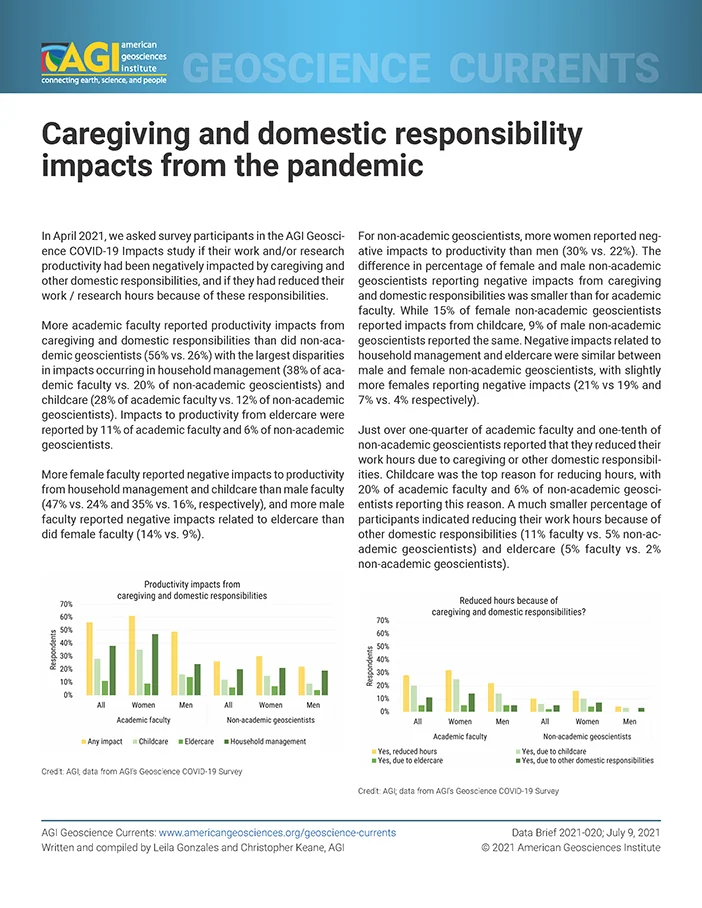
Caregiving and domestic responsibility impacts from the pandemic

A study found that academic faculty reported higher rates of productivity impacts from caregiving and domestic responsibilities than non-academic geoscientists, with women being more affected by these responsibilities. Women also reported reducing their work hours due to caregiving and domestic responsibilities at a higher rate than men across both academic and non-academic groups. The study aims to provide current snapshots on the impacts of COVID-19 on the geoscience enterprise.

Profession Data
Brief 2021-07-02

Academic activities by gender and faculty rank during the pandemic

A survey conducted by the American Geosciences Institute in April 2021 revealed differences in time allocation among faculty members based on gender and tenure status. The results showed that female faculty spent more time on committee work and teaching than compared to male faculty members, and less time on writing and research.

Profession Data
Brief 2021-06-25

Working and learning from home adaptations during the pandemic

During the COVID-19 pandemic, geoscience students and professionals adapted to remote working and learning by setting up dedicated workspaces, improving internet connectivity, and acquiring additional software and supplies. However, challenges persisted, including limited access to specialized software, restricted lab and fieldwork opportunities, and difficulties in maintaining collaboration and engagement. More students than faculty used shared workspaces for their remote learning, despite this being one of the key challenges previously mentioned by participants that impacted productivity.

Profession Data
Brief 2021-06-18

Academic faculty and student skill development during the pandemic

Within academia, most academic departments, faculty, and students reported that business skills, database skills, graphic design, data visualization, data science, and programming skills are of continuing or increasing importance to the profession. The survey also found that faculty have higher levels of proficiency in certain skills, such as business and graphic design, while students reported higher proficiency in programming.

Profession Data
Brief 2021-06-11

Changes in geoscience instructional environments through April 2021

The COVID-19 pandemic has led to significant changes in geoscience academic instructional environments, with nearly 80% of departments continuing to primarily deliver courses online and many incorporating virtual labs and field activities. Faculty reported that all aspects of hybrid and online instruction required more work than in-person teaching, but also found benefits such as increased accessibility and flexibility for students. Despite challenges, faculty and students expressed varying levels of satisfaction with online instruction, with areas of improvement including engagement and grading.

Profession Data
Brief 2021-06-10

U.S. Geoscience Enrollments and Degrees Collapse in 2019-2020

US geoscience enrollments declined in 2019-2020, with significant drops in undergraduate and graduate programs. The COVID-19 pandemic and soft energy sector job market are contributing factors to the declines. Bachelor's and doctoral degree awards also decreased, with a notable drop in master's degrees.

Profession Data
Brief 2021-06-04

Geoscience student progress during the pandemic

Geoscience students have reported various impacts on their degree progress, including delays in research projects and changes to thesis designs, as well as concerns about employment opportunities and financial obligations during the pandemic. Despite these challenges, nearly 90% of students intend to continue their studies, with many reporting participation in virtual workshops, conferences, and online courses. The top concerns for geoscience students remain employment opportunities and workplace safety, although availability of educational opportunities has become a growing concern.

Profession Data
Brief 2021-05-21

COVID-19 Impacts to Academic Department Operations, April 2021

The COVID-19 pandemic had significant impacts on geoscience academic departments, including budget cuts (58%), staffing reductions and changes to travel policies, and modifications to promotion and tenure guidelines. Departments reported varying levels of flexibility in teaching and learning, with many adopting hybrid formats for the next academic term. Despite concerns about workplace safety and staffing levels, most departments are now expecting a return to normal operations by the start of the next academic year.

Profession Data
Brief 2021-05-07

COVID-19 impacts on geoscience K-12 faculty

The pandemic had significant impacts on K-12 educators, with the quick transition to remote work and then shift to a mix of in-person and online instruction by September 2020. Access restrictions and limited staffing at facilities, increased health protocols, and virtual meetings continue to be the most common COVID-19 related restriction reported by K-12 educators. Concerns about workplace safety remained a top priority, while academic rigor, educational opportunities, and employment opportunities also became increasingly important issues.

Profession Data
Brief 2021-04-30

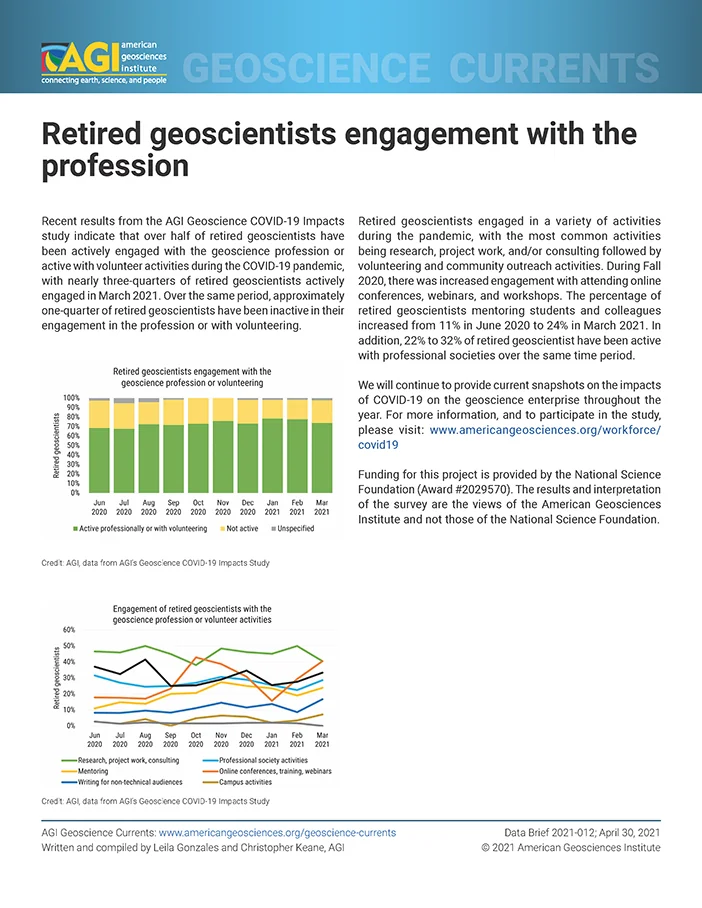
Retired geoscientists engagement with the profession

Retired geoscientists were involved in various activities such as research, project work, consulting, volunteering, and mentoring students and colleagues during the pandemic. The study also found that engagement with professional societies increased over time, with 22-32% of retired geoscientists participating in this way.

Profession Data
Brief 2021-04-23

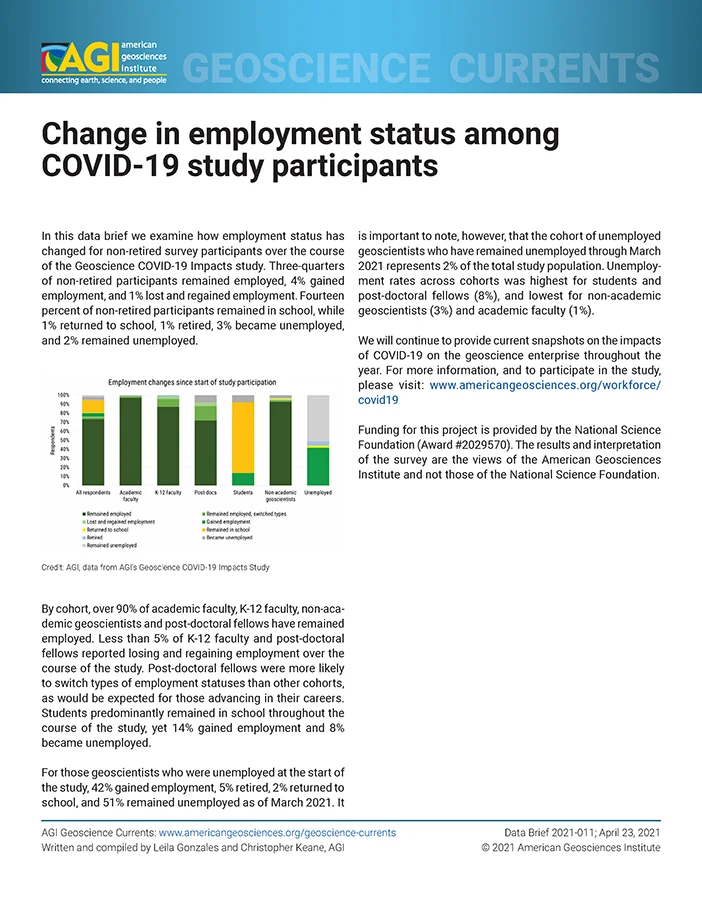
Change in employment status among COVID-19 study participants

The study found that most non-retired geoscience participants remained employed, with varying rates of employment changes among different cohorts, including students and post-doctoral fellows who were more likely to switch types of employment statuses. Unemployment rates were highest for students and post-doctoral fellows, while lowest for academic faculty and non-academic geoscientists. The study aims to provide current snapshots on the impacts of COVID-19 on the geoscience enterprise.

Profession Data
Brief 2021-04-16

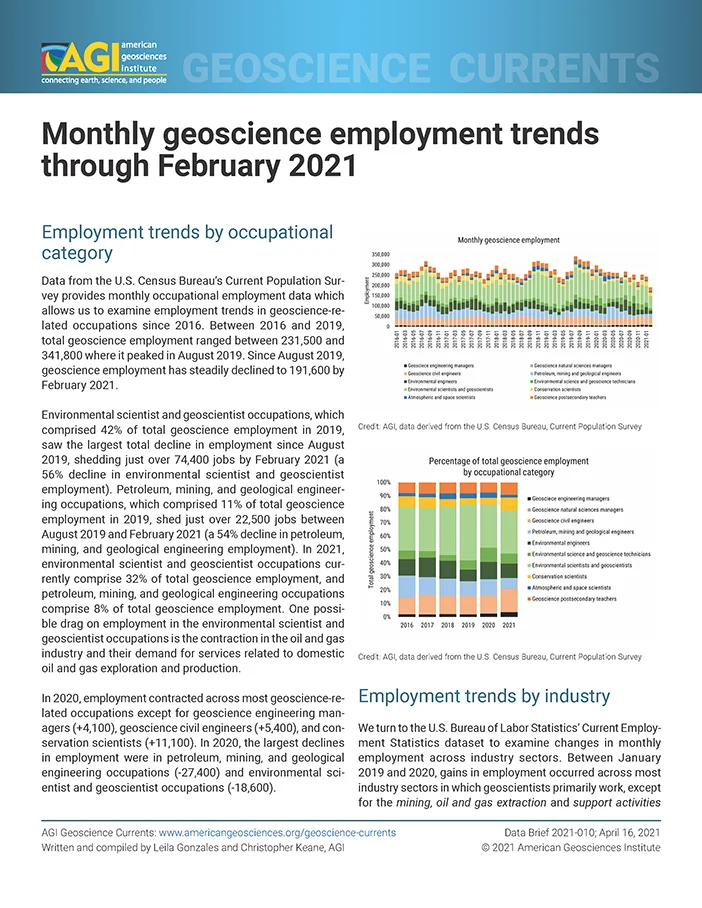
Monthly geoscience employment trends through February 2021

Between August 2019 and February 2021, geoscience employment declined from approximately 341,800 to 191,600 jobs, with environmental scientists and geoscientists experiencing a 56% reduction, and petroleum, mining, and geological engineers seeing a 54% decrease. In 2020, while most geoscience-related occupations faced job losses, positions such as geoscience engineering managers, geoscience civil engineers, and conservation scientists saw employment growth. The contraction in the oil and gas industry likely contributed to employment declines, particularly affecting environmental scientists and geoscientists.

Profession Data
Brief 2021-04-02

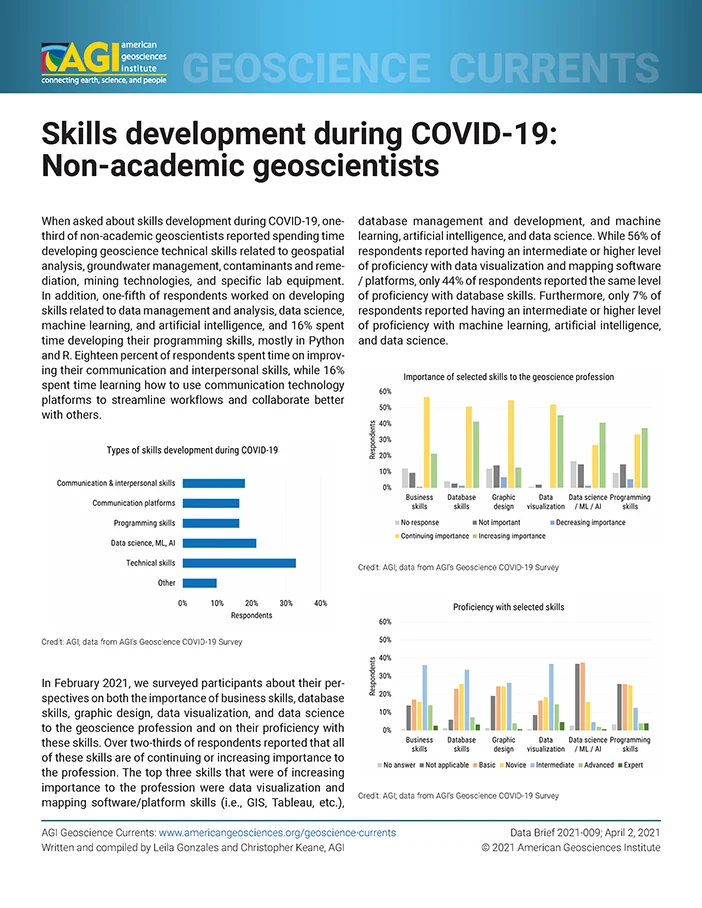
Skills development during COVID-19: Non-academic geoscientists

During the COVID-19 pandemic, non-academic geoscientists focused on skill development, with one-third enhancing technical skills like geospatial analysis and groundwater management, while 20% improved data science, machine learning, and programming skills in Python and R. Additionally, 18% worked on communication and interpersonal skills, and 16% adopted new communication technologies to improve collaboration. Despite recognizing the importance of emerging skills such as machine learning and data visualization, proficiency levels in these areas remained relatively low.

Profession Data
Brief 2021-03-26

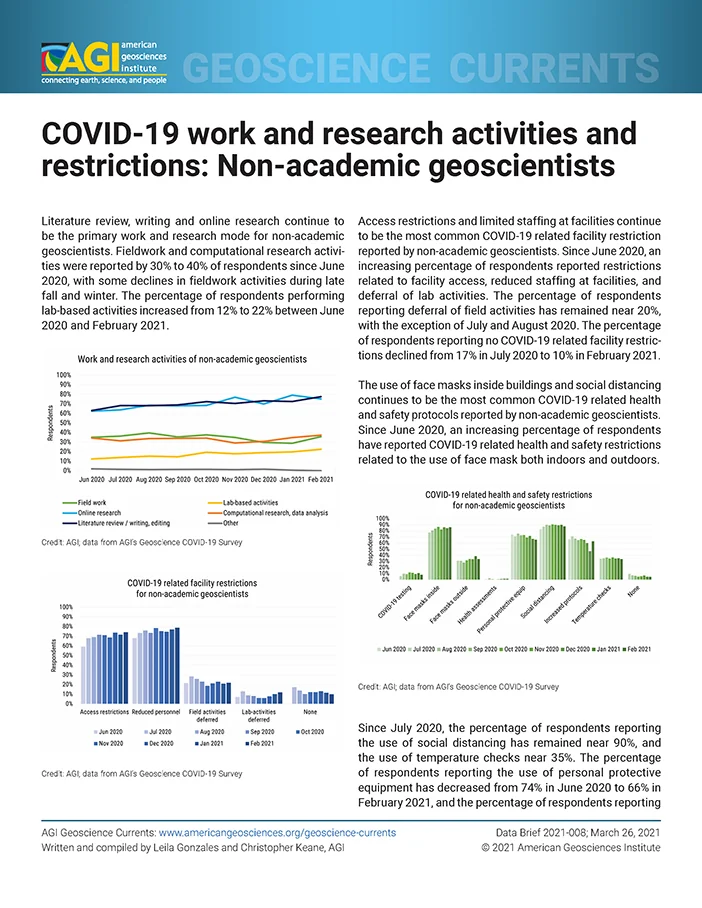
COVID-19 work and research activities and restrictions: Non-academic geoscientists

A survey of non-academic geoscientists found that literature review, writing, and online research continue to be primary work modes, with fieldwork and lab-based activities experiencing declines due to COVID-19 restrictions. The majority of respondents reported changes in their work or research, including limitations on in-person activities, increased remote work opportunities, and challenges related to technology issues and collaboration. Despite challenges, many respondents reported benefits such as improved productivity, flexible hours, and better work-life balance.

Profession Data
Brief 2021-03-19

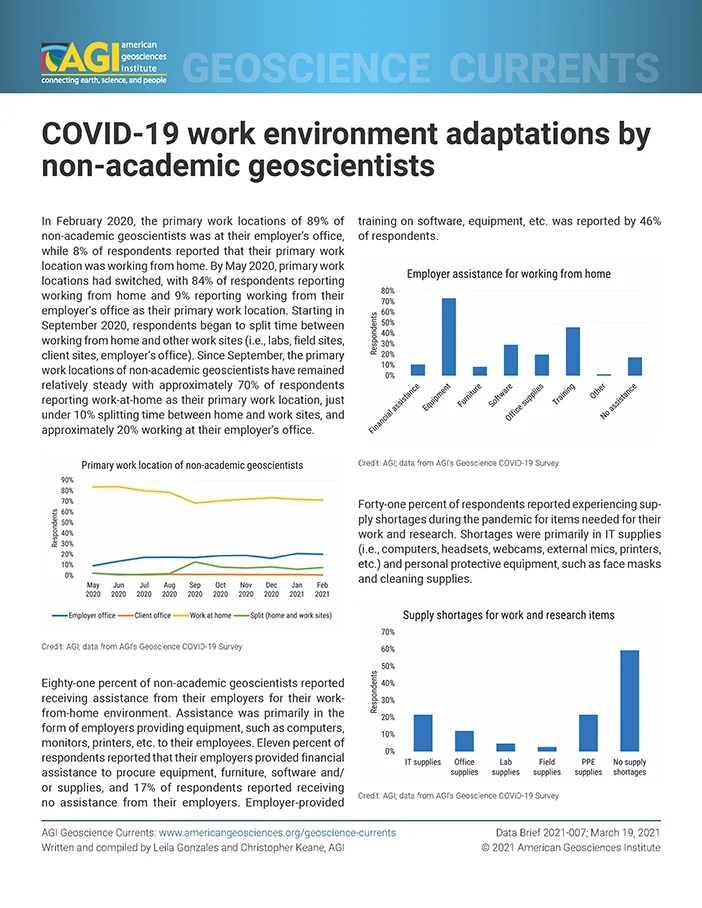
COVID-19 work environment adaptations by non-academic geoscientists

A survey of non-academic geoscientists found that, starting in February 2020, primary work locations shifted from employer's offices to working from home, with approximately 70% of respondents now reporting work-at-home as their primary location. The majority of respondents (81%) received assistance from their employers for their work-from-home environment, but many reported challenges with technology issues, distractions, and lack of in-person communication with colleagues. Despite these challenges, most respondents were moderately to extremely proficient in using virtual platforms and collaboration tools.

Profession Data
Brief 2021-03-12

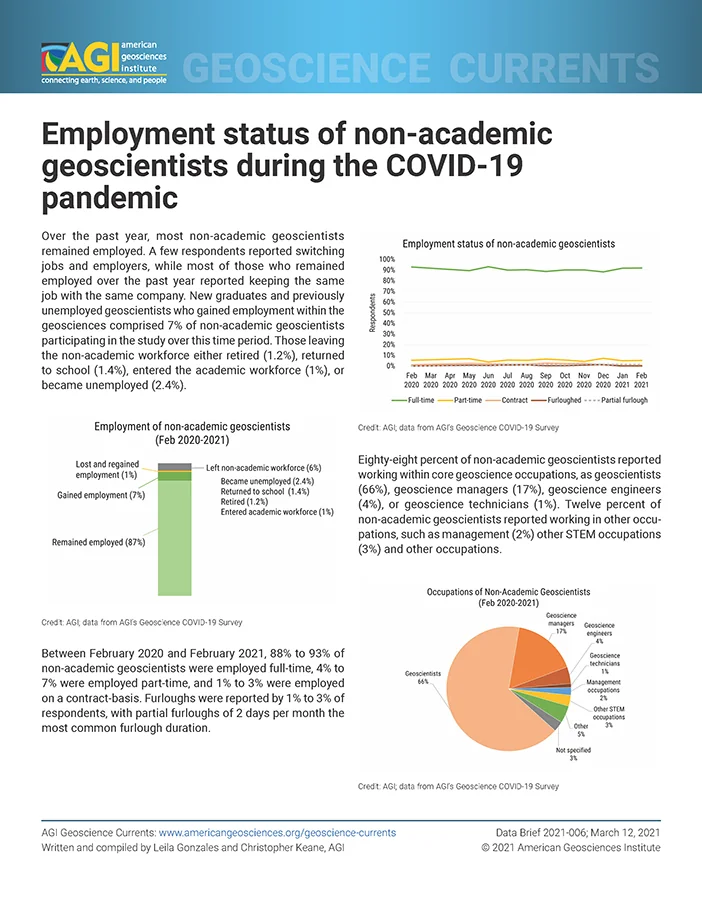
Employment status of non-academic geoscientists during the COVID-19 pandemic

Over the past year, most non-academic geoscientists remained employed keeping the same job with the same company, with a few switching jobs and employers. Approximatley 4% left the non-academic workforce to retire, return to school, or to enter the academic workforce, while just over 2% became unemployed. For non-academic geoscientists, workplace safety continues to be the top concern, with increasing concerns around the academic rigor of higher education programs and availability of educational opportunities.

Profession Data
Brief 2021-02-19

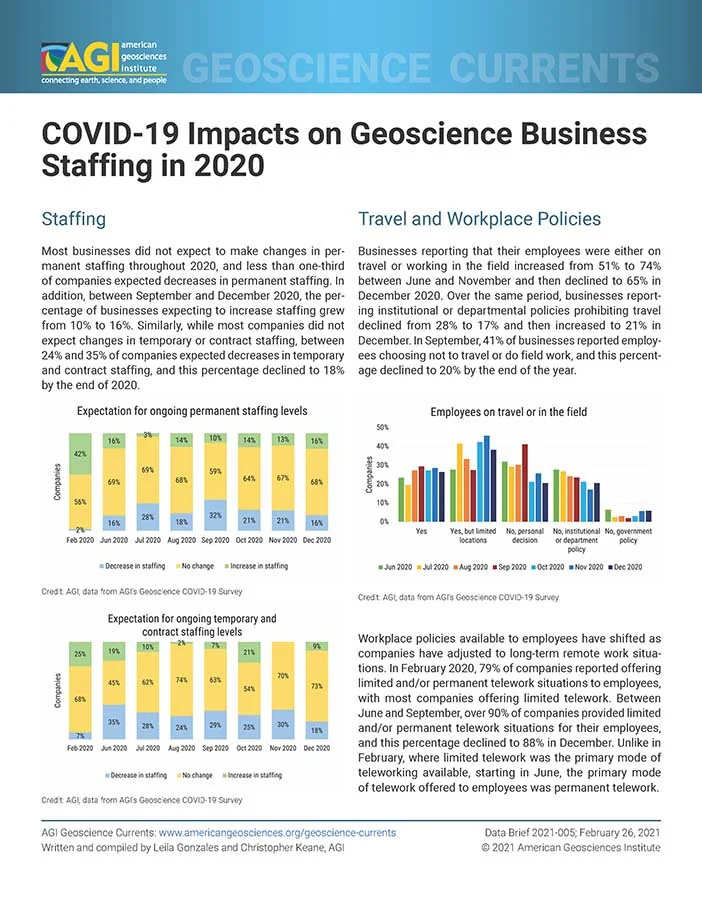
COVID-19 Impacts on Geoscience Business Staffing in 2020

Geoscience employers expected minimal changes in staffing levels in 2020. Travel and fieldwork increased over the year as restrictions eased. By the end of 2020, employers had also shifted to long-term remote work options for employees, and had also noted the benefits of remote work including increased efficiency and improved employee morale. However, employers also noted challenges related to communication, specifically the lack of in-person communication, and issues related to hiring qualified talent.

Profession Data
Brief 2021-02-12

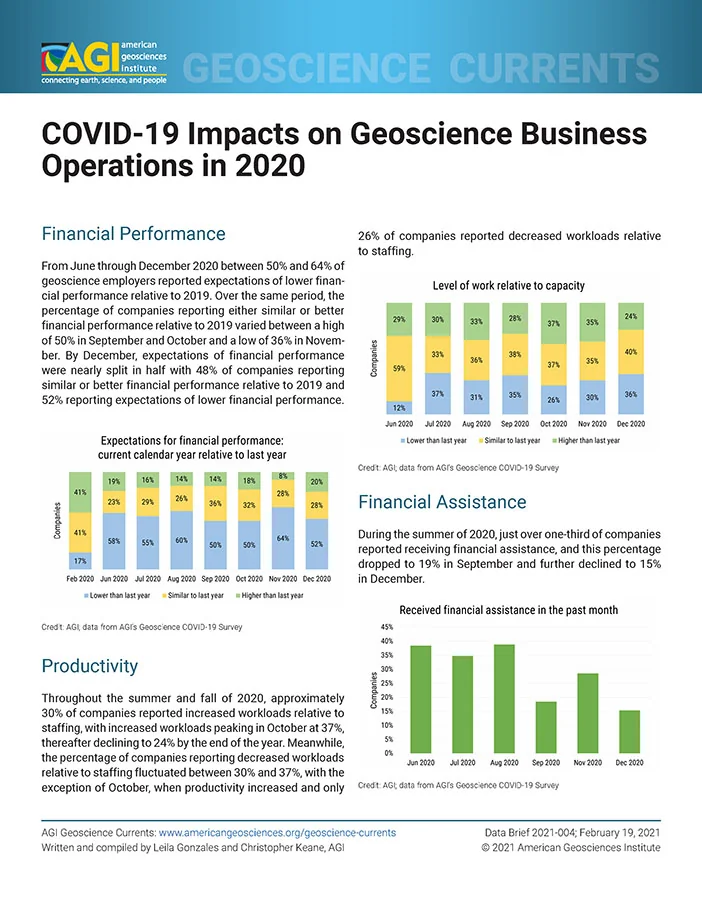
COVID-19 Impacts on Geoscience Business Operations in 2020

Between June and December 2020, geoscience employers reported varying expectations for financial performance, with nearly half expecting lower performance and only 48% reporting similar or better performance by the end of the year. The pandemic had a significant impact on business operations, with regulatory restrictions, supply chain disruptions, and staffing issues being common challenges. Despite these challenges, many businesses continued to invest in remote work technologies and health and safety protocols, and few reported new opportunities for research or changes in project focus due to the pandemic.

Profession Data
Brief 2021-02-05

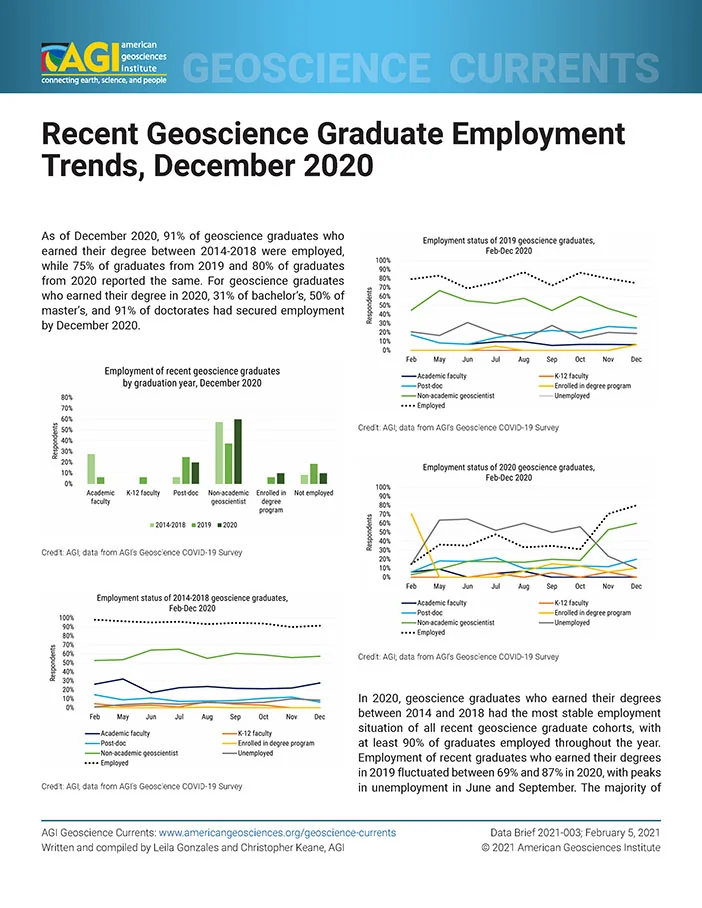
Recent Geoscience Graduate Employment Trends, December 2020

As of December 2020, employment rates for recent geoscience graduates varied by degree level: 31% for bachelor's, 50% for master's, and 91% for doctorates. Graduates from 2014–2018 maintained over 90% employment throughout 2020, indicating stability in the job market for experienced individuals. In contrast, 2019 graduates experienced employment fluctuations between 69% and 87%, with peaks in unemployment during June and September. Notably, only 2% of employed recent geoscience graduates reported job loss since February 2020, suggesting relative employment stability during the early months of the COVID-19 pandemic.

Profession Data
Brief 2021-01-29

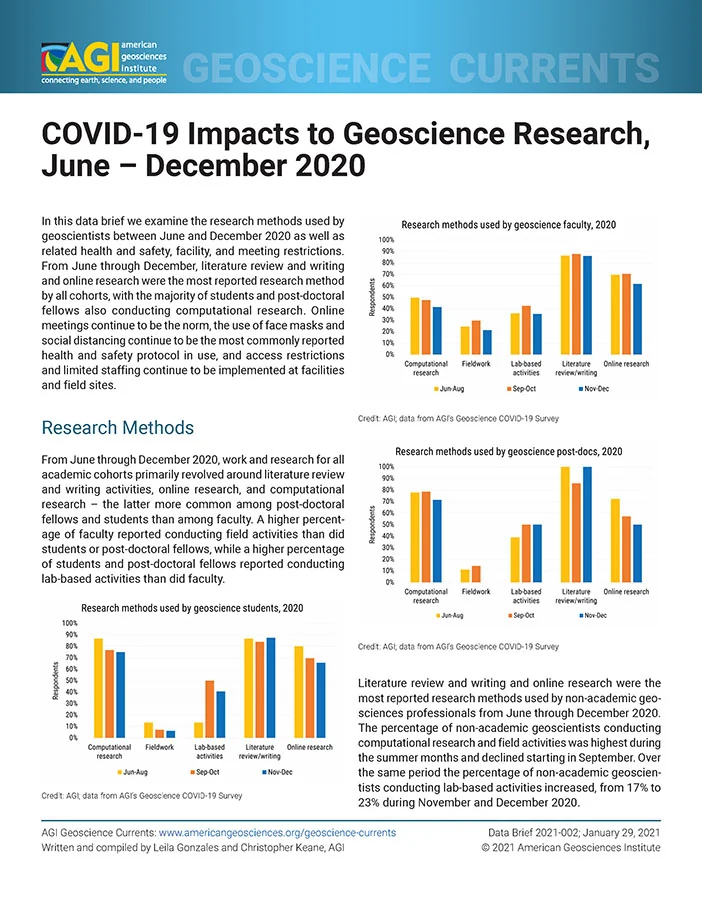
COVID-19 Impacts to Geoscience Research, June - December 2020

Between June and December 2020, geoscientists primarily conducted research using literature review, writing, online research, and computational research, with varying levels of field and lab-based activities across different cohorts. Health and safety restrictions, including wearing face masks and social distancing, remained common, while facility access and travel were also impacted by COVID-19 protocols.

Profession Data
Brief 2021-01-08

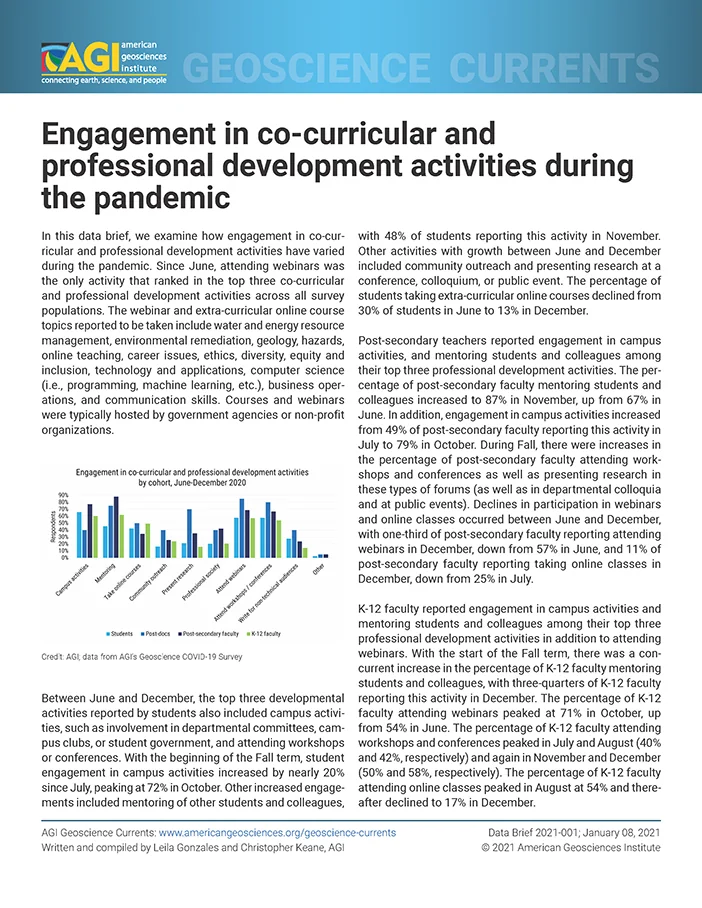
Engagement in co-curricular and professional development activities during the pandemic

Between June and December 2020, attending webinars ranked among the top three professional development activities across all groups surveyed. Other key activities included mentoring students and colleagues, participating in campus activities (e.g., committees, clubs, or student government), and attending workshops or conferences. Non-academic geoscientists, retired geoscientists, and unemployed geoscientists also highlighted mentoring and additional activities such as volunteering or taking online classes.

Profession Data
Brief 2020-12-28

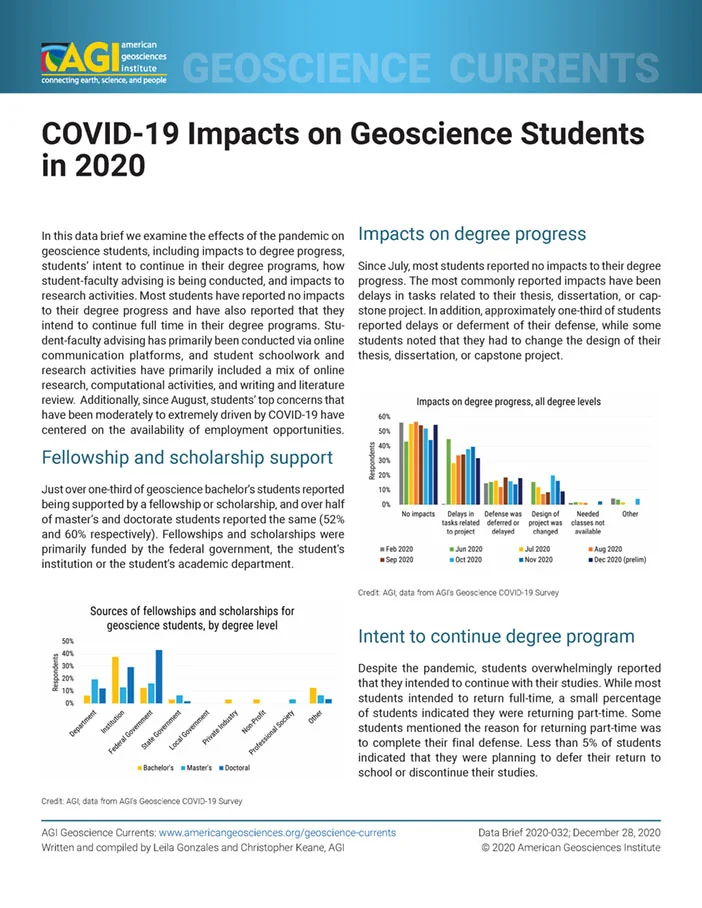
COVID-19 Impacts on Geoscience Students in 2020

Geoscience students reported no significant impacts on their degree progress, intent to continue in their programs, or student-faculty advising during the pandemic. However, they did face challenges such as restrictions in facility access and technology issues with virtual platforms. The top concerns of geoscience students since August have been the availability of employment opportunities and academic rigor, with a growing percentage expressing these concerns.

Profession Data
Brief 2020-12-11

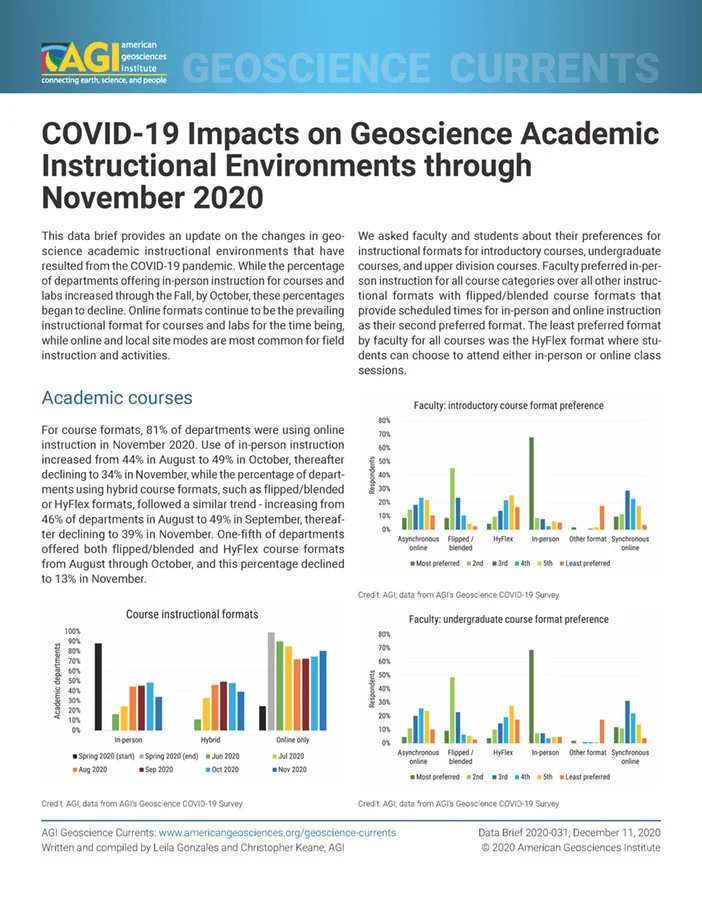
COVID-19 Impacts on Geoscience Academic Instructional Environments through November 2020

The COVID-19 pandemic has led to changes in geoscience academic instructional environments, with online formats becoming the prevailing method for courses and labs, while field instruction and activities have shifted towards local field experiences. Faculty and students have expressed mixed views on their productivity levels and challenges with remote learning, with faculty citing issues such as work-life balance and institutional support, while students struggled with staying focused and motivated.

Profession Data
Brief 2020-12-04

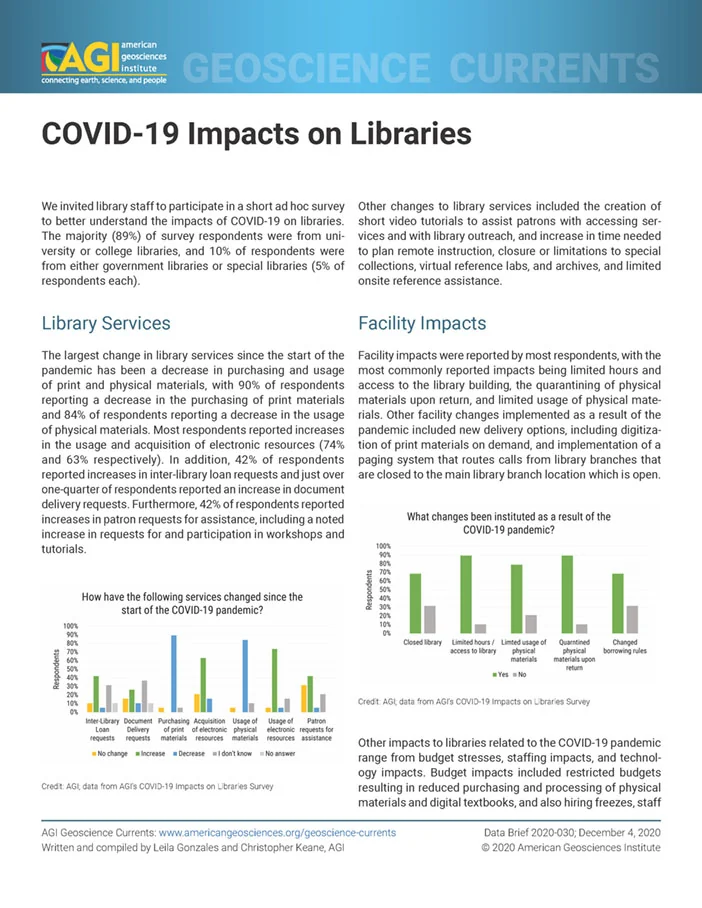
COVID-19 Impacts on Libraries

The COVID-19 pandemic has had significant impacts on libraries, including a decrease in print and physical materials usage, an increase in electronic resources acquisition, and facility changes such as limited hours and access. Budget stresses, staffing issues, and technology challenges have also been reported, with many staff members having to adapt to working from home and assume different roles. Overall, the pandemic has required libraries to make significant adjustments to their services and operations.

Profession Data
Brief 2020-11-27

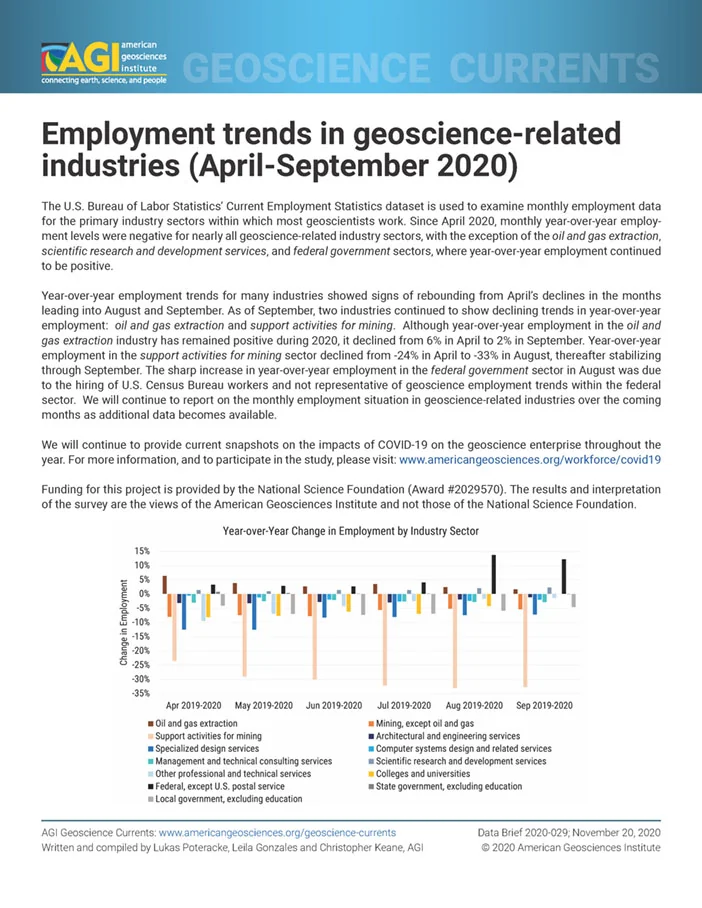
Employment trends in geoscience-related industries (April-September 2020)

Since April 2020, monthly year-over-year employment levels were negative for nearly all geoscience-related industry sectors, with the exception of the oil and gas extraction, scientific research and development services, and federal government sectors, where year-over-year employment continued to be positive. Year-over-year employment trends for many industries showed signs of rebounding from April's declines in the months leading into August and September.

Profession Data
Brief 2020-11-13

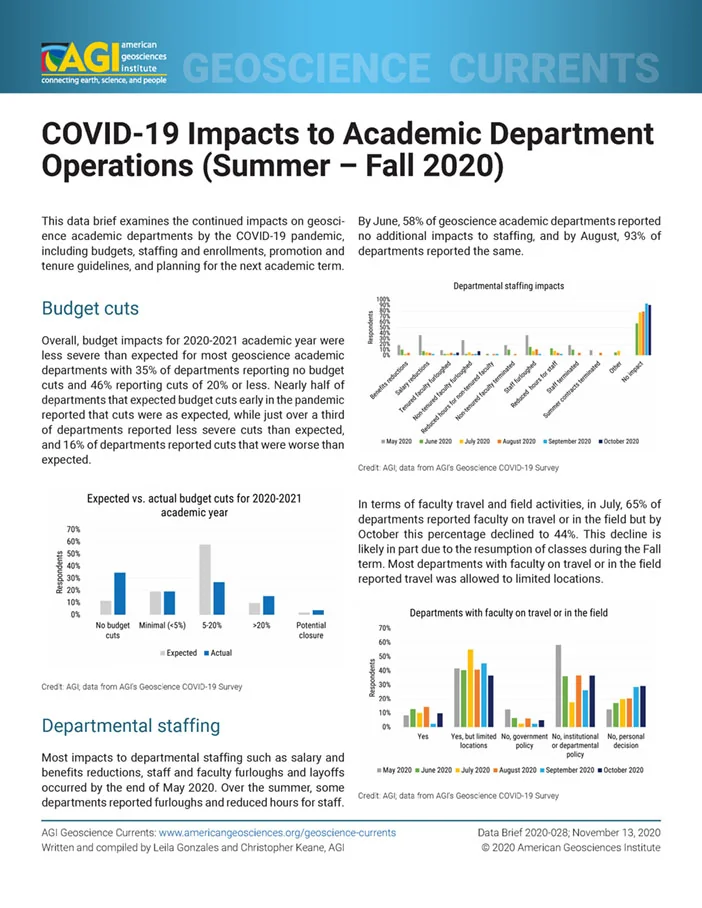
COVID-19 Impacts to Academic Department Operations (Summer - Fall 2020)

During the 2020-2021 academic year, geoscience departments experienced less severe budget impacts than anticipated, with most staffing reductions occurring by May 2020 and stabilizing by August. Departments adjusted tenure and promotion guidelines, often extending promotion clocks, while enrollments in introductory courses and majors remained stable or increased. Planning for the next term emphasized hybrid instructional formats, with concerns shifting from workplace safety to financial stability and adapting to new teaching methods.

Profession Data
Brief 2020-11-06

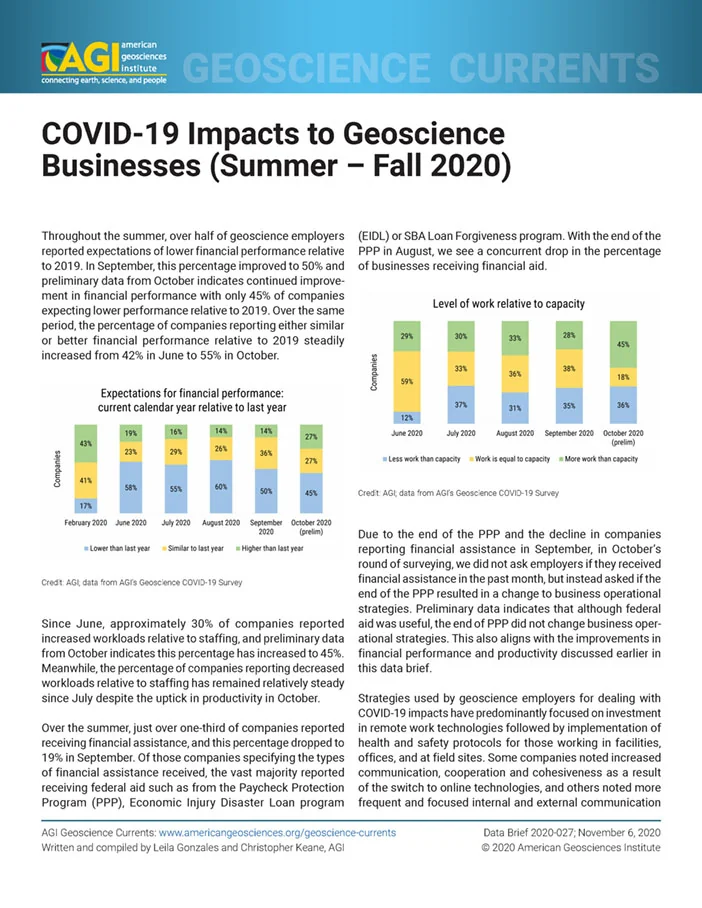
COVID-19 Impacts to Geoscience Businesses (Summer – Fall 2020)

Geoscience employers reported gradual improvements in financial performance from summer to October 2021, with fewer companies expecting lower performance compared to 2019. Remote work technologies and health protocols were widely adopted, and some companies noted improved communication and potential shifts toward permanent telework. Job openings at companies have increased, while challenges such as budgetary restrictions, lack of qualified candidates, and difficulties with remote interviewing persisted, prompting employers to prioritize adaptability, technical proficiency, and independent work skills in new hires.

Profession Data
Brief 2020-10-30

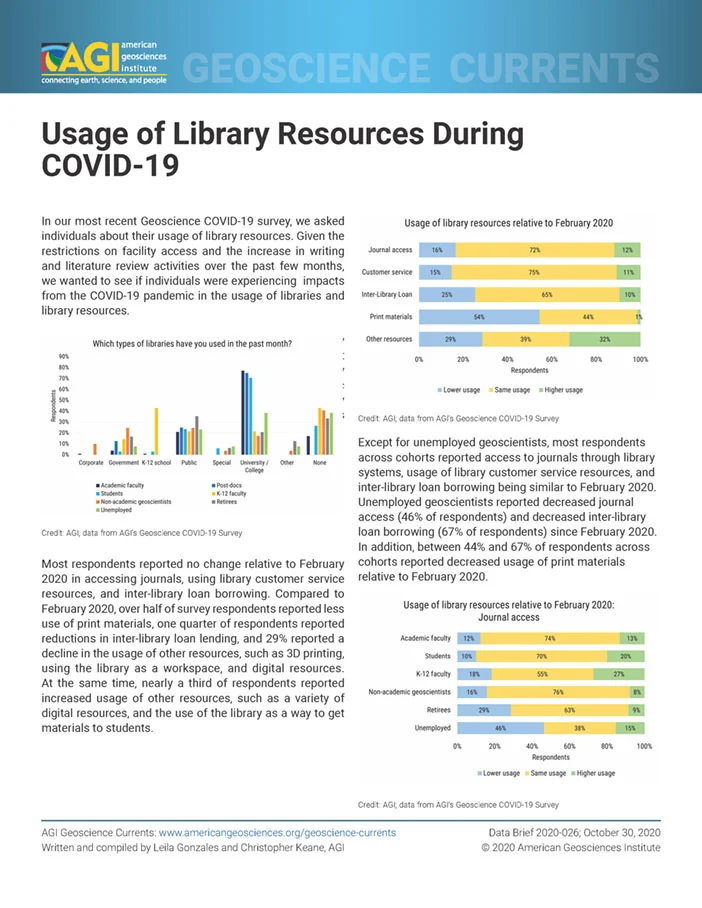
Usage of Library Resources During COVID-19

The COVID-19 pandemic has changed the way in which geoscientists use library resources. Access to journals, library customer service resources, and inter-library loan borrowing remained largely unchanged for most respondents, yet compared to February 2020, over half of respondents reported decreased use of print materials. In addition, nearly a third noted increased utilization of digital resources and online collections as well asl other resources such as 3D printing, using the library as a workspace, and digital resources.

Profession Data
Brief 2020-10-26

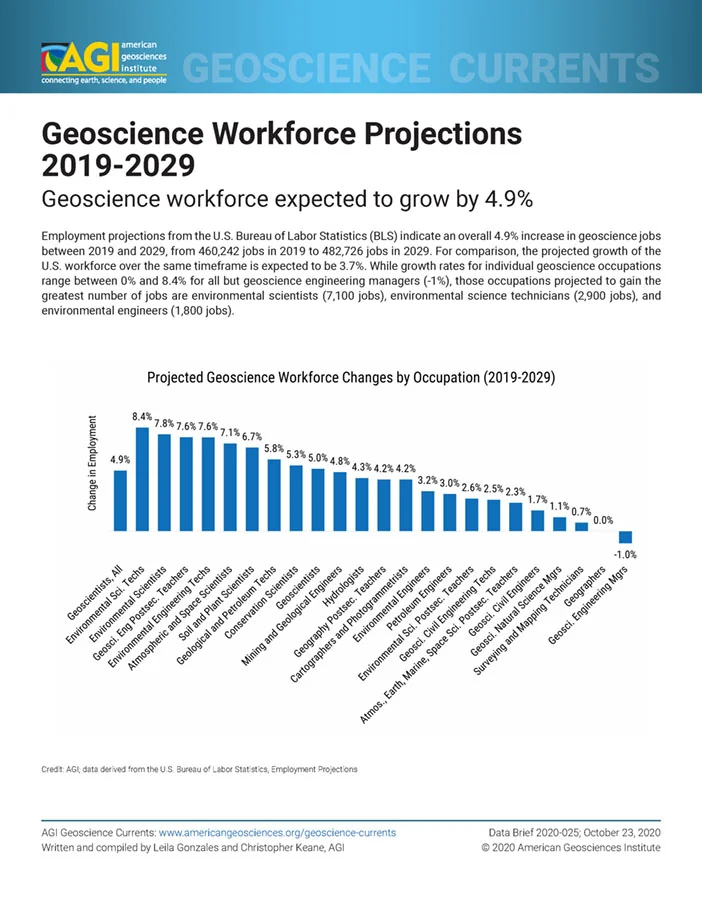
Geoscience Workforce Projections 2019-2029

The geoscience workforce is projected to grow by 4.9% between 2019 and 2029, with an increase in jobs across various sectors, including environmental science, engineering, and technical services. However, the industry will face a significant workforce deficit of approximately 130,000 full-time equivalent geoscientists by 2029 due to retirements and insufficient new graduates. To address this gap, innovative technologies such as artificial intelligence and machine learning are expected to play a key role in increasing workplace efficiencies.

Profession Data
Brief 2020-10-23

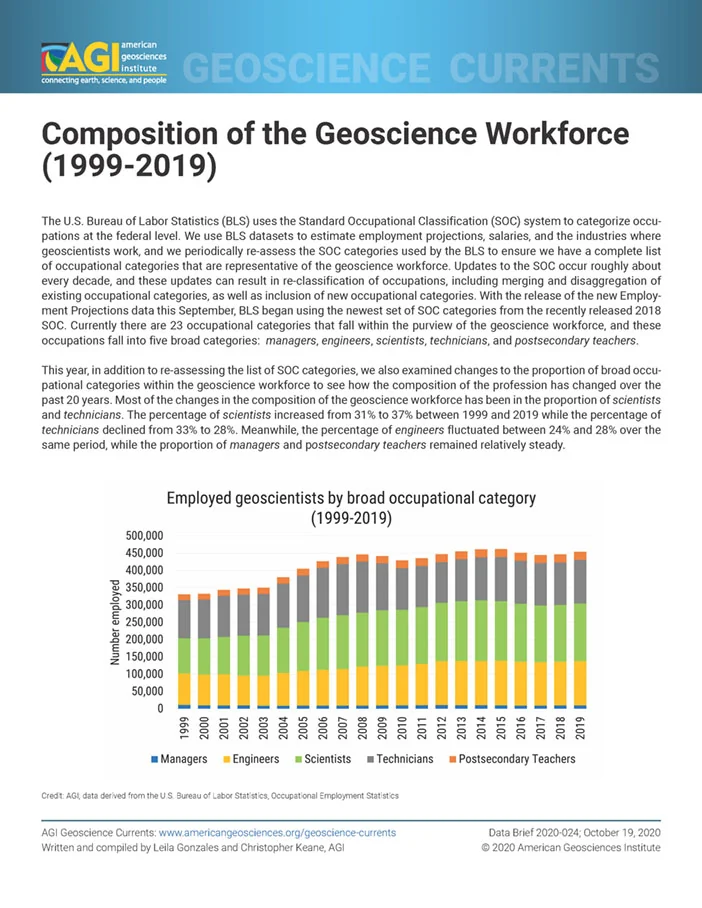
Composition of the Geoscience Workforce (1999-2019)

Most of the changes in the composition of the geoscience workforce over the past 20 years has been in the proportion of scientists and technicians. The percentage of scientists increased, the percentage of technicians declined, and the percentage of engineers, managers and postsecondary teachers remained relatively steady.

Profession Data
Brief 2020-10-19

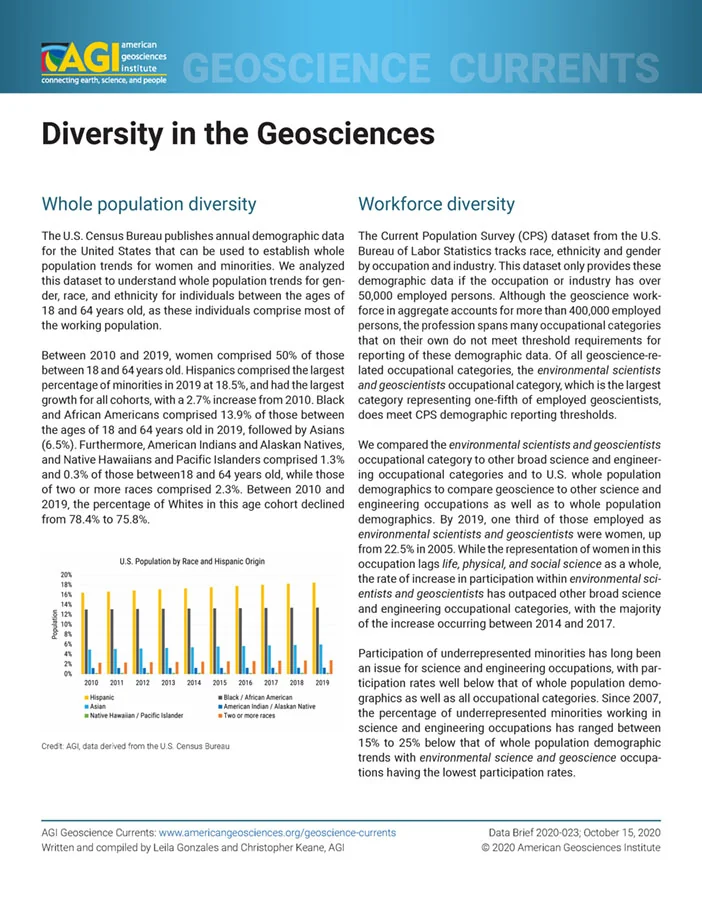
Diversity in the Geosciences

This data brief discusses the participation, recruitment, retention, and career outcomes of women and minorities in the geosciences. Despite efforts to increase diversity, there are still significant disparities in workforce retention rates, with women and minorities underrepresented in core geoscience occupations, thus highlighting the need for targeted strategies to address these issues and improve the career prospects of geoscience graduates from diverse backgrounds.
Profession Data
Brief 2020-10-09

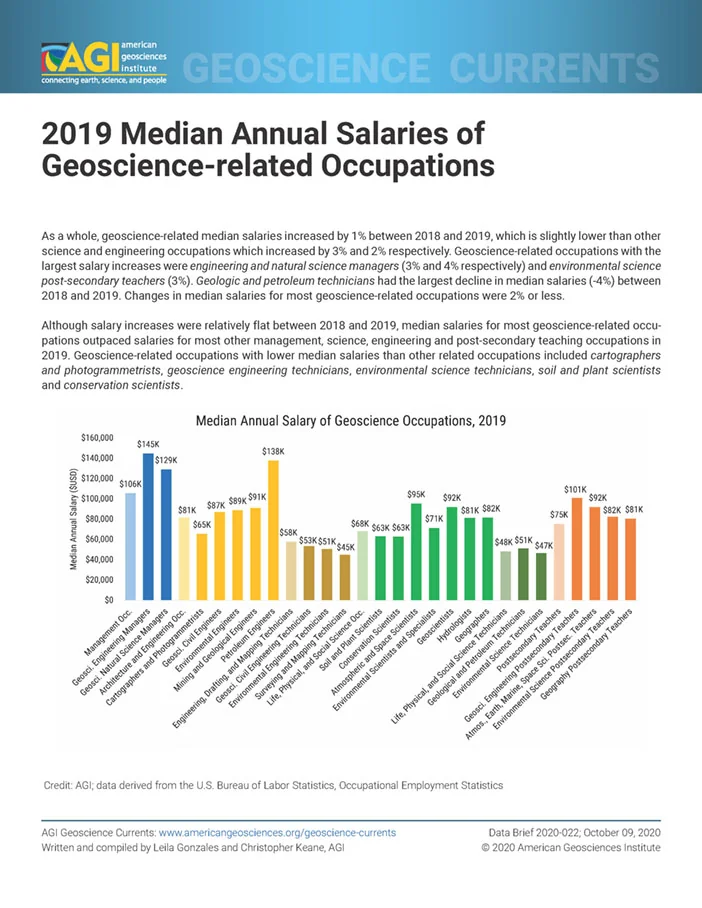
2019 Median Annual Salaries of Geoscience-related Occupations

As a whole, geoscience-related median salaries increased by 1% between 2018 and 2019, which is slightly lower than other science and engineering occupations which increased by 3% and 2% respectively. Although salary increases were relatively flat between 2018 and 2019, median salaries for most geoscience-related occupations outpaced salaries for most other management, science, engineering and post-secondary teaching occupations in 2019.
Profession Data
Brief 2020-09-30

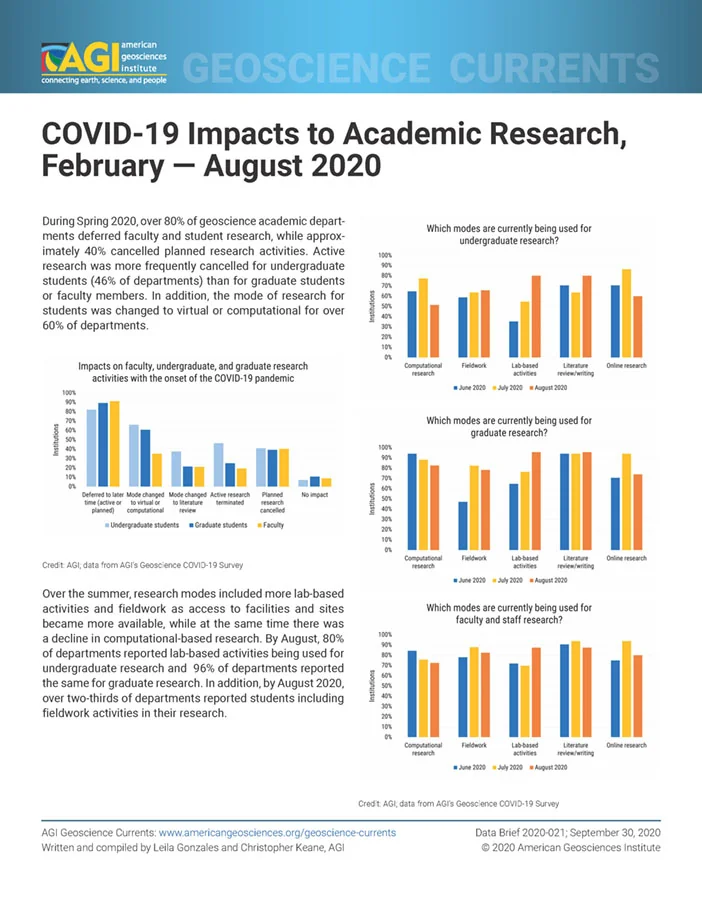
COVID-19 Impacts to Academic Research, February - August 2020

The COVID-19 pandemic had a significant impact on geoscience academic departments, with over 80% deferring faculty and student research in Spring 2020. Over the summer, research modes included more lab-based activities and fieldwork as access to facilities and sites became more available, while at the same time there was a decline in computational-based research. As institutions began to re-open, new health and safety protocols were instituted, including mask mandates, social distancing, and restrictions on personnel access.

Profession Data
Brief 2020-09-25

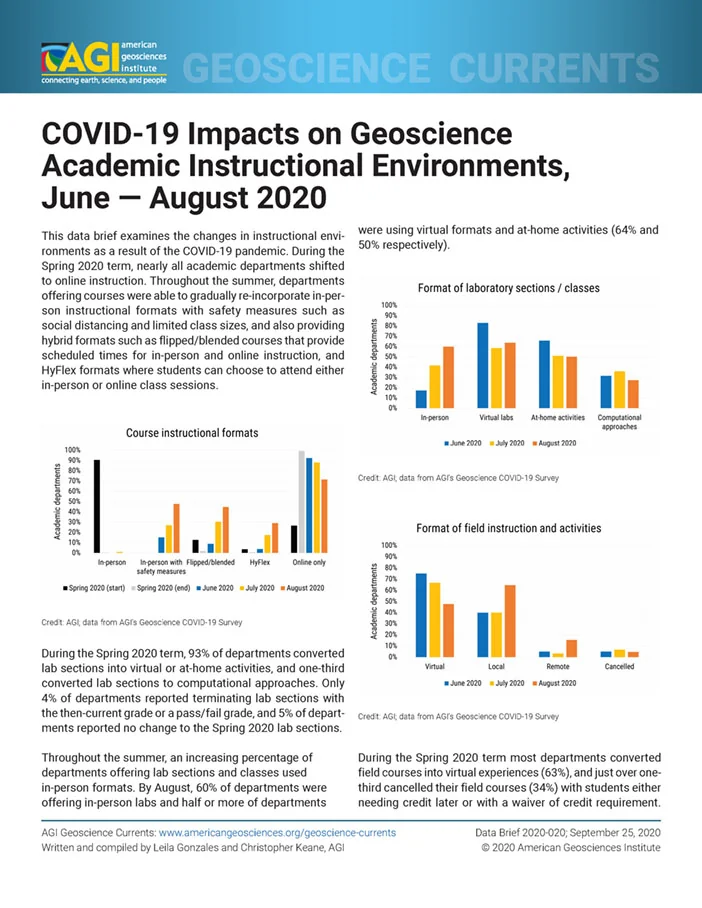
COVID-19 Impacts on Geoscience Academic Instructional Environments, June — August 2020

The COVID-19 pandemic led to significant changes in instructional environments across academic departments, with many shifting to online instruction and incorporating safety measures such as social distancing and limited class sizes. By the summer, an increasing percentage of departments were using in-person formats for labs and field courses, with some adopting local field experiences that included self-guided investigations and small group instruction.

Profession Data
Brief 2020-09-08

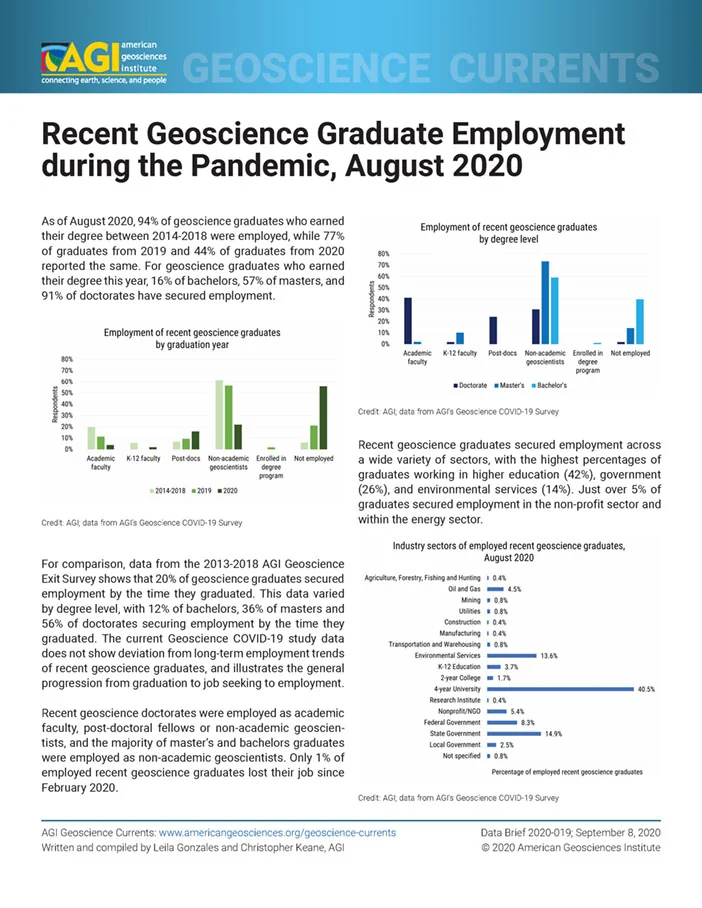
Recent Geoscience Graduate Employment during the Pandemic, August 2020

As of August 2020, employment rates for recent geoscience graduates varied significantly, with 44% of 2020 graduates employed compared to 77% for 2019 graduates and 94% for 2014–2018 graduates. Employment stability was notable, with only 1% of employed graduates reporting job loss during the early months of the COVID-19 pandemic. However, unemployment rates were highest for 2020 graduates, particularly for bachelor's degree holders, with many actively seeking geoscience positions or exploring opportunities outside the field.

Profession Data
Brief 2020-09-04

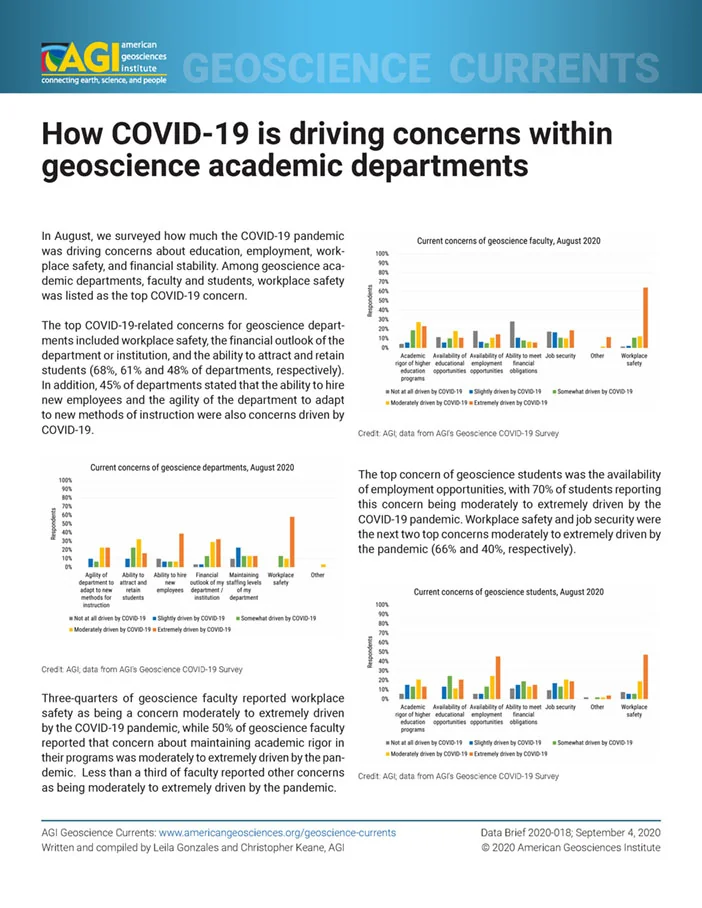
How COVID-19 is driving concerns within geoscience academic departments

The COVID-19 pandemic has raised significant concerns within geoscience academic departments, particularly around workplace safety, financial stability, and student recruitment and retention. A 2020 survey revealed that 68% of departments were concerned about safety, 61% about finances, and nearly half about attracting and retaining students, while faculty and students also expressed worries about job security and academic rigor.

Profession Data
Brief 2020-08-28

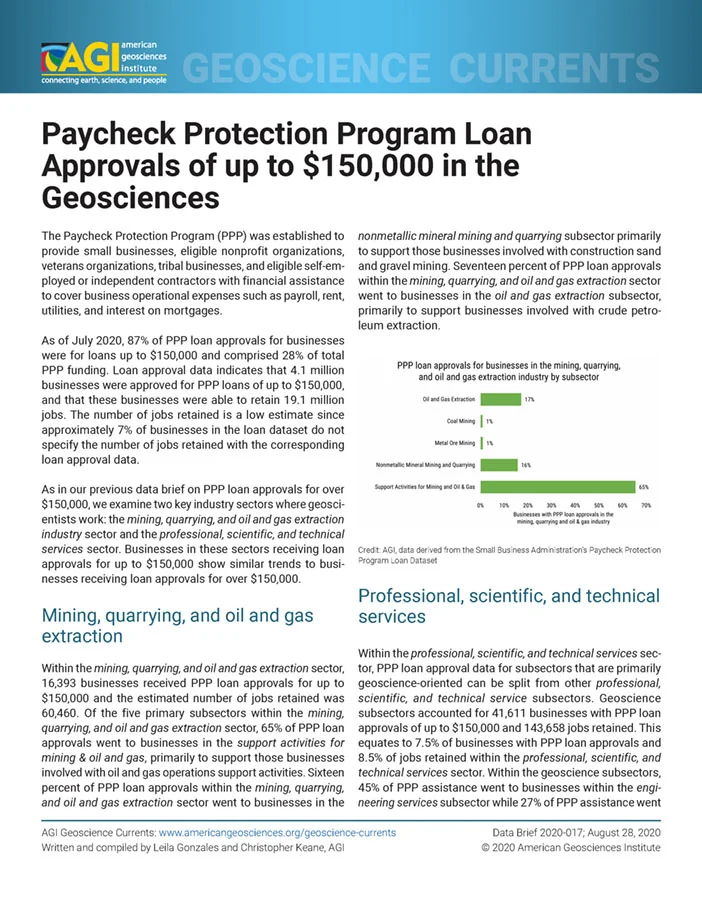
Paycheck Protection Program Loan Approvals of up to $150,000 in the Geosciences

As of July 2020, 87% of Paycheck Protection Program (PPP) loan approvals for businesses were for loans up to $150,000 and comprised 28% of total PPP funding which was distributed to 4.1 million businesses enabling them to retain 19.1 million jobs. Within the mining, quarrying, and oil and gas extraction sector, 16,393 businesses received PPP loan approvals for up to $150,000 and the estimated number of jobs retained was 60,460. Within the professional, scientific, and technical services sector, PPP loan approval data for geoscience subsectors accounted for 41,611 businesses with PPP loan approvals of up to $150,000 and 143,658 jobs retained.

Profession Data
Brief 2020-08-21

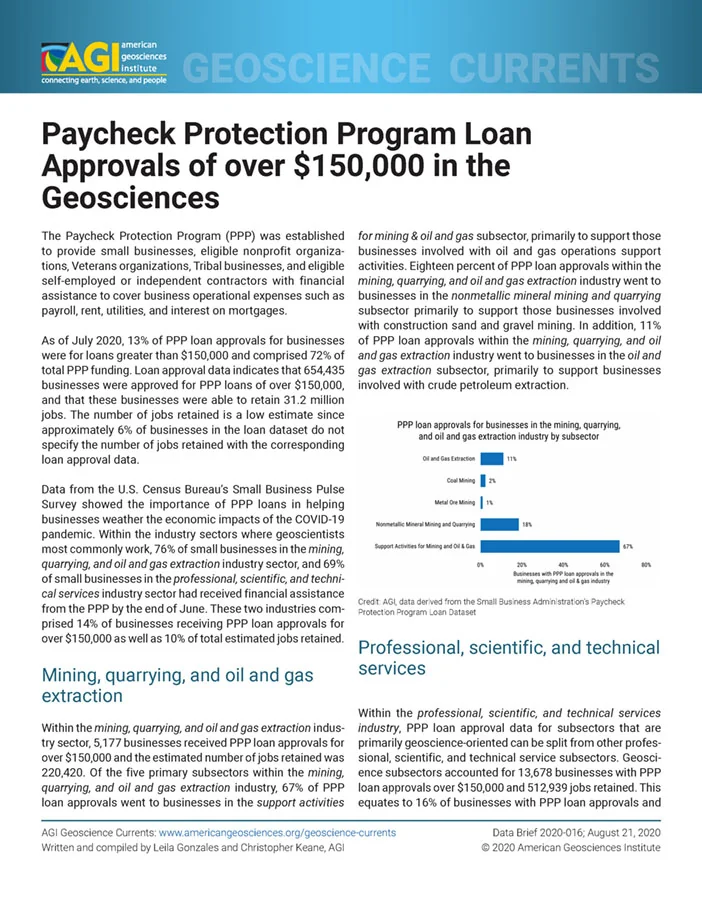
Paycheck Protection Program Loan Approvals of over $150,000 in the Geosciences

The Paycheck Protection Program (PPP) provided essential financial support during the COVID-19 pandemic, with loans over $150,000 accounting for 72% of total funding and supporting 31.2 million jobs across 654,435 businesses. Among industries where geoscientists commonly work, 76% of small businesses in mining, quarrying, and oil and gas extraction, and 69% in professional, scientific, and technical services received PPP assistance by June 2020. These two sectors accounted for 14% of businesses receiving large loans and 10% of the total jobs retained through the program.

Profession Data
Brief 2020-08-14

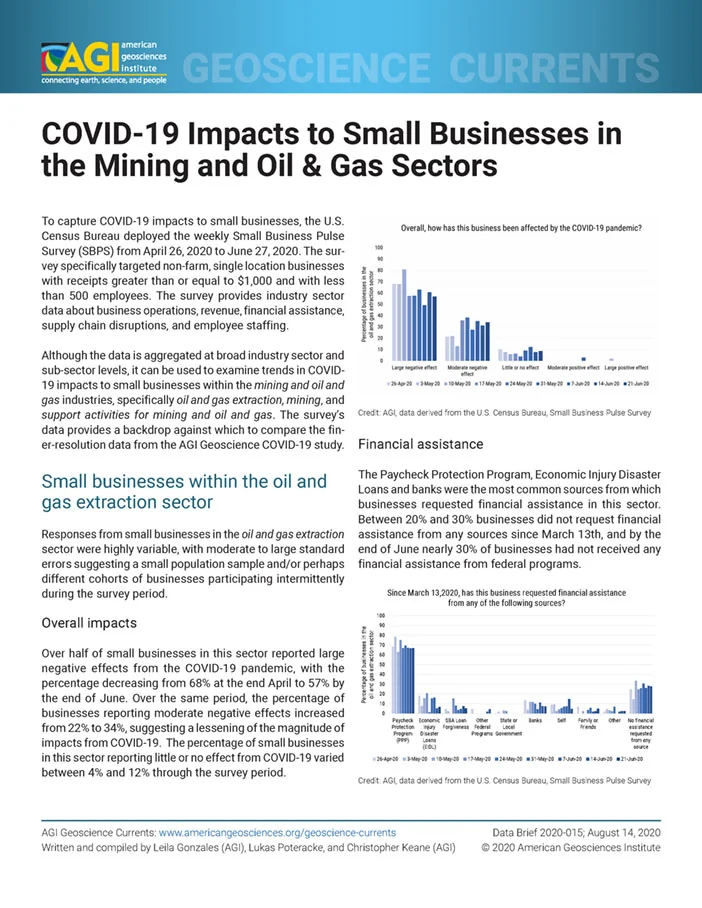
COVID-19 Impacts to Small Businesses in the Mining and Oil & Gas Sectors

The U.S. Census Bureau conducted a Small Business Pulse Survey (SBPS) from April to June 2020 to capture COVID-19 impacts on small businesses, particularly in the mining and oil and gas industries. The survey found that over half of small businesses in these sectors reported large negative effects from the pandemic, with declines in operating revenues, cash on hand, and staffing, but also minimal interruptions to business operations. Overall, the survey provides valuable insights into the impacts of COVID-19 on small businesses in the geoscience enterprise.

Profession Data
Brief 2020-08-10

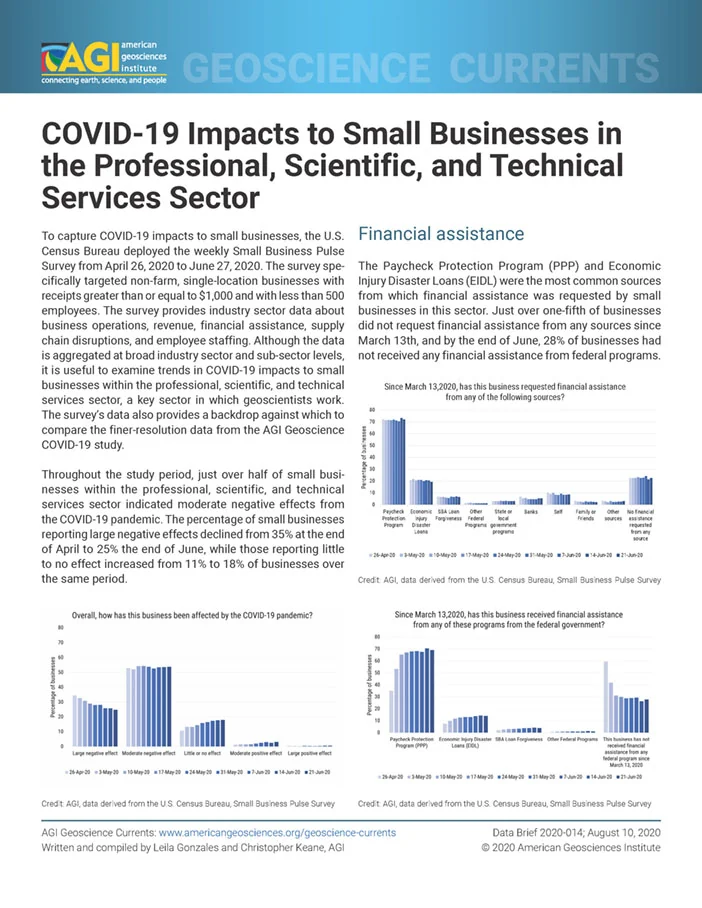
COVID-19 Impacts to Small Businesses in the Professional, Scientific, and Technical Services Sector

The U.S. Census Bureau conducted the Small Business Pulse Survey from April to June 2020, providing insights into the impacts of COVID-19 on small businesses in the professional, scientific, and technical services sector, including geoscience enterprises. The survey found that over half of these businesses experienced moderate negative effects, with declines in operating revenues and cash on hand reported by a significant majority. Despite disruptions to business operations, staffing remained strong, and most businesses did not miss loan payments or scheduled payments during the study period.

Profession Data
Brief 2020-08-05

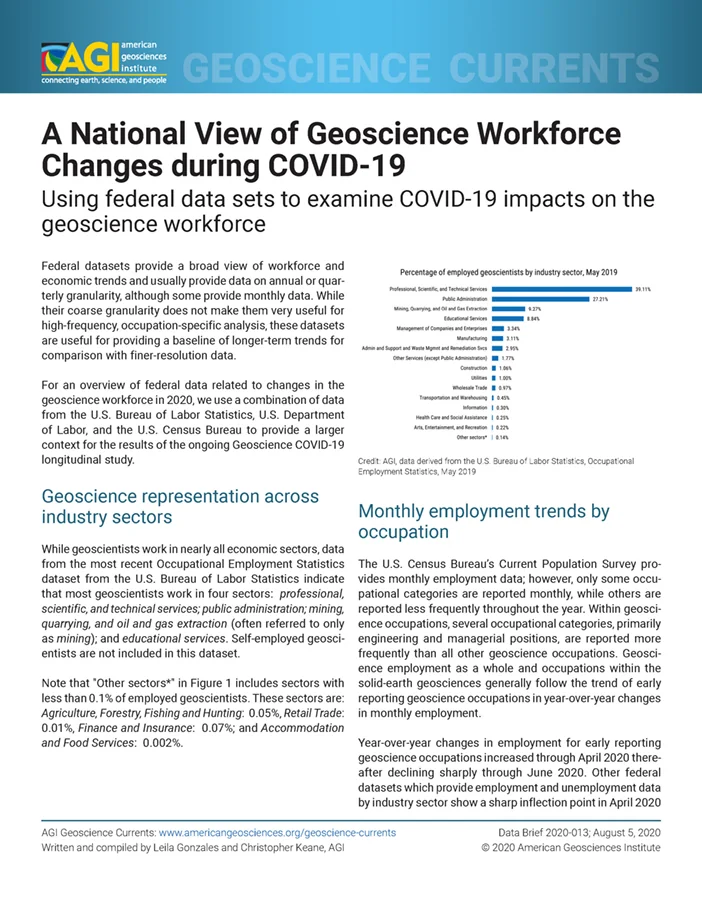
A National View of Geoscience Workforce Changes during COVID-19

The COVID-19 pandemic significantly impacted the U.S. geoscience workforce, with notable employment fluctuations observed in 2020. Year-over-year employment for geoscience occupations rose through April 2020 but declined sharply by June 2020. Despite this downturn, geoscience employment remained higher compared to 2019 levels. Unemployment insurance claims surged across various sectors in April 2020, and of the four sectors in which most geoscientists work, the educational services and mining sectors showed the largest year-over-year increases in unemployment claims during April and May 2020.

Profession Data
Brief 2020-07-31

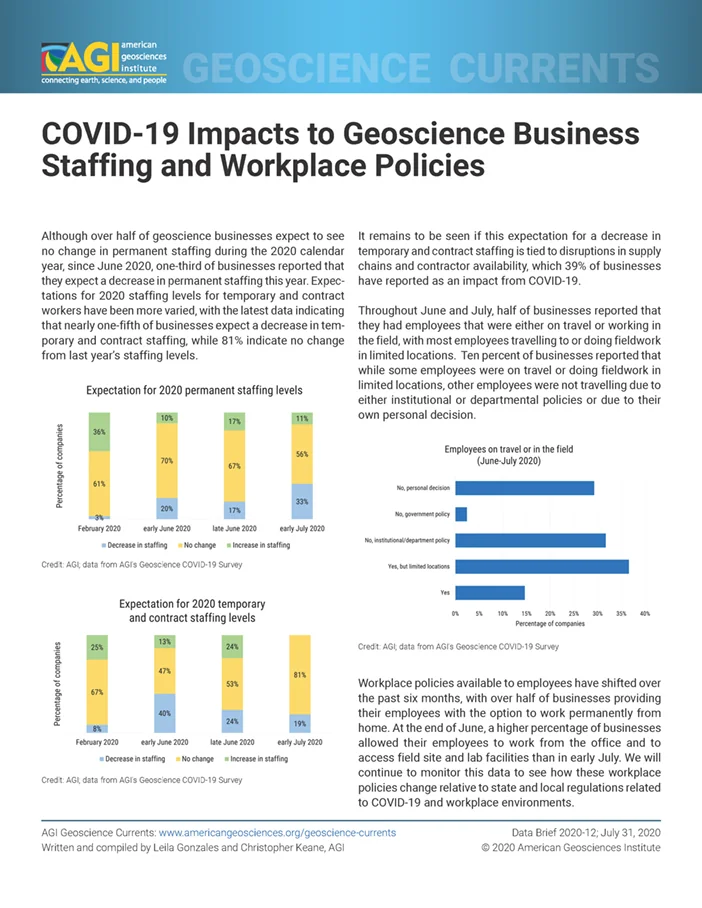
COVID-19 Impacts to Geoscience Business Staffing and Workplace Policies

Geoscience employers have seen mixed expectations for staffing levels, with some anticipating a decrease in temporary and contract workers. By the end of July, most employers reported that their employees were either travelling and/or conducting fieldwork. Many businesses also noted a shift to remote work options, with over half providing employees the option to work from home permanently.

Profession Data
Brief 2020-07-10

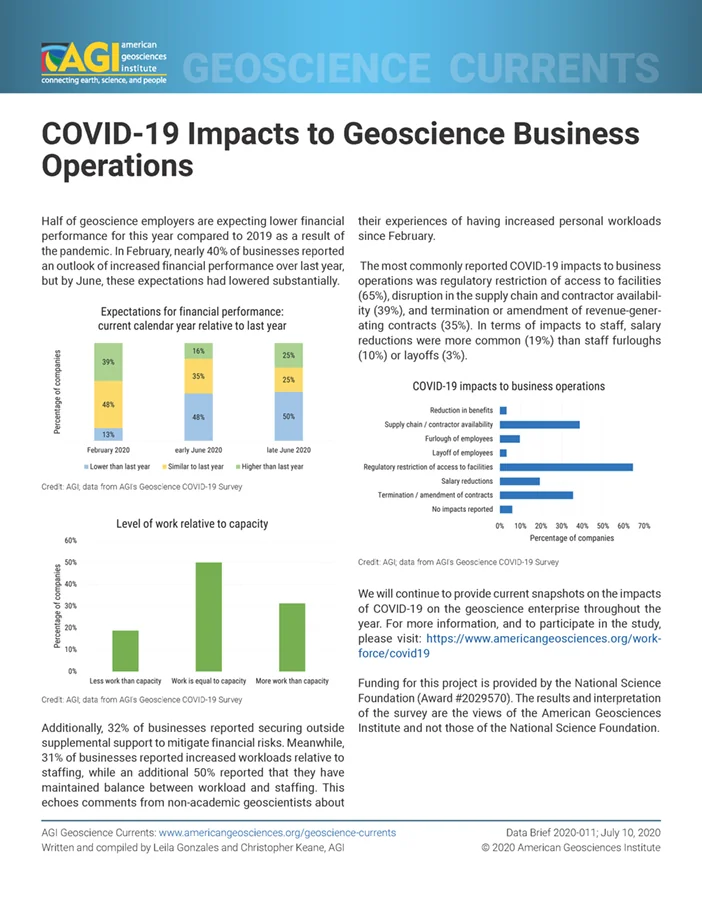
COVID-19 Impacts to Geoscience Business Operations

Geoscience employers face financial challenges due to the pandemic, with many adjusting staffing levels and securing outside support. Regulatory restrictions, supply chain disruptions, and contract terminations remain significant issues.

Profession Data
Brief 2020-07-03

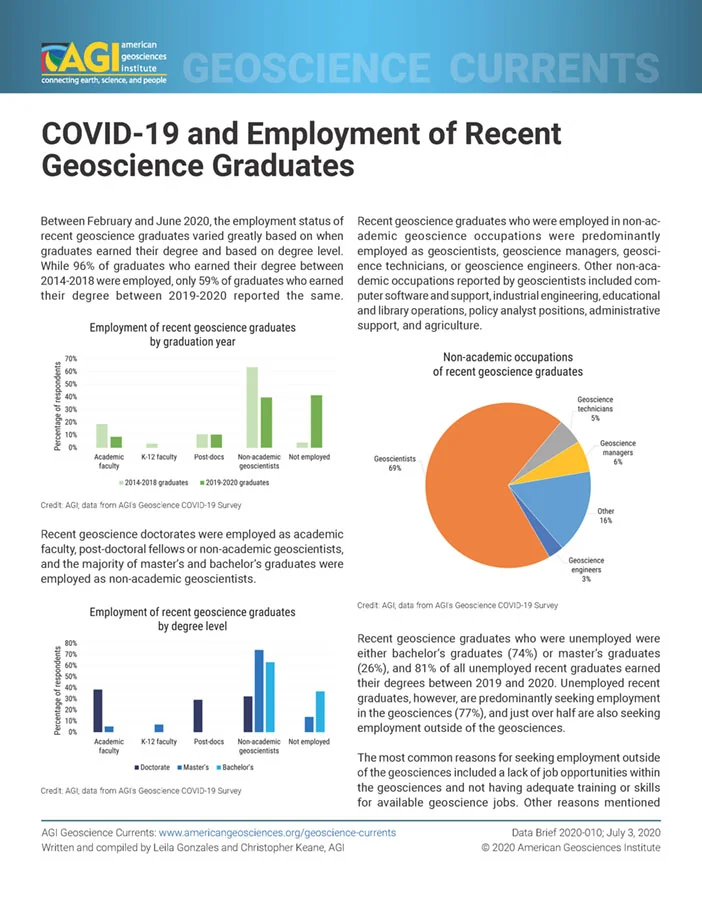
COVID-19 and Employment of Recent Geoscience Graduates

Between February and June 2020, the employment status of recent geoscience graduates varied greatly based on when graduates earned their degree and based on degree level. While most graduates who earned their degree between 2014-2018 were employed, just over half of graduates who earned their degree between 2019-2020 reported the same. Recent geoscience doctorates were employed as academic faculty, post-doctoral fellows or non-academic geoscientists, and the majority of master’s and bachelor’s graduates were employed as non-academic geoscientists.

Profession Data
Brief 2020-06-26

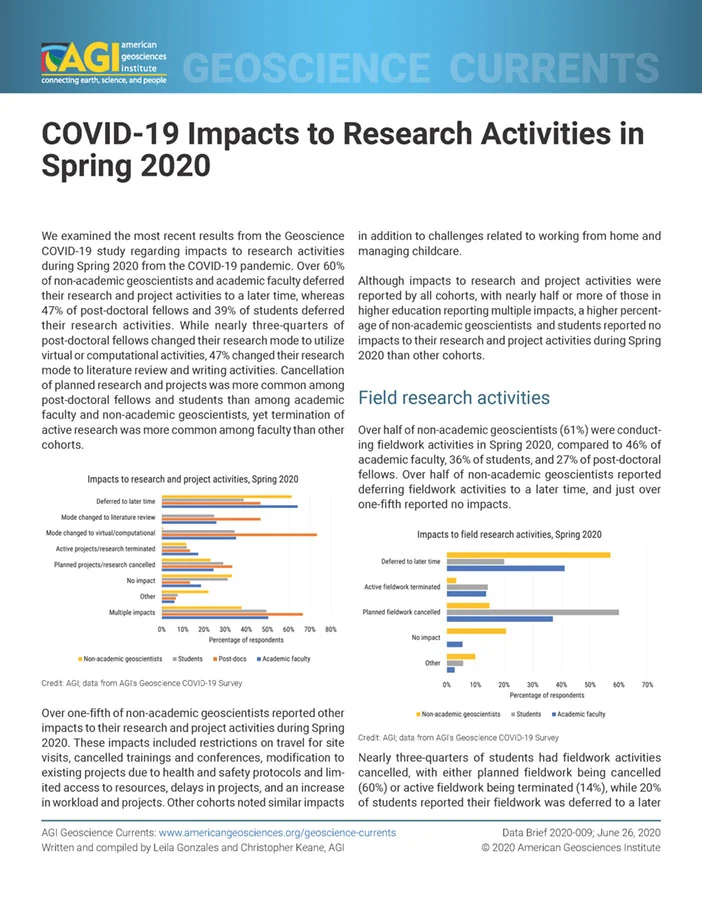
COVID-19 Impacts to Research Activities in Spring 2020

During Spring 2020, most non-academic geoscientists and academic faculty deferred their research and project activities to a later time, while cancellation of planned research and projects was more common among post-doctoral fellows and students. Most post-doctoral fellows changed their research mode to utilize virtual or computational activities, with many changing their focus to literature review and writing activities. Fieldwork activities were also affected, with nearly three-quarters of students having their fieldwork cancelled or terminated, while lab-based research activities were deferred by most respondents across all cohorts.

Profession Data
Brief 2020-06-19

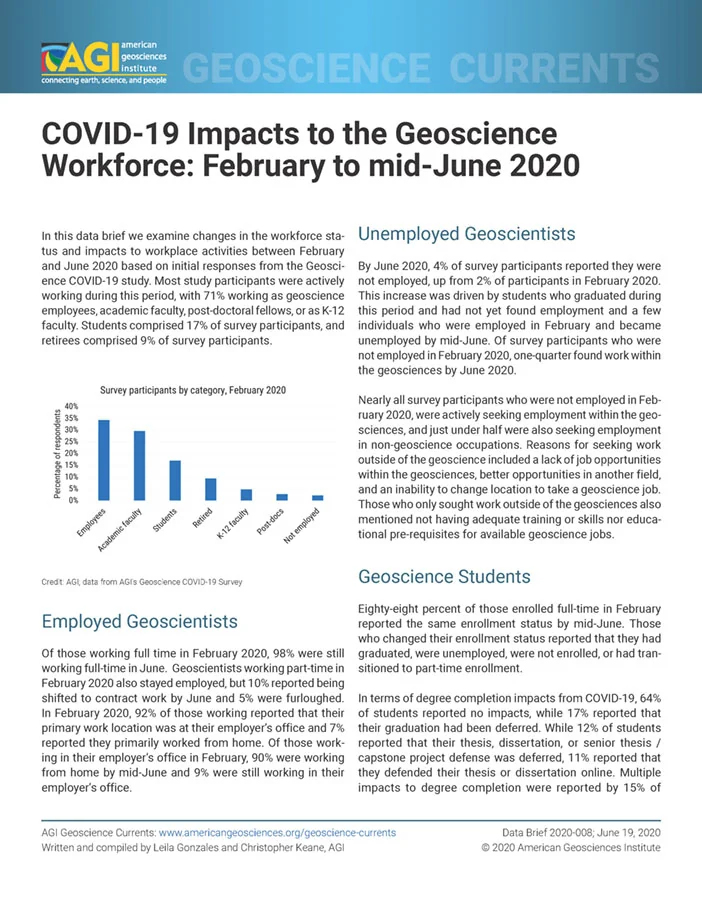
COVID-19 Impacts to the Geoscience Workforce: February to mid-June 2020

Most geoscience employees, students, and retirees remained employed or continued their education during the COVID-19 pandemic, with some experiencing changes in work arrangements or degree completion. The majority of unemployed individuals were actively seeking employment within the geosciences, while others sought opportunities outside of the field due to lack of training or skills.

Profession Data
Brief 2020-06-12

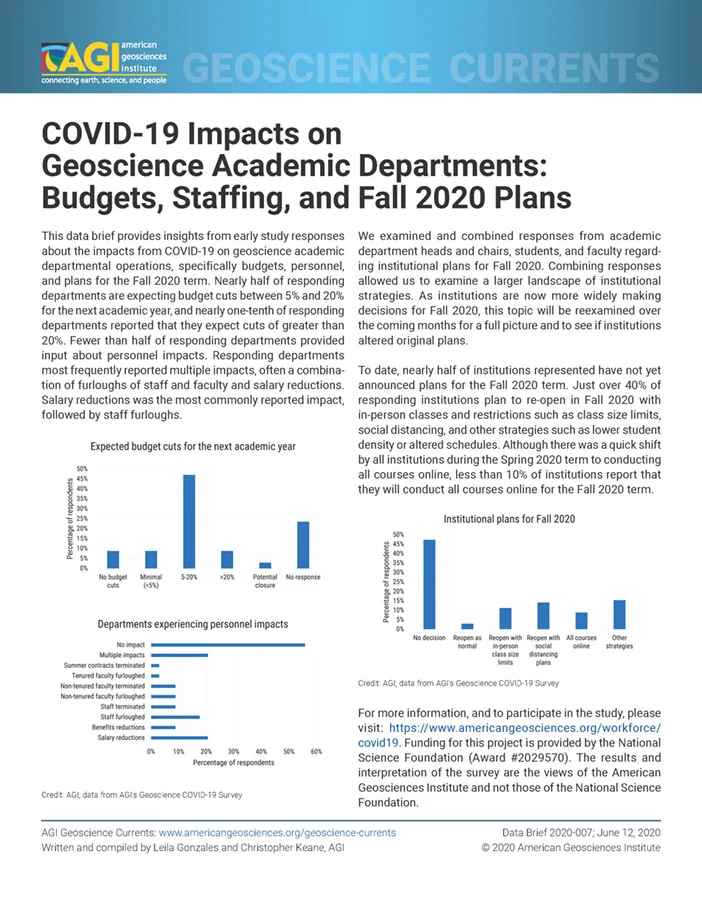
COVID-19 Impacts on Geoscience Academic Departments: Budgets, Staffing, and Fall 2020 Plans

Academic geoscience departments reported various impacts from COVID-19, with most reporting staffing and salary reductions and expectations of budget cuts for the next academic year. To date, nearly half of institutions represented have not yet announced plans for the Fall 2020 term, and just over 40% plan to re-open with in-person classes and restrictions such as class size limits, social distancing, and other strategies such as lower student density or altered schedules.

Profession Data
Brief 2020-06-05

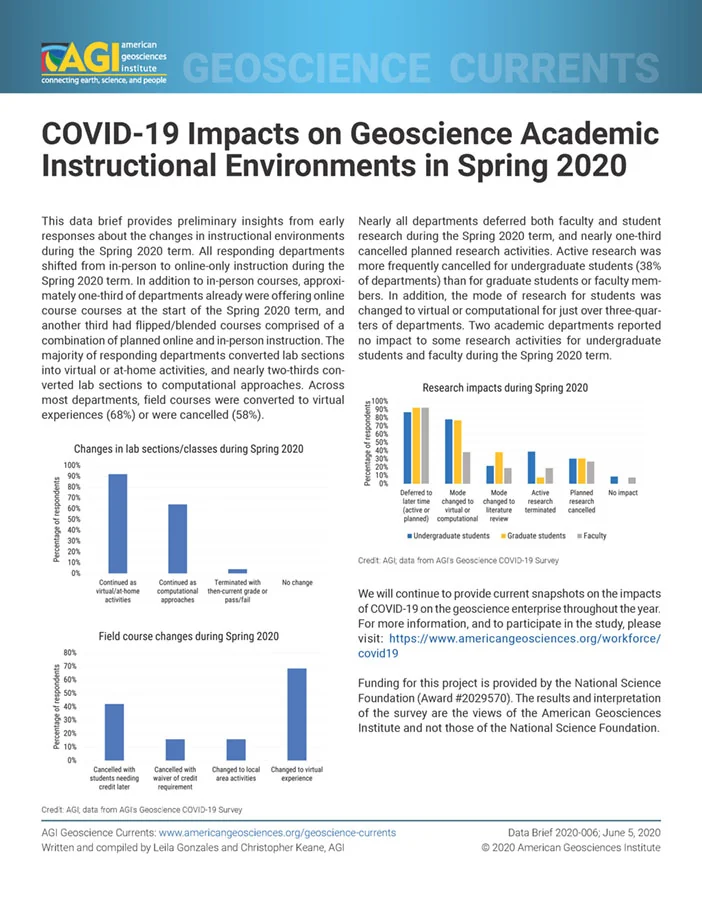
COVID-19 Impacts on Geoscience Academic Instructional Environments in Spring 2020

The Spring 2020 term saw significant changes in instructional environments across departments, with most shifting to online-only instruction and converting lab sections to virtual or computational approaches. Research activities were also impacted, with nearly all departments deferring research and many changing the mode of research to virtual or computational.

Profession Data
Brief 2020-05-05

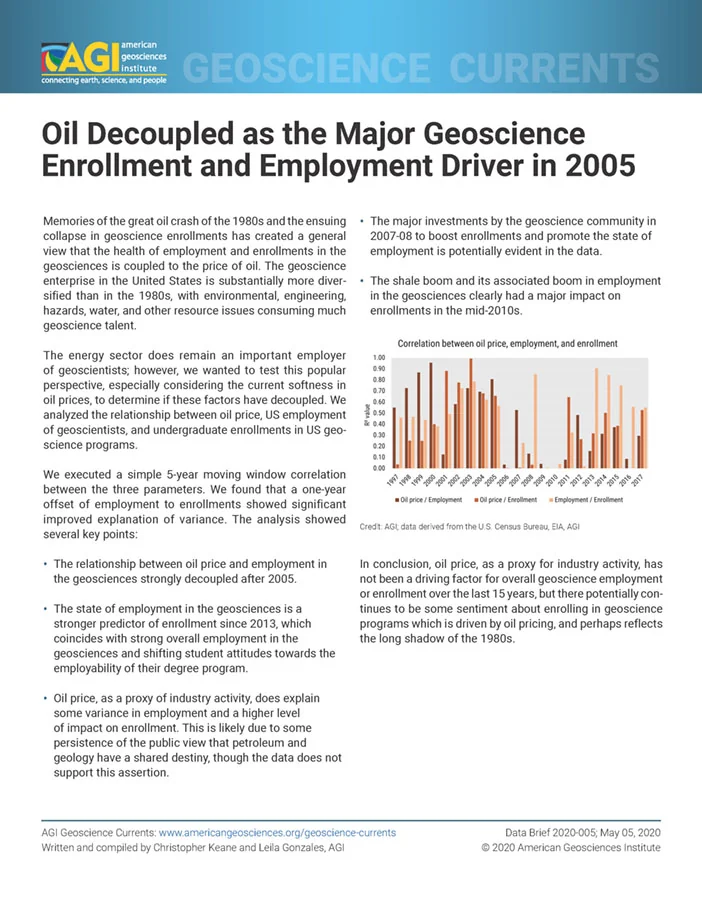
Oil Decoupled as the Major Geoscience Enrollment and Employment Driver in 2005

The relationship between oil price and employment in the geosciences has decoupled since 2005, with employment being a stronger predictor of enrollment since 2013. Oil price still explains some variance in employment and enrollment, but its impact is likely due to lingering public perceptions rather than actual industry activity. The shale boom had a significant impact on enrollments in the mid-2010s, suggesting that geoscience programs are driven by more than just oil pricing sentiment.

Profession Data
Brief 2020-04-22

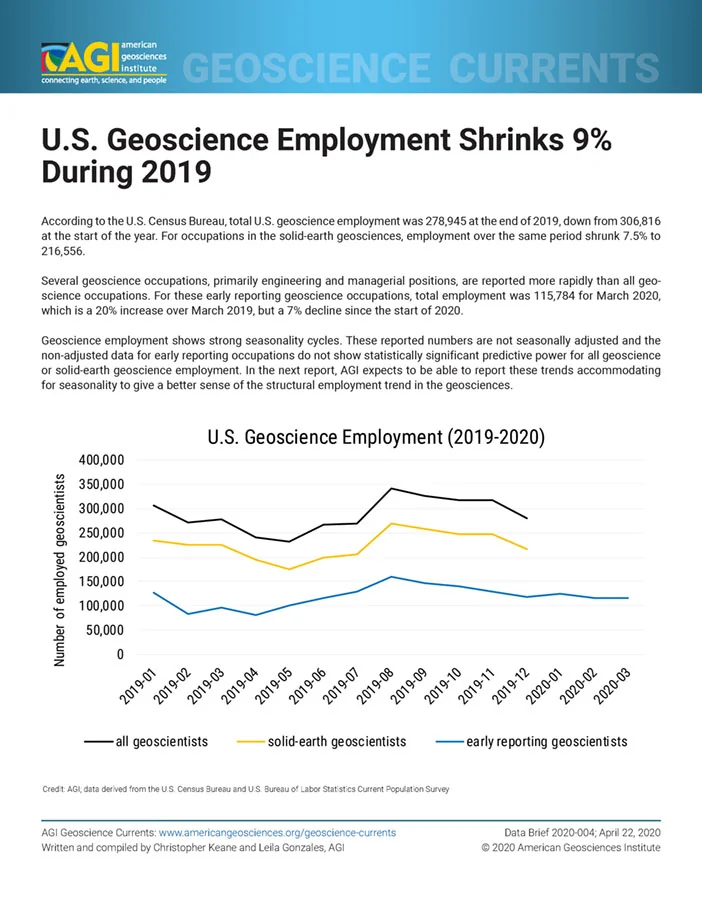
U.S. Geoscience Employment Shrinks 9% During 2019

According to the U.S. Census Bureau, total U.S. geoscience employment was 278,945 at the end of 2019, down from 306,816 at the start of the year. Several geoscience occupations, primarily engineering and managerial positions, are reported more rapidly than all geoscience occupations. For these early reporting geoscience occupations, total employment was 115,784 for March 2020, which is a 20% increase over March 2019, but a 7% decline since the start of 2020.

Profession Data
Brief 2020-04-02

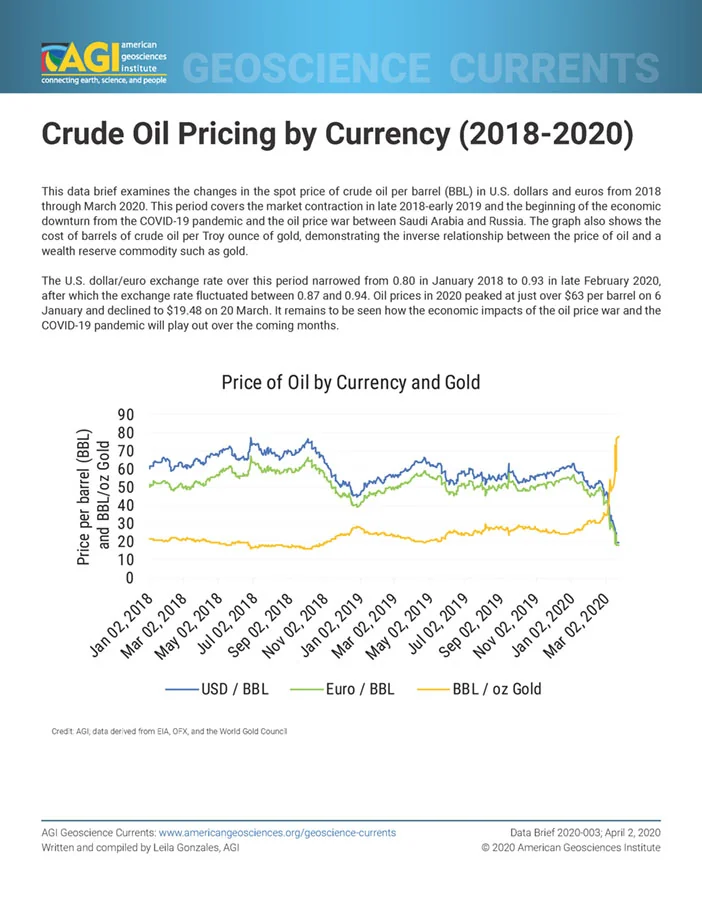
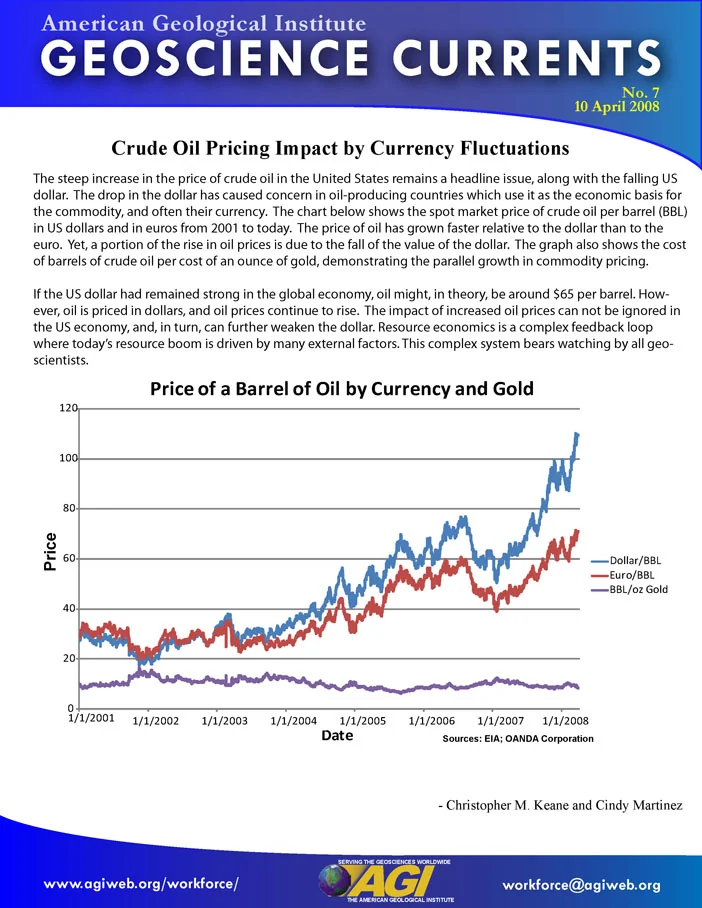
Crude Oil Pricing by Currency (2018-2020)

The data brief examines changes in crude oil prices from 2018 to March 2020, covering the market contraction and economic downturn caused by the COVID-19 pandemic and oil price war. The US dollar/euro exchange rate narrowed during this period, while oil prices peaked at $63 per barrel before declining to $19.48. The long-term impact of these events on the economy is still uncertain.

Profession Data
Brief 2020-01-17

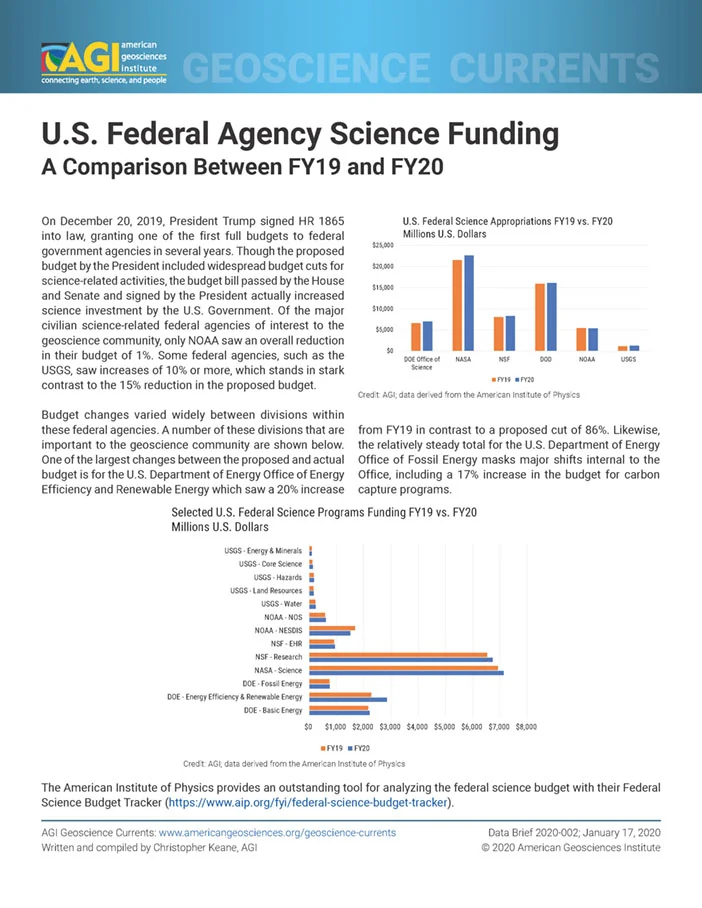
U.S. Federal Agency Science Funding

President Trump signed HR 1865 into law in December 2019, granting a full budget to federal government agencies and increasing science investment by the U.S. Government despite proposed cuts. Some agencies, such as NOAA, saw slight reductions, while others like USGS and the Department of Energy Office of Energy Efficiency and Renewable Energy saw significant increases.

Profession Data
Brief 2020-01-14

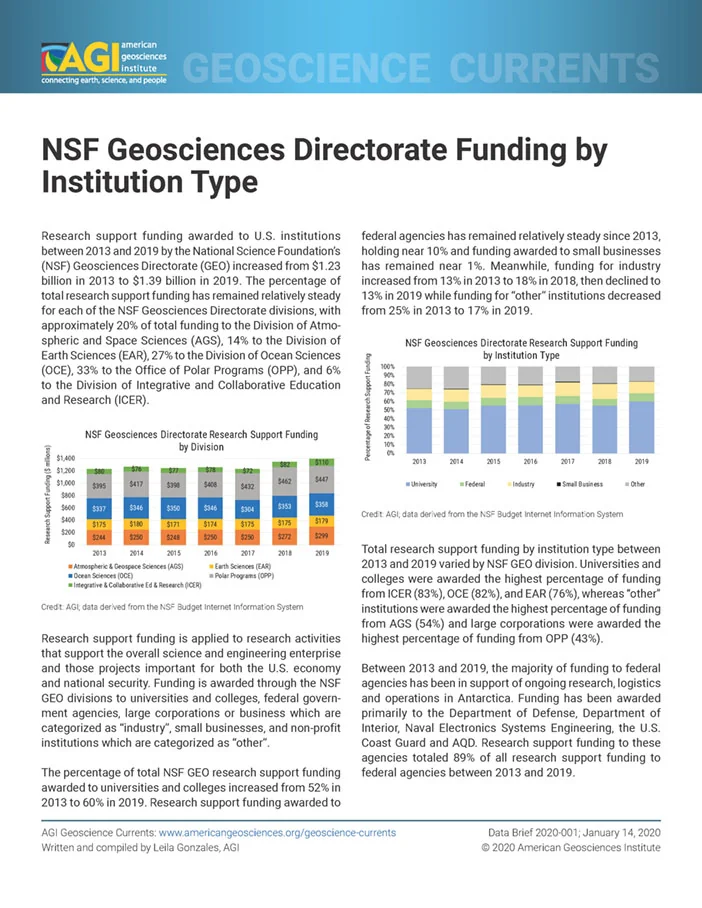
NSF Geosciences Directorate Funding by Institution Type

The National Science Foundation's Geosciences Directorate awarded $1.39 billion in research support funding to U.S. institutions in 2019, with universities and colleges receiving the majority of the funding. The distribution of funding to federal agencies, industry, non-profit organizations, and small businesses varied by NSF division, including funding support for research in Antarctica, atmospheric and severe weather research, and ocean research.

Profession Data
Brief 2019-11-25

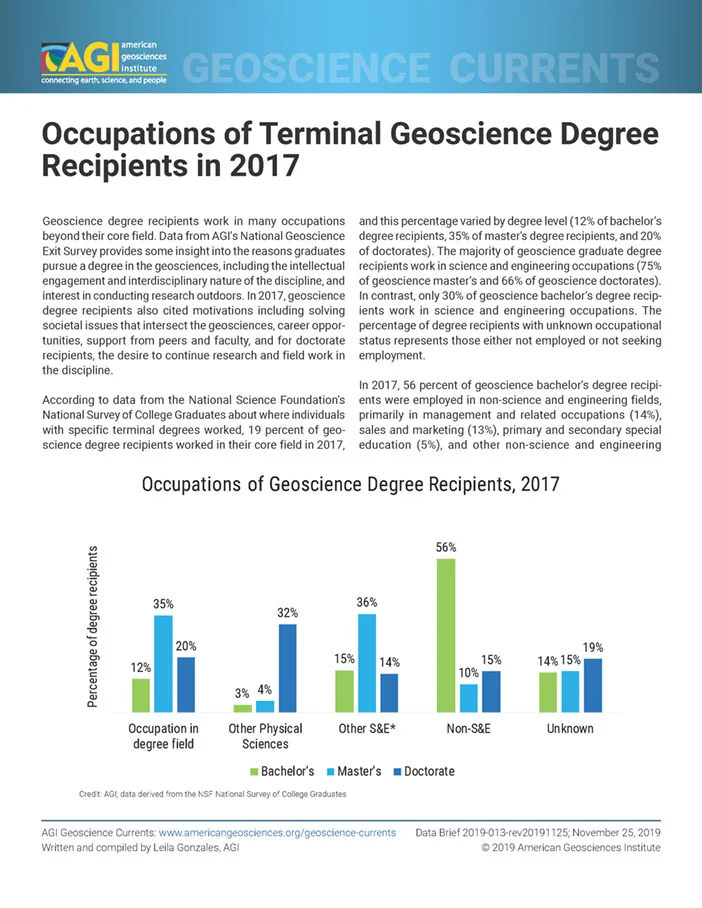
Occupations of Terminal Geoscience Degree Recipients in 2017

According to data from the National Science Foundation's National Survey of College Graduates, geoscience degree recipients work in various occupations beyond their core field, with 75% of master's and 66% of doctorate recipients employed in science and engineering occupations. Geoscience graduate degree recipients have a higher percentage of working in the same field as their degree compared to other physical sciences. The majority of bachelor's degree recipients are employed in non-science and engineering fields.

Profession Data
Brief 2019-11-25

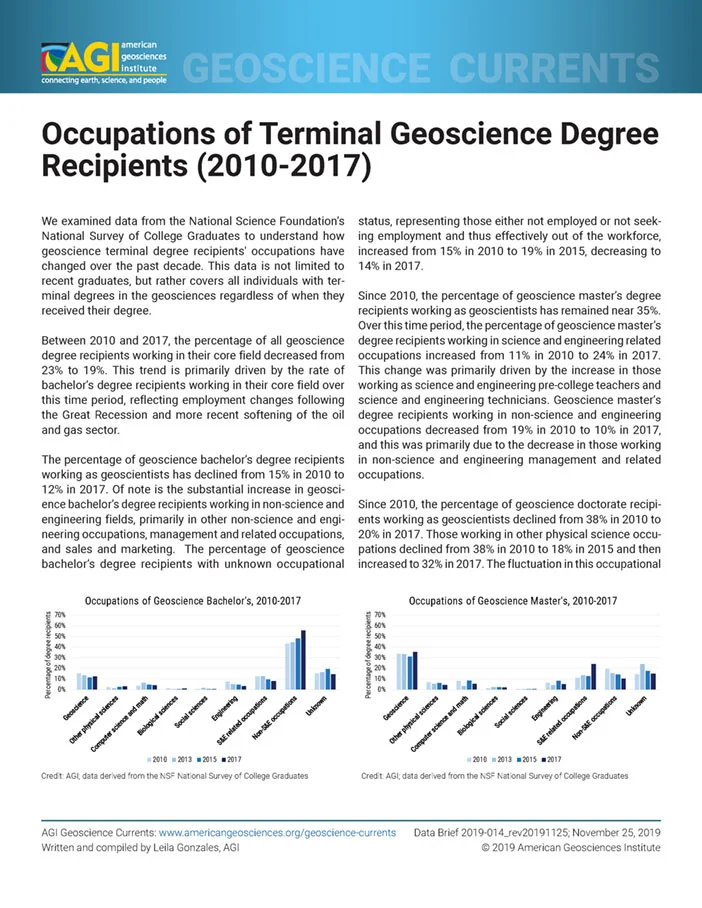
Occupations of Terminal Geoscience Degree Recipients (2010-2017)

Between 2010 and 2017, the percentage of all geoscience degree recipients working in their core field decreased from 23% to 19%. This trend is primarily driven by the rate of bachelor’s degree recipients working in their core field over this time period, reflecting employment changes following the Great Recession and more recent softening of the oil and gas sector.

Profession Data
Brief 2019-11-21

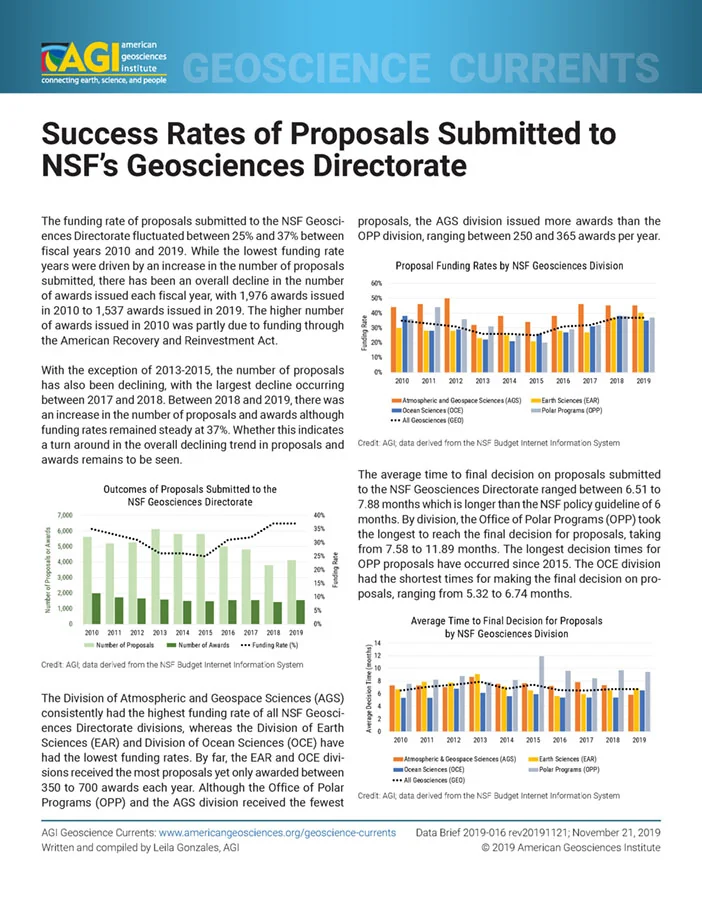
Success Rates of Proposals Submitted to NSF's Geosciences Directorate

Between 2010 and 2019, the funding rate for proposals submitted to the NSF Geosciences Directorate ranged from 25% to 37%, with lower rates driven by increased submissions. Overall, the number of proposals and awards declined during this period, with the Division of Atmospheric and Geospace Sciences maintaining the highest funding rate, while Earth and Ocean Sciences had the lowest. Despite shorter award durations, median annual award amounts have risen, with varying increases across divisions.

Profession Data
Brief 2019-11-15

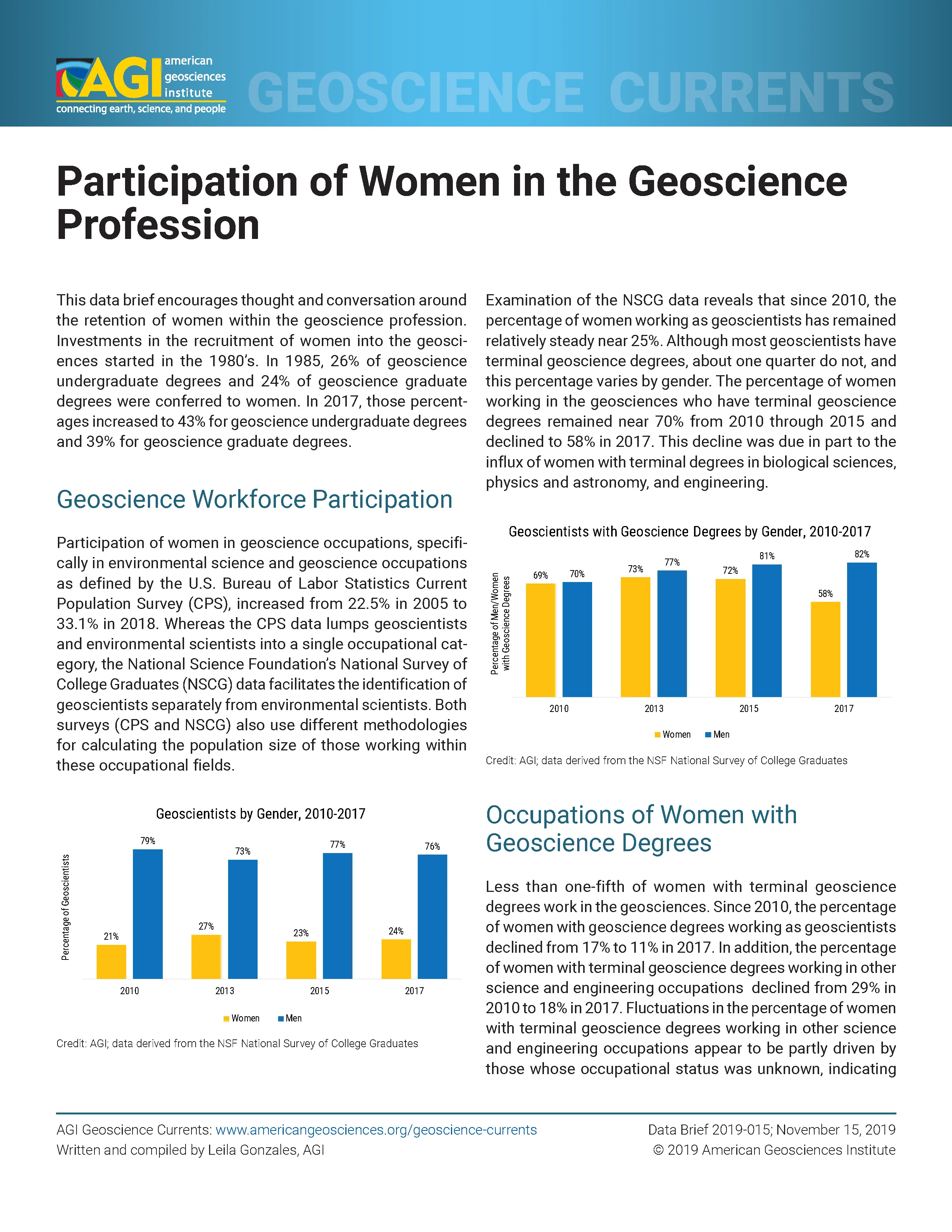
Participation of Women in the Geoscience Profession

Efforts to recruit women into geoscience since the 1980s have led to significant increases in degree attainment, with women earning 43% of undergraduate and 39% of graduate geoscience degrees by 2017. However, women's participation in geoscience occupations has grown modestly, with only about 25% of geoscientists being women and less than one-fifth of women with geoscience degrees employed in the field. These trends highlight challenges in retaining women in geoscience careers despite successful academic recruitment efforts.

Profession Data
Brief 2019-11-04

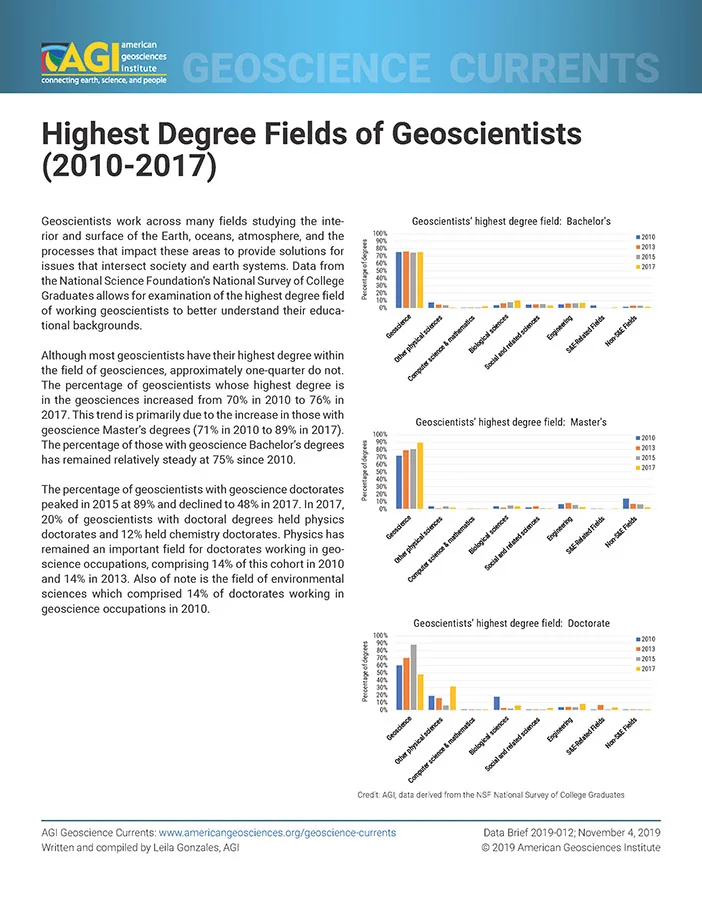
Highest Degree Fields of Geoscientists (2010-2017)

The percentage of geoscientists with a degree in geosciences increased from 70% in 2010 to 76% in 2017, while those with Master's degrees in geoscience rose from 71% to 89%. The number of geoscientists with doctorates peaked at 89% in 2015 and declined to 48% in 2017, with physics and chemistry being the most common fields for doctoral degrees. Environmental sciences also emerged as a significant field for doctorates working in geoscience occupations.

Profession Data
Brief 2019-11-01

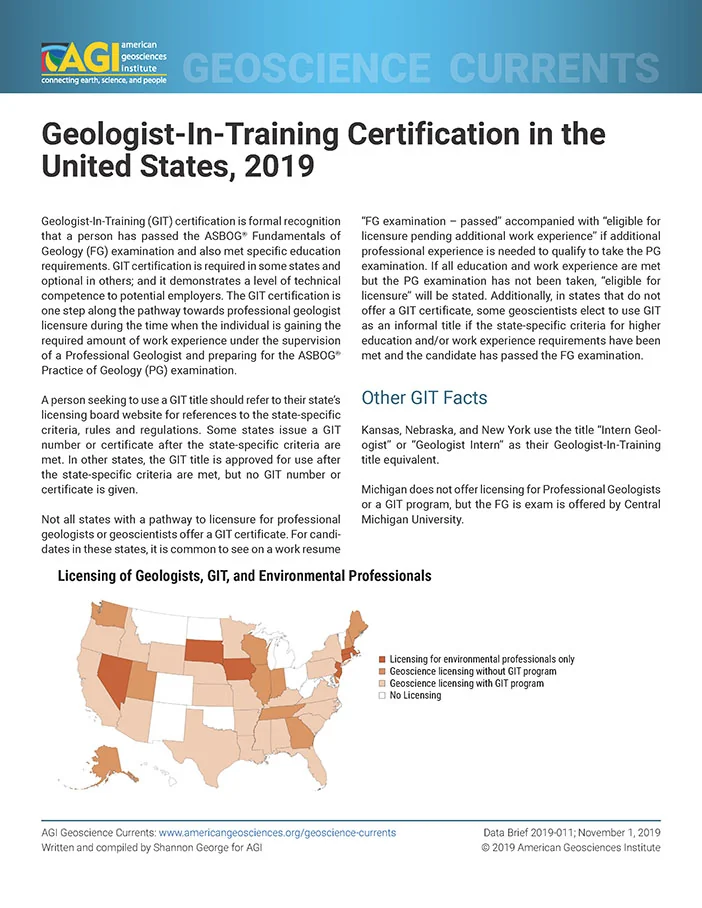
Geologist-In-Training Certification in the United States, 2019

The Geologist-In-Training (GIT) certification is a formal recognition that demonstrates technical competence to potential employers and is required in some states, but optional in others. To use the GIT title, individuals must meet specific education requirements and pass the ASBOG Fundamentals of Geology examination, with varying state-specific criteria and regulations. Some states do not offer a GIT certificate, but geoscientists may still use the title informally if they have met the required education and work experience.

Profession Data
Brief 2019-10-01

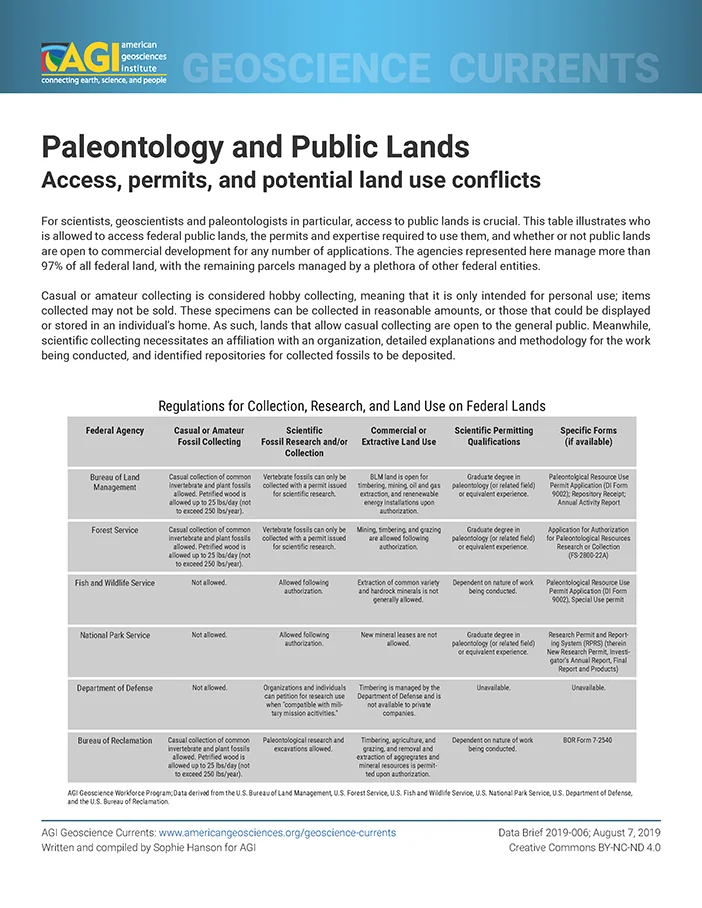
Paleontology and Public Lands

Access to public lands is crucial for scientists and geoscientists, with different levels of access depending on whether it's for casual or scientific collecting. The Bureau of Land Management uses a Potential Fossil Yield Classification system to evaluate the impact of proposed activities on paleontological resources, but there is limited precedent for consequences against commercial entities that don't comply. The document provides information on federal agencies' policies and regulations regarding access to public lands and fossil collecting.

Profession Data
Brief 2019-09-26

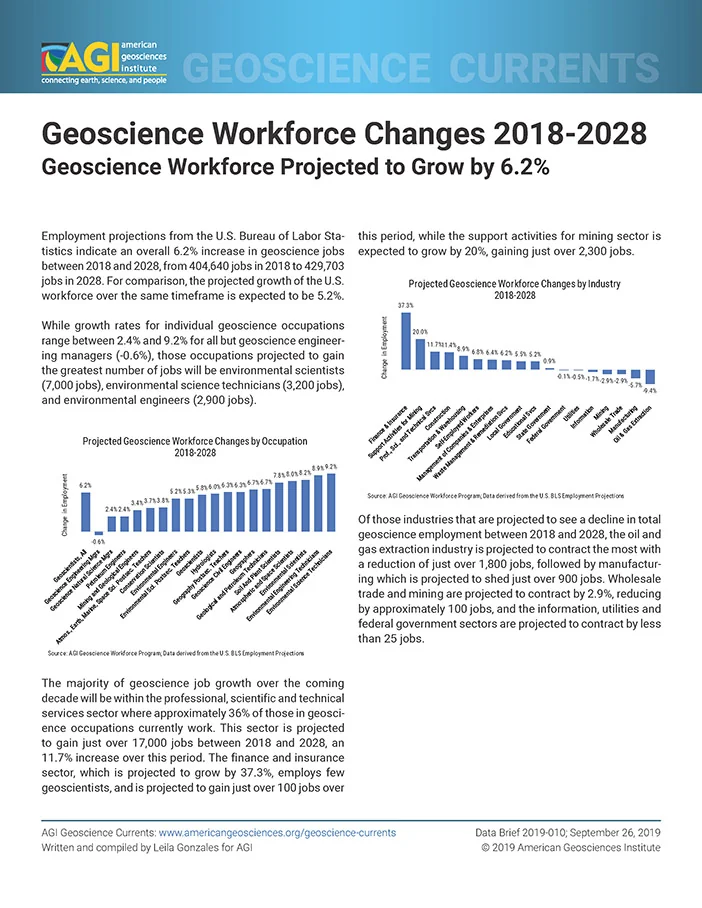
Geoscience Workforce Changes 2018-2028

The geoscience workforce is projected to grow by 6.2% between 2018 and 2028, with an increase in jobs from 404,640 to 429,703. The majority of job growth will occur in the professional, scientific and technical services sector, which is expected to gain over 17,000 jobs during this period. However, some industries such as oil and gas extraction and manufacturing are projected to contract, with reductions of just over 1,800 and 900 jobs respectively.

Profession Data
Brief 2019-09-15

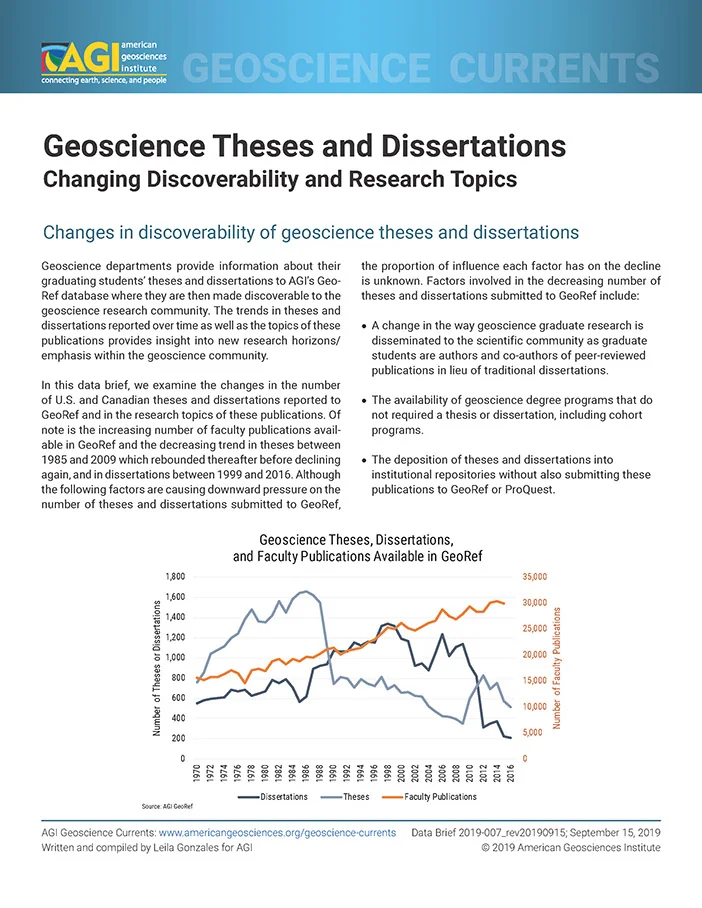
Geoscience Theses and Dissertations

The number of geoscience theses and dissertations reported to GeoRef has declined since 1985. The decline is attributed to changes in how graduate research is disseminated, availability of degree programs without thesis requirements, and increased deposition into institutional repositories. Trends in topics indicate an increase in publications focusing on economic geology, environmental geology, and extraterrestrial geology.

Profession Data
Brief 2019-09-15

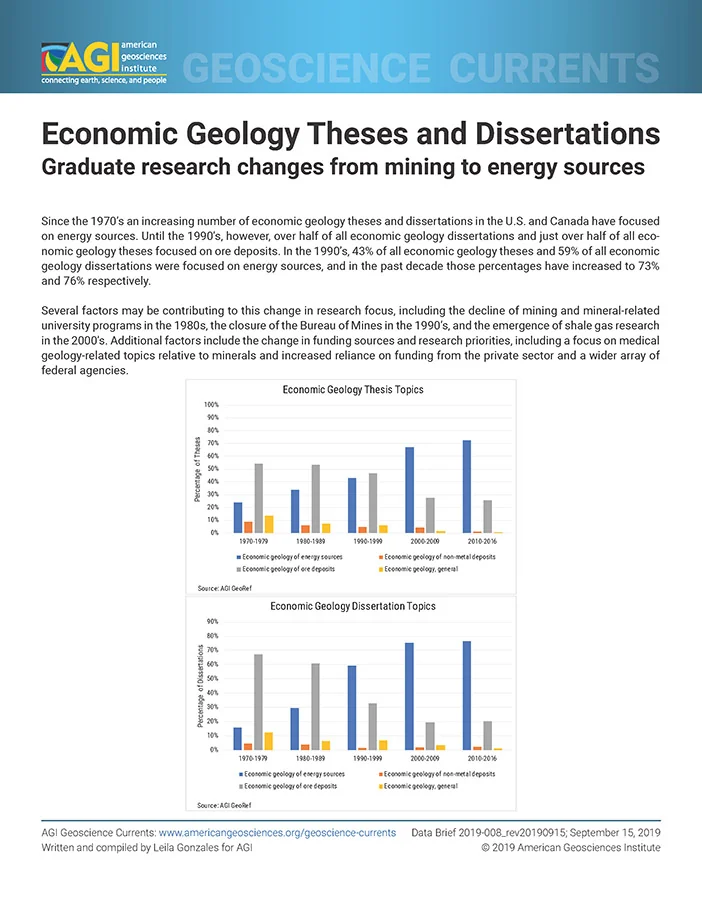
Economic Geology Theses and Dissertations

Graduate research in economic geology has shifted from focusing on ore deposits to energy sources since the 1990s, driven by factors including the decline of mining and mineral-related university programs in the 1980s, the closure of the Bureau of Mines in the 1990s, the emergence of shale gas research in the 2000s, and changes in funding priorities.

Profession Data
Brief 2019-09-05

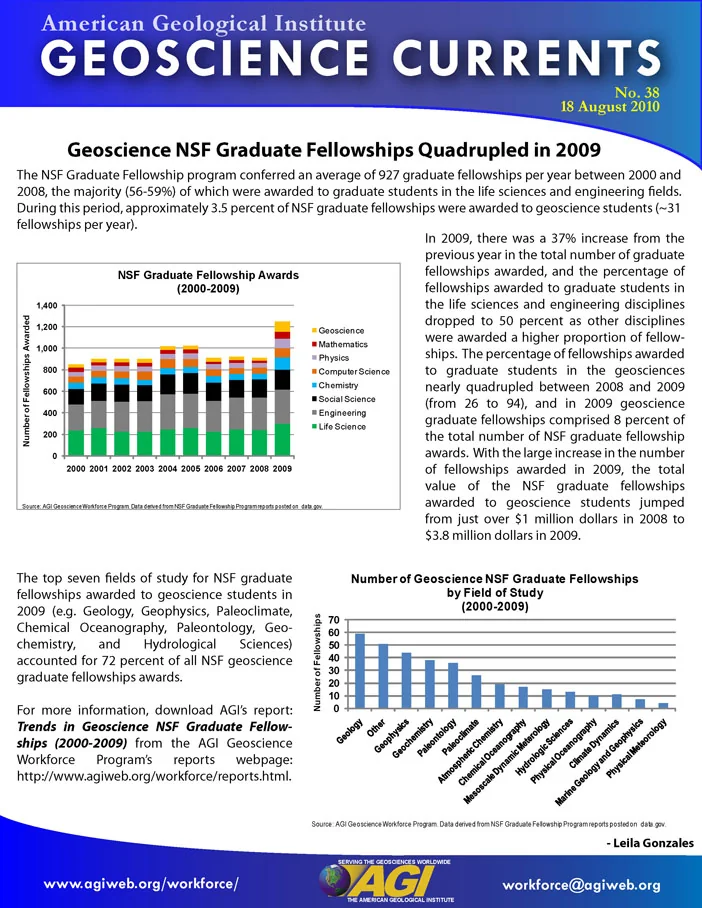
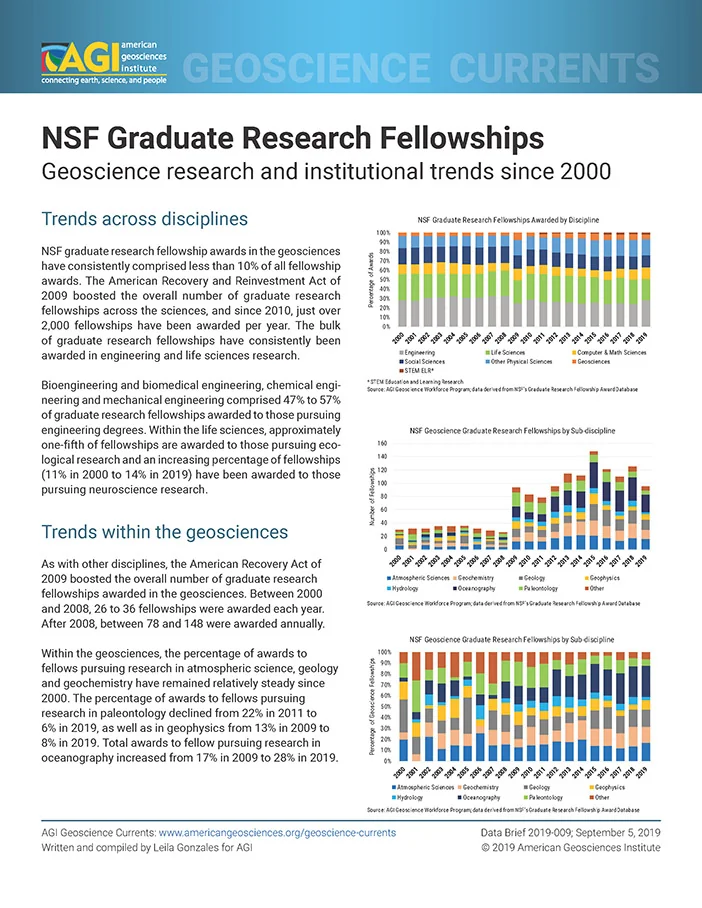
NSF Graduate Research Fellowships

The number of graduate research fellowships in the geosciences has increased since 2000, with a significant boost from the American Recovery Act of 2009; however, the percentage of awards granted to geoscience fellows has consistently comprised less than 10%. The majority of fellowships have been awarded to students pursuing engineering and life sciences degrees, with the ecological and neuroscience subdisciplines seeing an increasing percentage of awards over time. Top institutions for geoscience graduate research fellows include Harvard University, Massachusetts Institute of Technology, and University of California, Berkeley.

Profession Data
Brief 2019-07-19

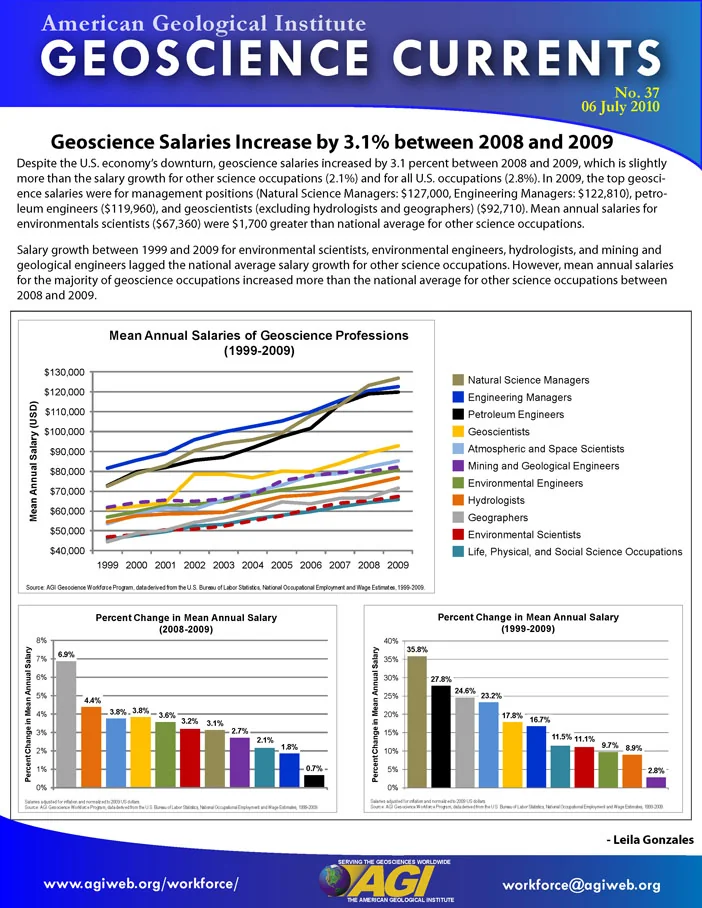
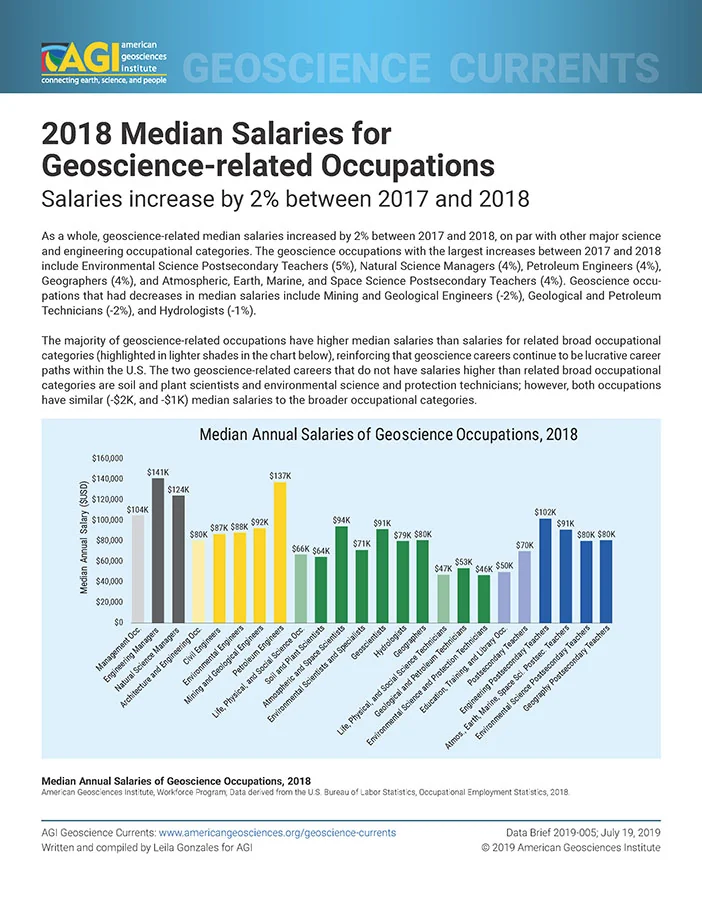
2018 Median Salaries for Geoscience-related Occupations

Salaries in geoscience-related occupations increased by 2% between 2017 and 2018, with some occupations experiencing larger increases than others. Geoscience occupations that had decreases in median salaries include Mining and Geological Engineers (-2%), Geological and Petroleum Technicians (-2%), and Hydrologists (-1%). The majority of geoscience-related occupations have higher median salaries than related broad occupational categories.

Profession Data
Brief 2019-04-29

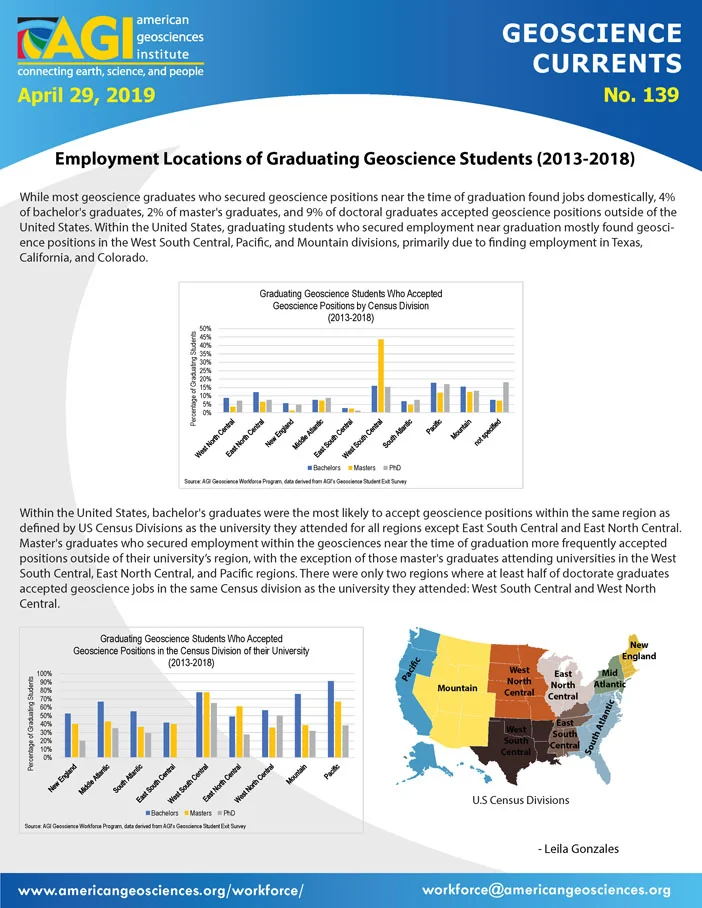
Employment Locations of Graduating Geoscience Students (2013-2018)

Most geoscience graduates who secured geoscience positions near the time of graduation found jobs domestically, yet a small percentage accepted geoscience positions outside of the United States. Within the United States, bachelor's graduates were the most likely to accept geoscience positions within the same US Census region, while geoscience graduate degree recipients were more likely to accept jobs farther afield.

Profession Data
Brief 2019-04-16

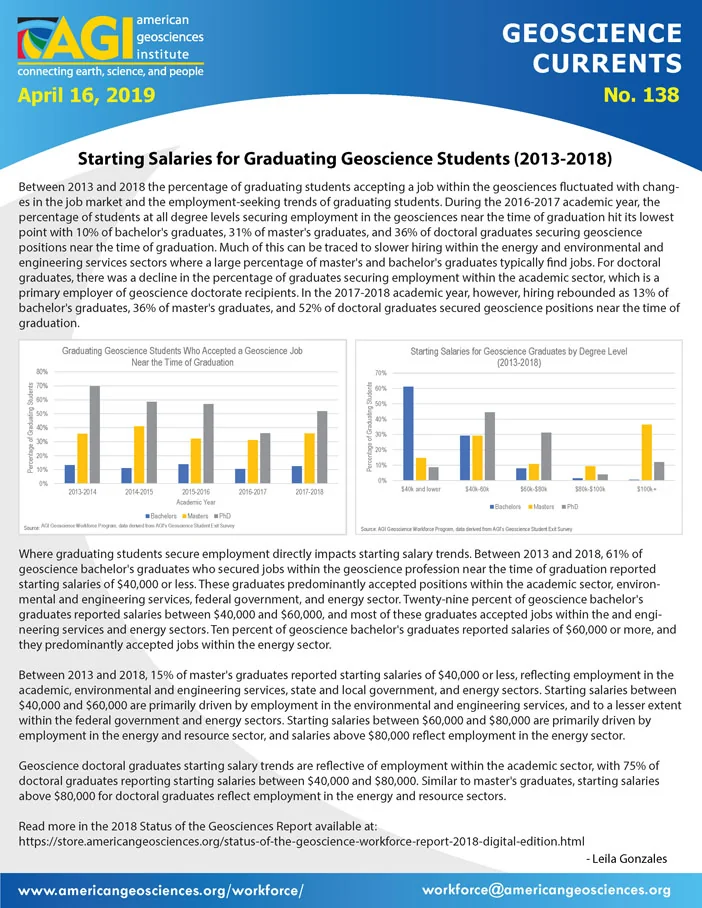
Starting Salaries for Graduating Geoscience Students (2013-2018)

Between 2013 and 2018, starting salaries for geoscience graduates varied by degree level and employment sector. Among bachelor's degree recipients who secured geoscience positions near graduation, 61% reported starting salaries of $40,000 or less, primarily in academia, environmental and engineering services, federal government, and the energy sector. In contrast, 15% of master's graduates reported starting salaries in the same range, with higher salaries often associated with positions in the energy and resource sectors. For doctoral graduates, 75% reported starting salaries between $40,000 and $80,000, reflecting employment predominantly within the academic sector.

Profession Data
Brief 2019-04-03

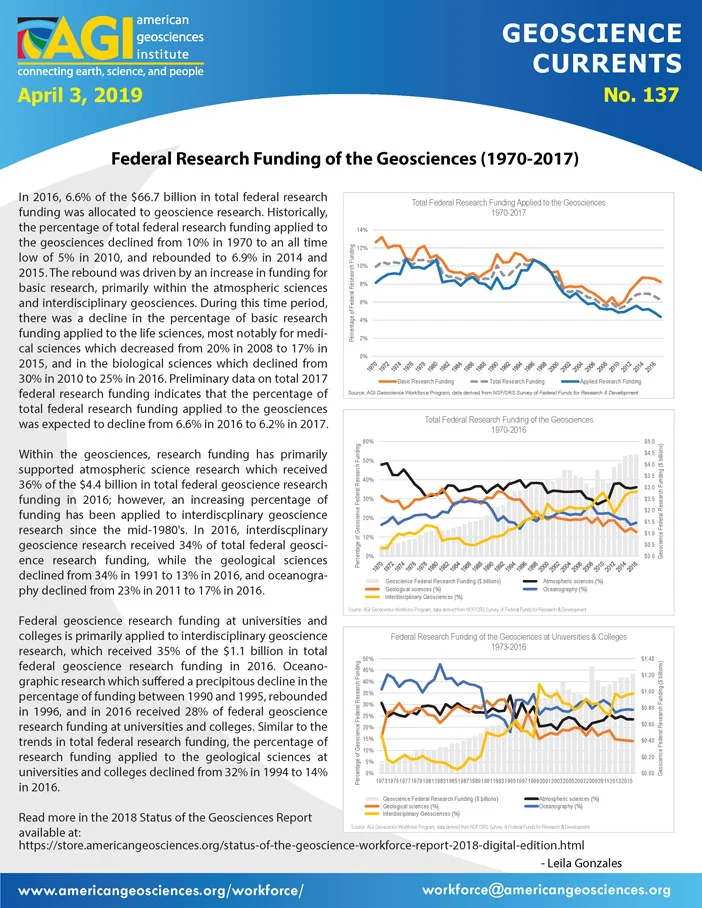
Federal Research Funding of the Geosciences (1970-2017)

Federal research funding for geosciences has fluctuated over time, with a decline from 10% in 1970 to an all-time low in 2010 before rebounding to 6.6% in 2016. Within the geosciences, research funding has primarily supported atmospheric science research; however, an increasing percentage of funding has been applied to interdisciplinary geoscience research since the mid-1980's.

Profession Data
Brief 2019-01-08

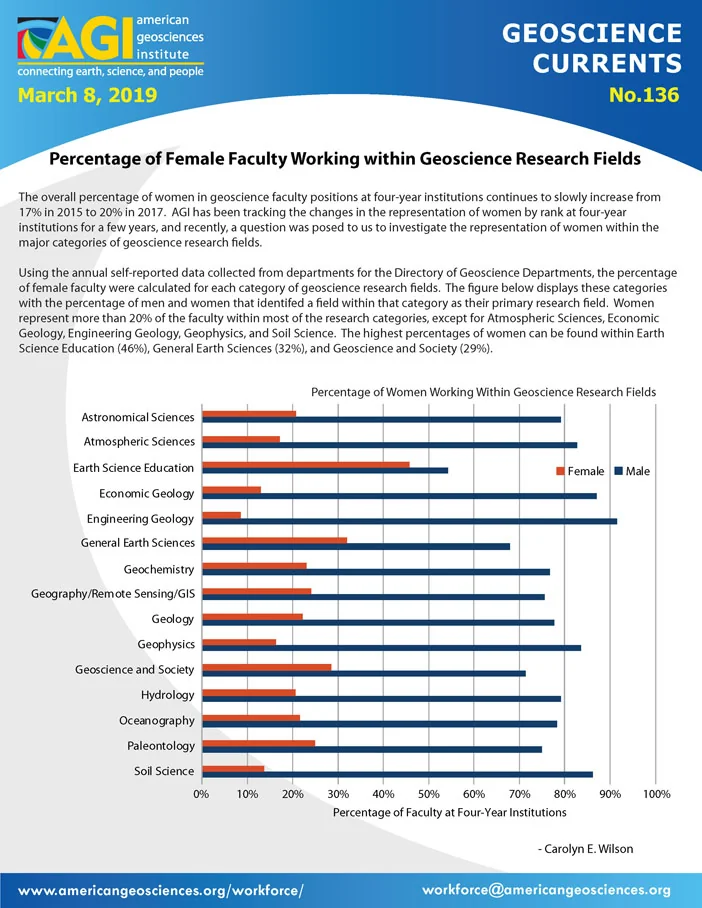
Percentage of Female Faculty Working within Geoscience Research Fields

The percentage of female geoscience faculty at four-year institutions has increased over time, reaching 20% in 2017. Women represent more than 20% of the faculty within most of the research categories, except for Atmospheric Sciences, Economic Geology, Engineering Geology, Geophysics, and Soil Science. The highest percentages of women can be found within Earth Science Education, General Earth Sciences, and Geoscience and Society.

Profession Data
Brief 2018-12-20

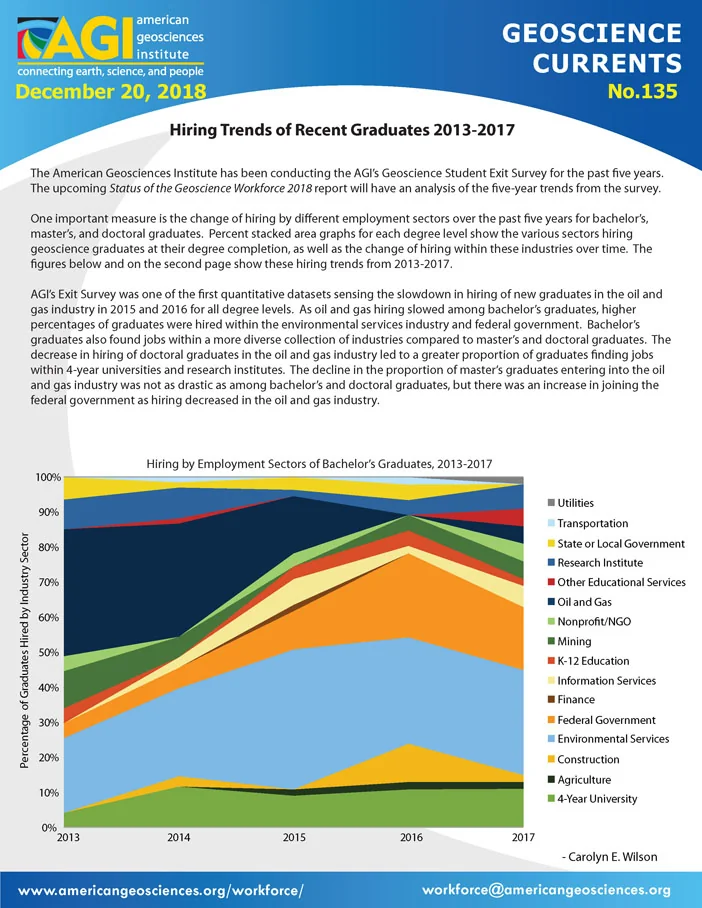
Hiring Trends of Recent Graduates, 2013-2017

The American Geosciences Institute's Exit Survey has tracked changes in hiring trends for geoscience graduates over the past five years, revealing shifts in employment sectors and degree levels. The survey found that bachelor's graduates were hired by a more diverse range of industries, while master's and doctoral graduates were more likely to be hired in specific sectors such as environmental services and 4-year universities. The oil and gas industry saw a significant decline in hiring for all degree levels, with an increase in federal government jobs for some graduates.

Profession Data
Brief 2018-11-14

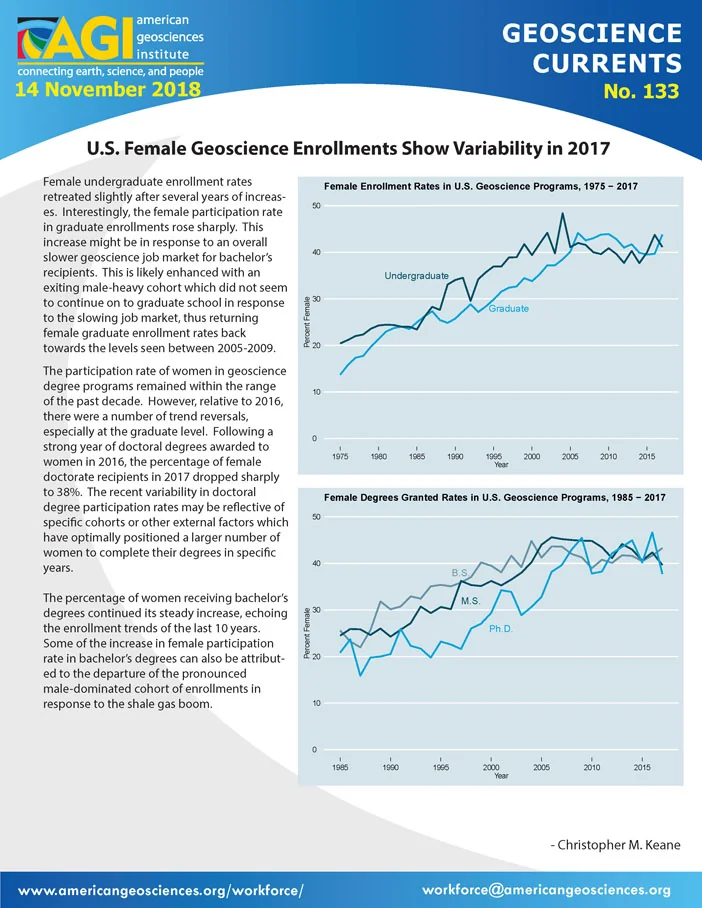
U.S. Female Geoscience Enrollments Show Variability in 2017

In 2017, U.S. female undergraduate enrollment in geoscience programs slightly declined after several years of growth, while female participation in graduate enrollments increased sharply, returning to levels seen between 2005 and 2009. This shift may be due to a slower geoscience job market for bachelor's degree holders, leading to higher graduate enrollment among women. Additionally, the percentage of women receiving bachelor's degrees continued its steady rise, partly attributed to the departure of a male-dominated cohort that enrolled during the shale gas boom.

Profession Data
Brief 2018-10-31

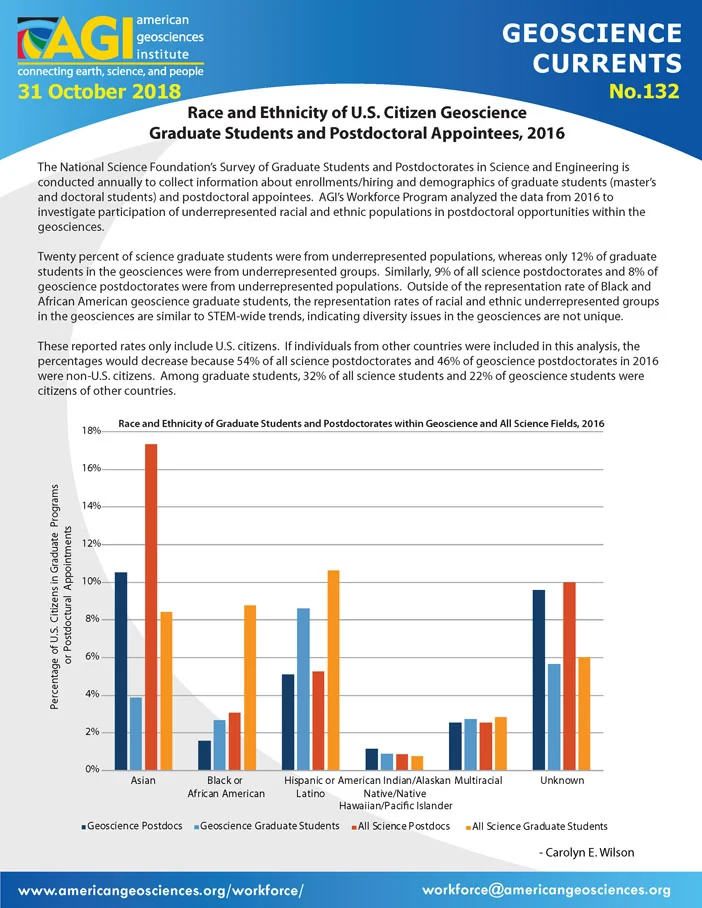
Race and Ethnicity of U.S. Citizen Geoscience Graduate Students and Postdoctoral Appointees, 2016

Data from the National Science Foundation's Survey of Graduate Students and Postdoctorates in Science and Engineering showed that underrepresented groups made up a smaller percentage of graduate students and postdoctoral appointees in the geosciences compared to STEM-wide trends (12% vs. 20% and 8% vs. 9%, respsectively). The inclusion of international students would further decrease these percentages due to the high proportion of graduate students and postdoctoral fellows in the sciences who are non-U.S. citizens.

Profession Data
Brief 2018-09-27

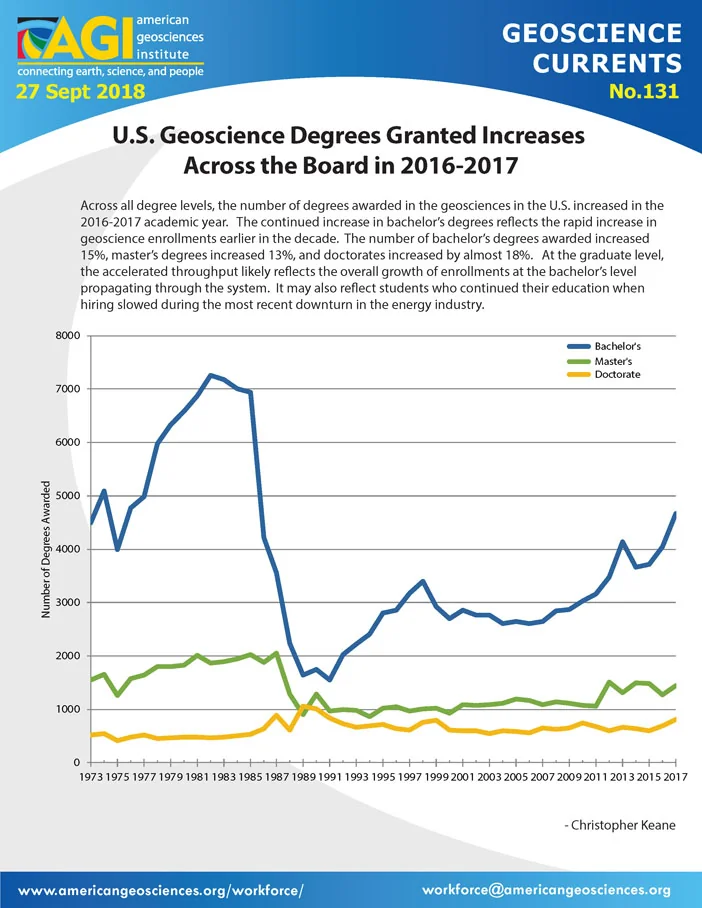
U.S. Geoscience Degrees Granted Increases Across the Board in 2016-2017

The number of degrees awarded in geosciences increased across all degree levels] in the U.S. from 2016-2017, with bachelor's degrees rising by 15%, master's degrees by 13%, and doctorates increasing by almost 18%. This growth may be attributed to the rapid increase in geoscience enrollments earlier in the decade, as well as students continuing their education during a downturn in the energy industry. The accelerated throughput at the graduate level likely reflects the overall growth of bachelor's level enrollments.

Profession Data
Brief 2018-09-26

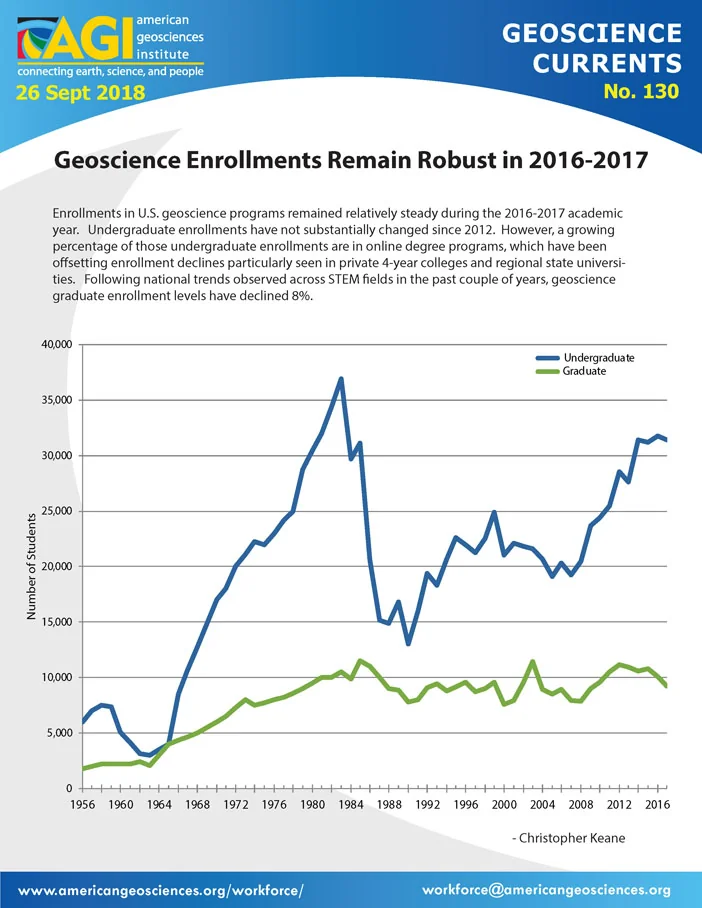
Geoscience Enrollments Remain Robust in 2016-2017

Undergraduate enrollments have not changed substantially since 2012, but online degree programs are offsetting declines in private colleges and regional state universities. Geoscience graduate enrollment levels declined by 8% following national trends in STEM fields.

Profession Data
Brief 2018-07-06

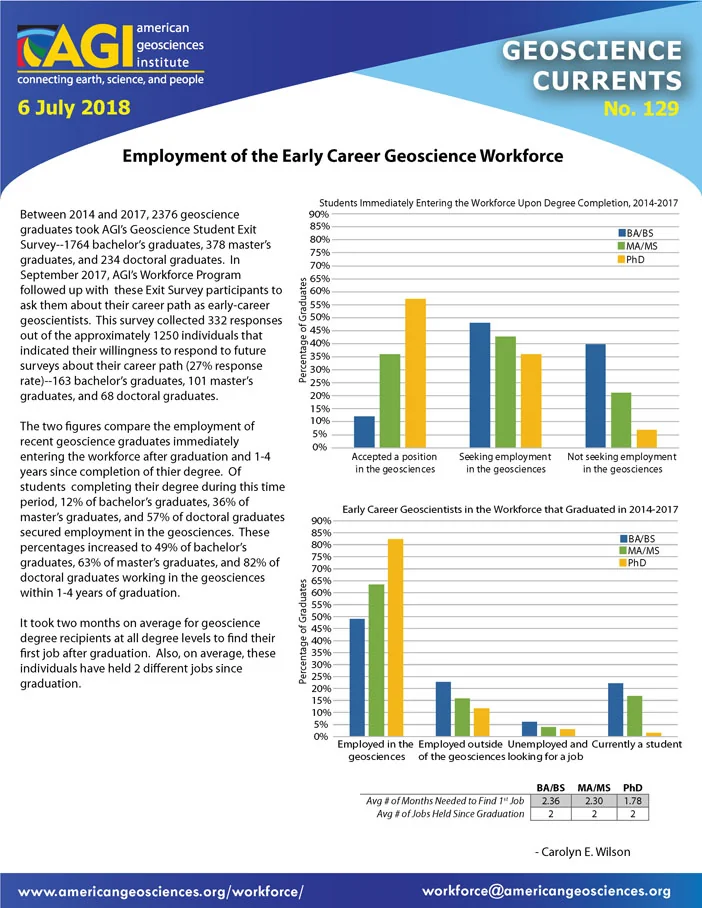
Employment of the Early Career Geoscience Workforce

Geoscience graduates who completed their degree between 2014 and 2017 had varying levels of employment in the geosciences immediately or within 1-4 years after graduation. On average, it took two months for geoscience degree recipients at all degree levels to find their first job after graduation, with graduate degree recipients securing employment at a higher rate.

Profession Data
Brief 2018-05-01

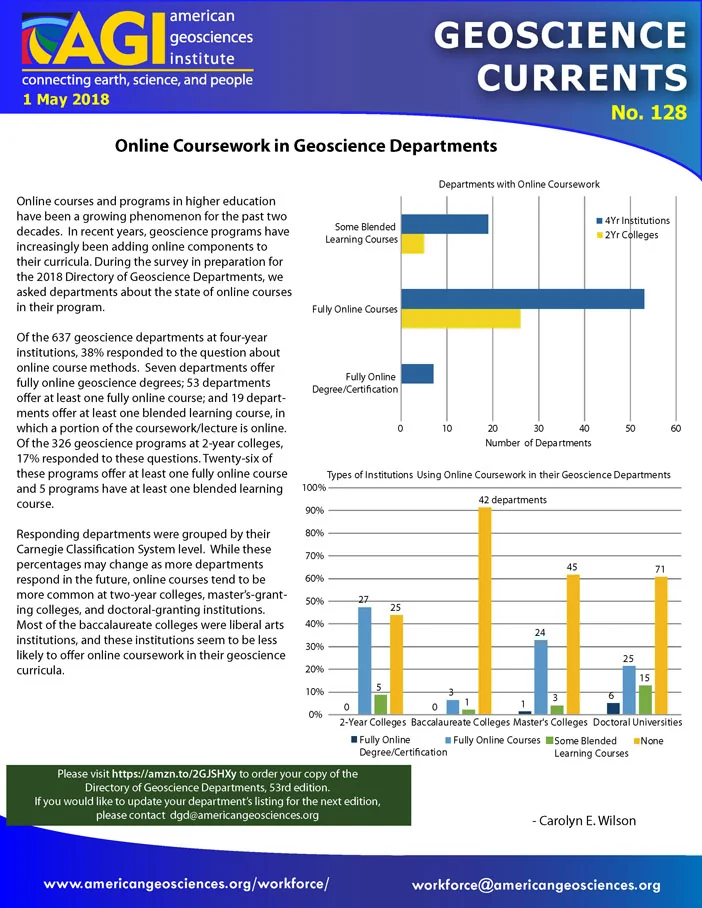
Online Coursework in Geoscience Departments

A survey of geoscience departments found that online courses and programs have become increasingly common in higher education, both at two-year and four-year institutions. Of the 637 geoscience departments at four-year institutions, 1% offer fully online geoscience degrees; 8% offer at least one fully online course; and 3% offer at least one blended learning course. Of the 326 geoscience programs at 2-year colleges, 8% offer at least one fully online course and 2% have at least one blended learning course.

Profession Data
Brief 2018-04-24

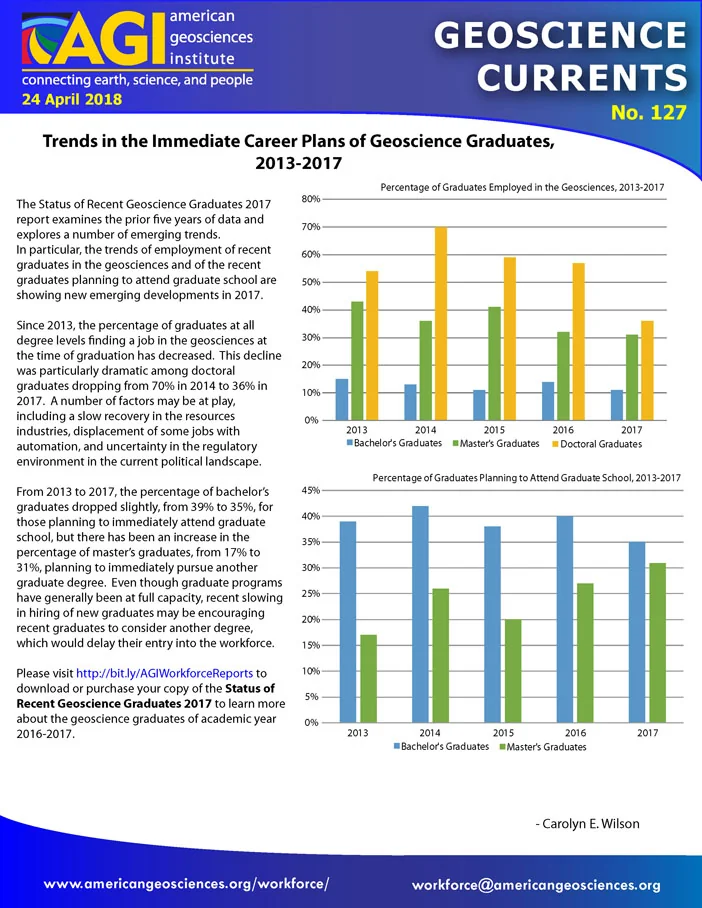
Trends in the Immediate Career Plans of Geoscience Graduates, 2013-2017

Employment rates for geoscience graduates have decreased since 2013, with a significant drop in doctoral graduates' job prospects. Meanwhile, there has been an increase in master's graduates planning to pursue another graduate degree, possibly due to slower hiring of new graduates and uncertainty in the regulatory environment.

Profession Data
Brief 2018-04-16

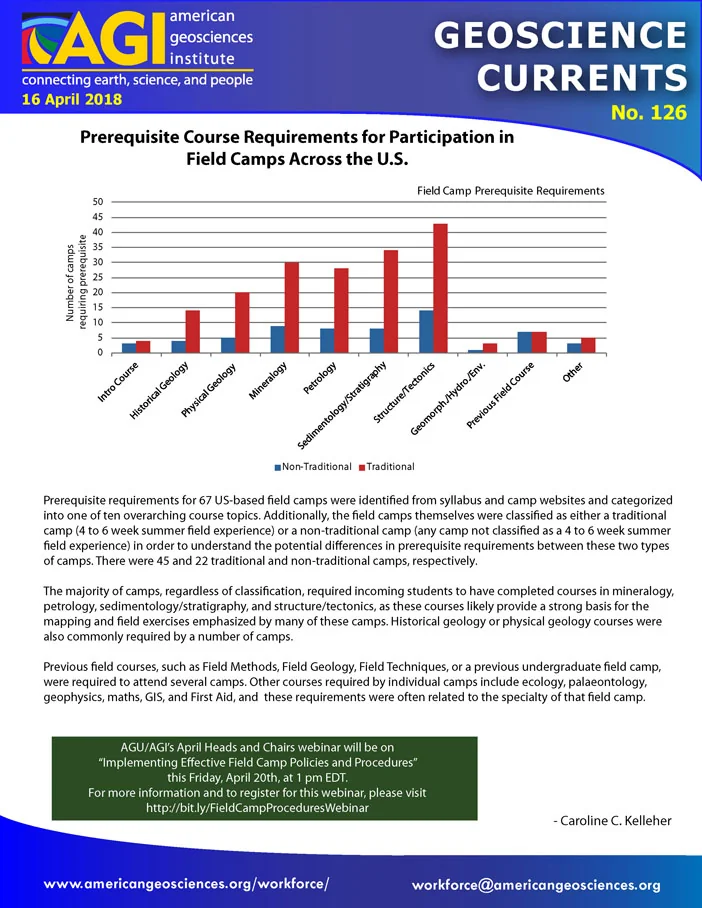
Prerequisite Course Requirements for Participation in Field Camps Across the U.S.

Geoscience field camps in the U.S. generally require foundational coursework in mineralogy, petrology, sedimentology/stratigraphy, and structural geology/tectonics, along with historical or physical geology and, in some cases, prior field experience. Additional prerequisites, such as ecology, paleontology, geophysics, mathematics, GIS, and First Aid, may vary based on the camp's focus. Prerequisite requirements differ between traditional 4 to 6-week summer camps and non-traditional camps with varying formats and durations.

Profession Data
Brief 2018-03-14

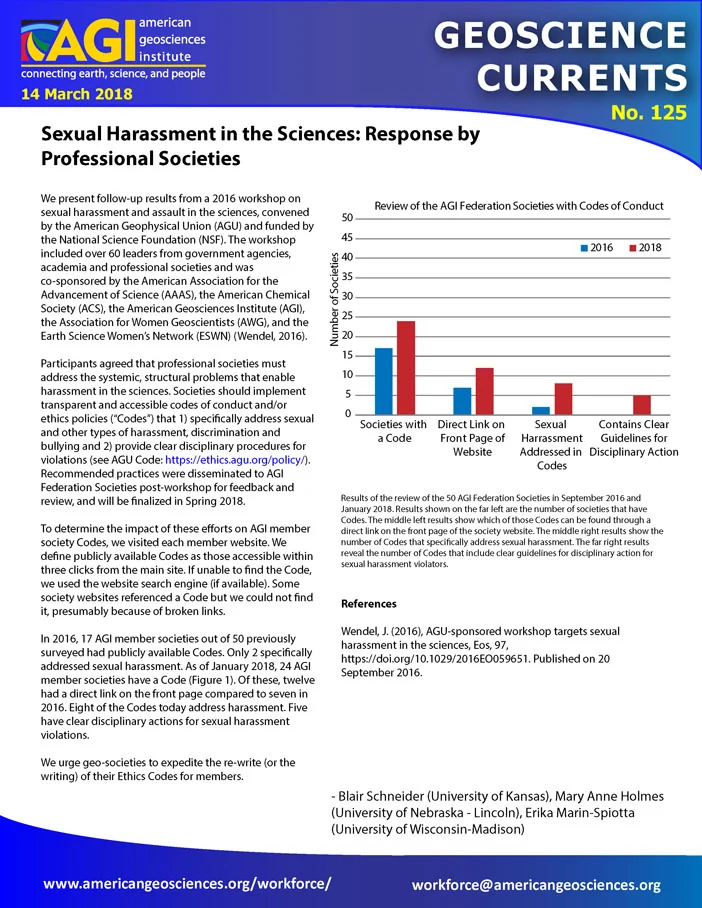
Sexual Harassment in the Sciences: Response by Professional Societies

The National Science Foundation funded a workshop in 2016 that was convened by the American Geophysical Union to address sexual harassment and assault in the sciences. The workshop included over 60 leaders from government agencies, academia, and professional societies, and was co-sponsored by AAAS, ACS, AGI, AWG, and ESWN. By January 2018, 24 AGI member societies had developed codes of conduct addressing harassment, with some having clear disciplinary actions for violations. The authors urge geoscience professional societies to expedite rewriting of their Ethics Codes for members.

Profession Data
Brief 2017-12-28

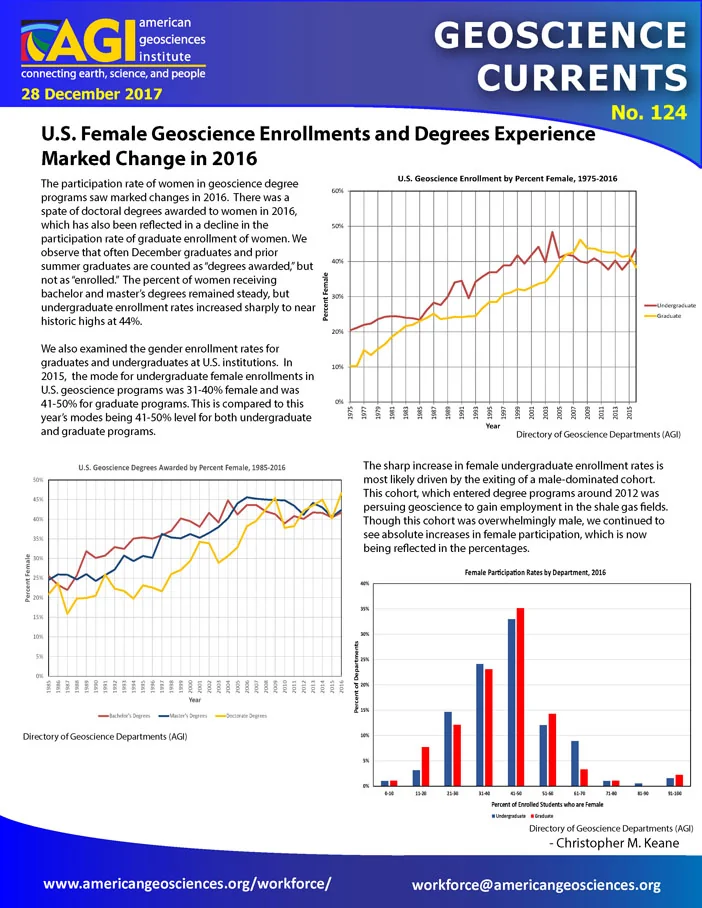
U.S. Female Geoscience Enrollments and Degrees Experience - Marked Change in 2016

The participation rate of women in geoscience degree programs increased significantly in 2016, with a notable rise in undergraduate enrollment rates to near historic highs at 44%. The increase is attributed to the exiting of a male-dominated cohort that entered degree programs around 2012. Despite this, absolute increases in female participation have continued, leading to an overall shift towards more balanced gender ratios in geoscience programs.

Profession Data
Brief 2017-11-30

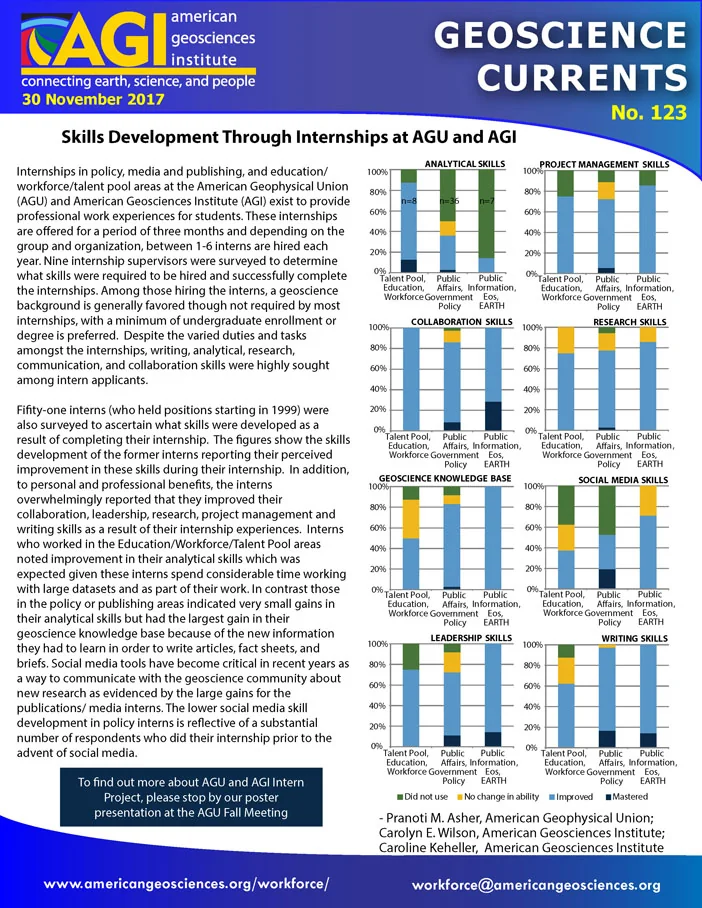
Skills Development Through Internships at AGU and AGI

Internships at AGU and AGI provide professional work experiences for students, focusing on skills such as writing, analytical, research, communication, and collaboration. Interns reported improvement in various skills, with some areas showing more significant gains than others. The development of social media skills was particularly notable for publications/media interns.

Profession Data
Brief 2017-11-21

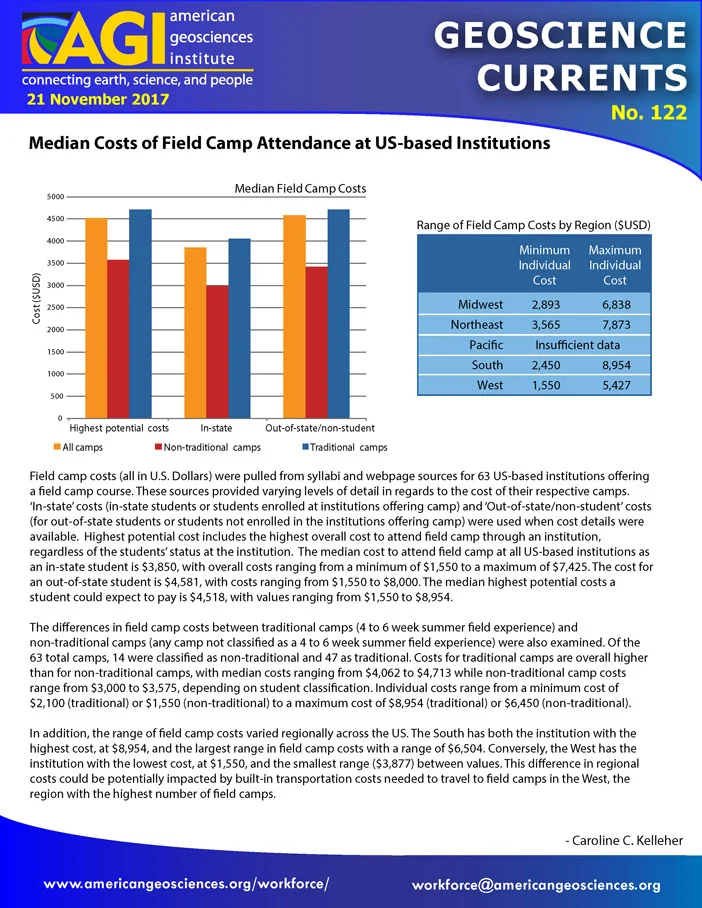
Median Costs of Field Camp Attendance at US-based Institutions

In 2017, AGI reported that the median cost for attending a U.S.-based geoscience field camp was $3,850 for in-state students and $4,581 for out-of-state students. Traditional field camps, typically lasting 4 to 6 weeks, had higher median costs ($4,062 to $4,713) compared to non-traditional camps ($3,000 to $3,575). Regional variations were also noted, with the South exhibiting the highest individual cost of $8,954 and the largest cost range, while the West had the lowest cost at $1,550 and the smallest range.

Profession Data
Brief 2017-10-19

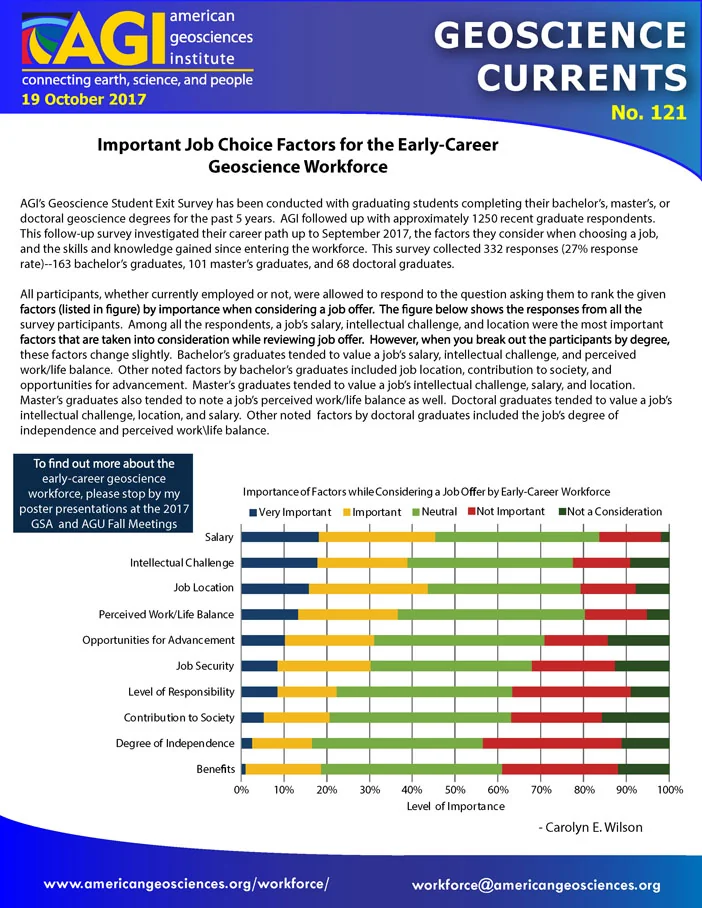
Important Job Choice Factors for the Early-Career Geoscience Workforce

A 2017 survey by AGI examined the job preferences of early-career geoscientists across different degree levels. The findings revealed that bachelor's graduates prioritized salary, intellectual challenge, and work-life balance; master's graduates valued intellectual challenge, salary, and location; and doctoral graduates emphasized intellectual challenge, location, and salary. These insights highlight the varying priorities among geoscientists when evaluating job opportunities at different educational stages.

Profession Data
Brief 2017-09-29

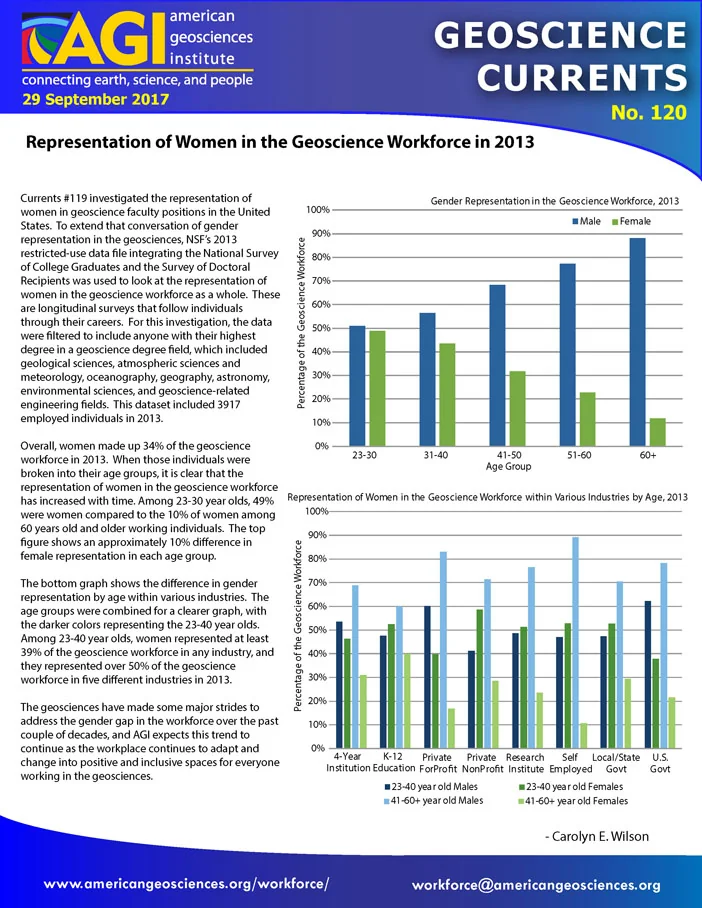
Representation of Women in the Geoscience Workforce in 2013

The study analyzed data from the National Survey of College Graduates and the Survey of Doctoral Recipients to investigate the representation of women in the geoscience workforce in the United States. The results showed that women made up 34% of the geoscience workforce in 2013, with a significant increase in representation among younger age groups. The study suggests that the geosciences have made progress in addressing the gender gap and expects this trend to continue as workplaces adapt to become more inclusive.

Profession Data
Brief 2017-08-17

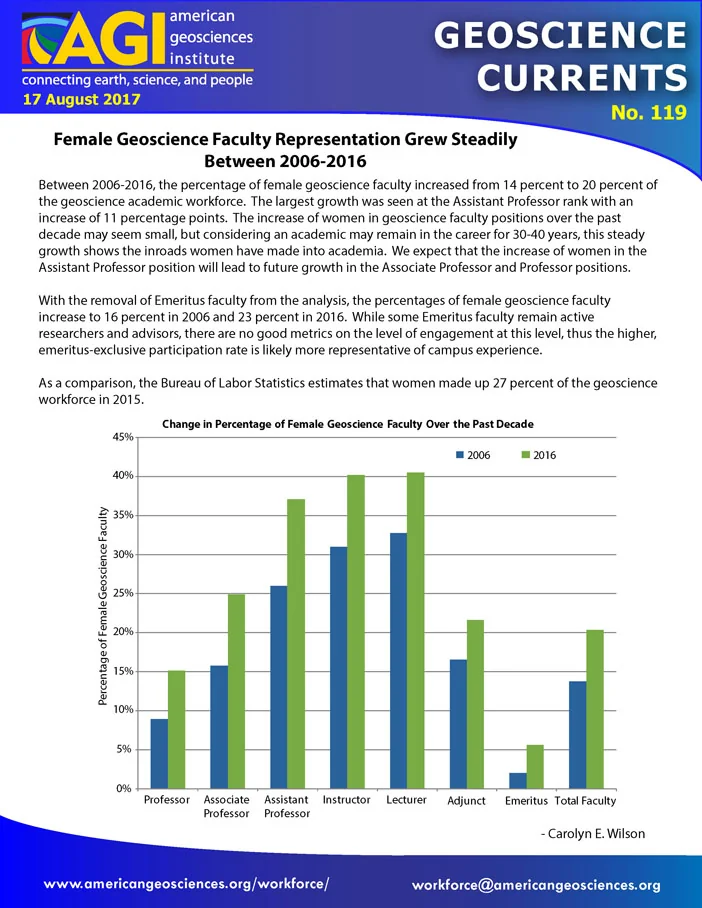
Female Geoscience Faculty Representation Grew Steadily Between 2006-2016

Between 2006 and 2016, the number of female geoscience faculty members grew from 14% to 20%, with a notable increase in the Assistant Professor position. This steady growth suggests that women are making progress into academia, which is expected to lead to future increases in higher ranks.

Profession Data
Brief 2017-05-24

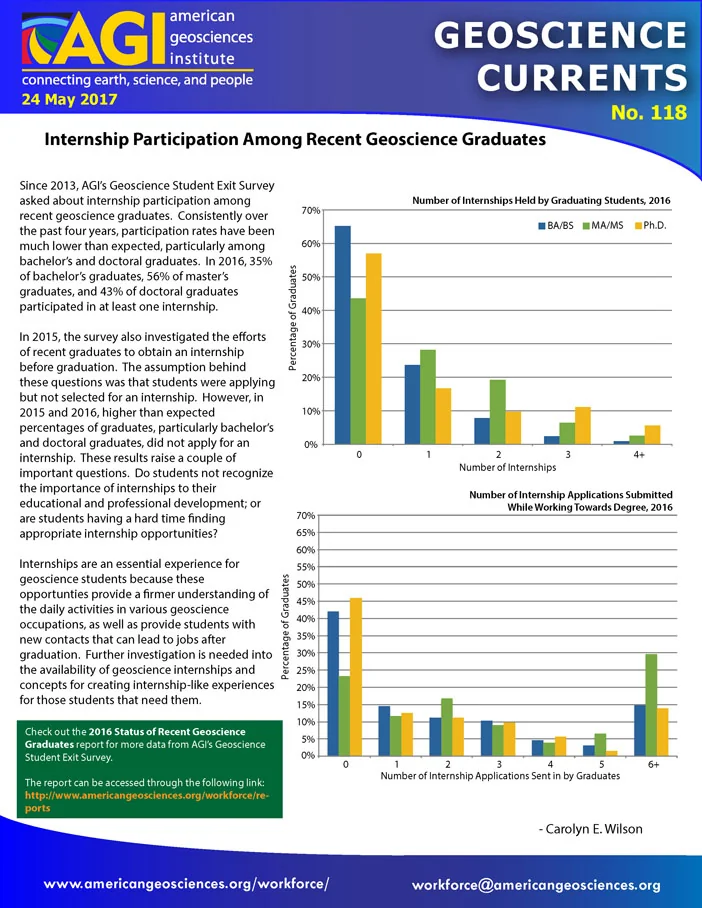
Internship Participation Among Recent Geoscience Graduates

Geoscience student participation rates in internships have been lower than expected over the past four years. Many graduates, particularly bachelor's and doctoral students, did not apply for an internship despite its importance for their education and career development. Further research is needed to understand the reasons behind this trend and explore alternative experiences for students who need them.

Profession Data
Brief 2017-05-05

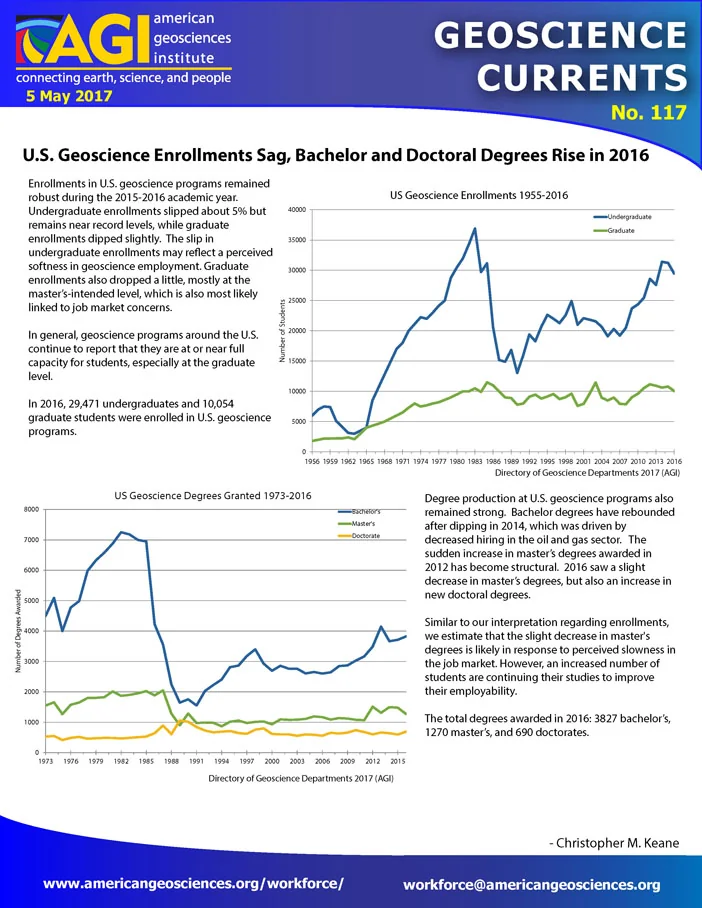
U.S. Geoscience Enrollments Sag, Bachelor and Doctoral Degrees Rise in 2016

Enrollments in US geoscience programs remained strong during the 2015-2016 academic year, with undergraduate enrollments slipping slightly but graduate enrollments also dropping due to concerns about job market conditions. Despite this, many programs reported being at or near full capacity for students, particularly at the graduate level. The total degrees awarded in 2016 showed a rebound in bachelor's degrees and an increase in doctoral degrees, while master's degrees decreased slightly.

Profession Data
Brief 2017-01-23

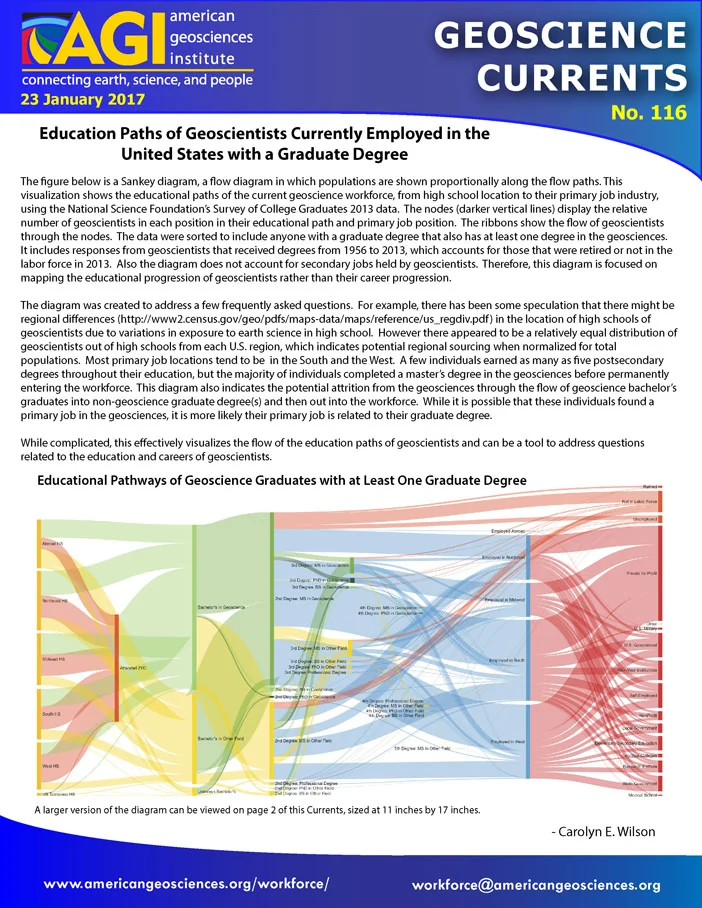
Education Paths of Geoscientists Currently Employed in the United States with a Graduate Degree

This visualization shows the educational paths of the current geoscience workforce, from high school location to their primary industry of employment. The majority of individuals completed a master’s degree in the geosciences before permanently entering the workforce. This diagram also indicates the potential attrition from the geosciences through the flow of geoscience bachelor’s graduates into non-geoscience graduate degree(s) and then out into the workforce.

Profession Data
Brief 2016-12-20

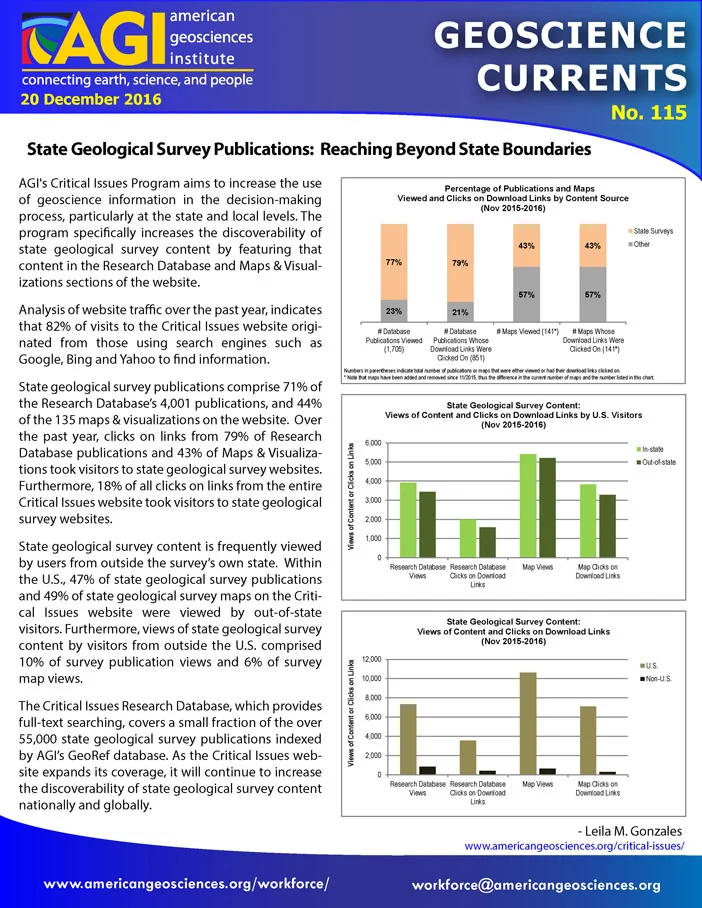
State Geological Survey Publications: Reaching Beyond State Boundaries

AGI's Critical Issues program aims to increase the discoverability of state geological survey content by featuring that content in the Research Database and Maps & Visualizations sections of its website. State geological survey publications are extensively accessed beyond their originating states, with 47% of publication views and 49% of map views from Critical Issues program web assets coming from out-of-state users within the U.S. Additionally, international visitors account for 10% of publication views and 6% of map views.

Profession Data
Brief 2016-10-19

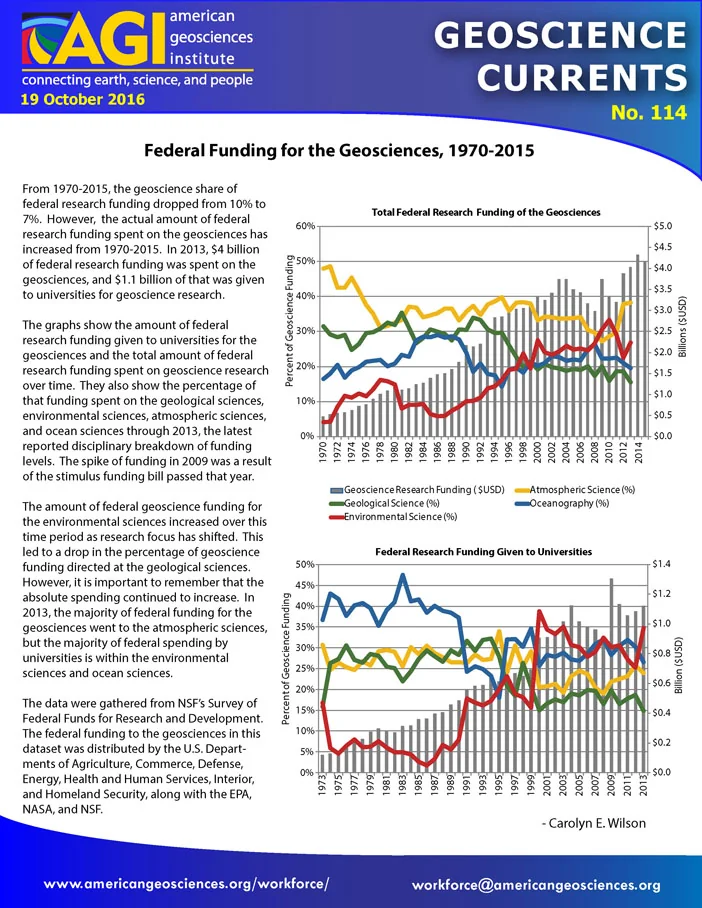
Federal Funding for the Geosciences, 1970-2015

From 1970-2015, the geoscience share of federal research funding declined, yet the actual amount of federal research funding spent on the geosciences increased. In 2013, the majority of federal funding for the geosciences went to the atmospheric sciences, but the majority of federal spending by universities was focused on the environmental sciences and ocean sciences.

Profession Data
Brief 2016-09-06

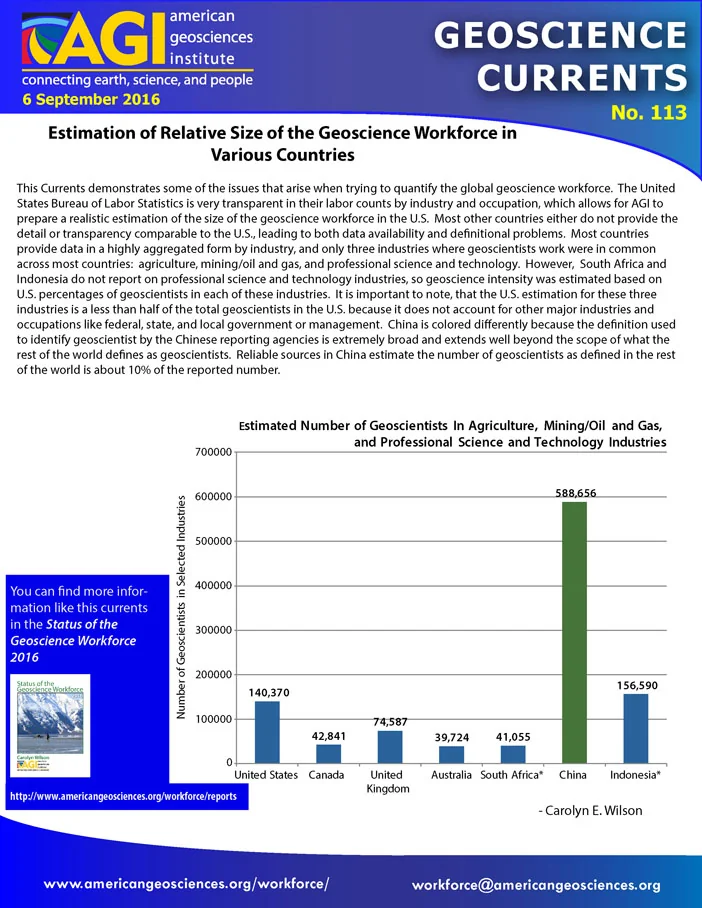
Estimation of Relative Size of the Geoscience Workforce in Various Countries

This data brief highlights challenges in quantifying the global geoscience workforce due to variations in data transparency and definitions across countries. While the U.S. provides detailed labor data, many countries report aggregated data, often limited to industries like agriculture, mining/oil and gas, and professional science and technology. For countries like South Africa and Indonesia, U.S. geoscience percentages were used to estimate workforce size, but this excludes many geoscientists working in other industries. China uses broader definitions than other countries, with reliable estimates suggesting only 10% align with global standards.

Profession Data
Brief 2016-09-02

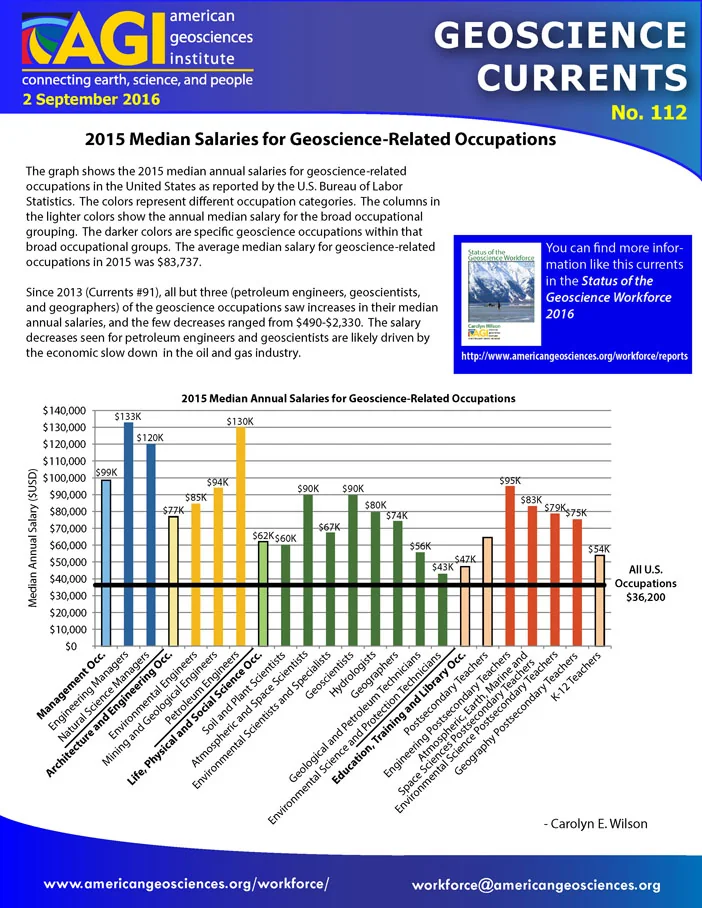
2015 Median Salaries for Geoscience-Related Occupations

The average median salary for geoscience-related occupations in 2015 was $83,737. Most geoscience occupations saw increases in salaries since 2013, with some decreases due to the economic slowdown in the oil and gas industry. The few decreases ranged from $490 to $2,330.

Profession Data
Brief 2016-08-12

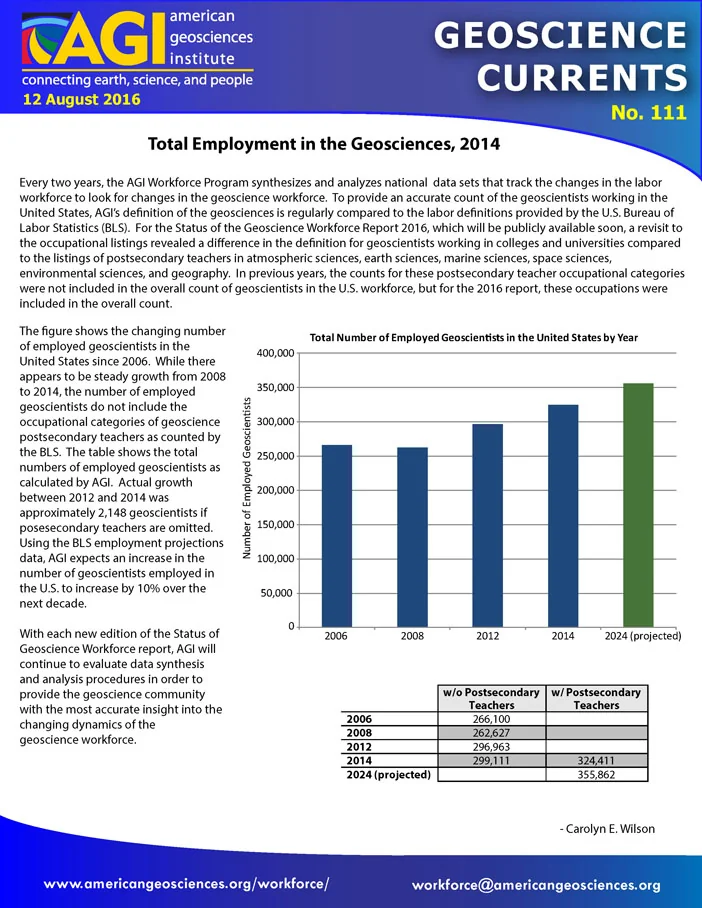
Total Employment in the Geosciences, 2014

In 2014, AGI reported a steady increase in geoscience employment in the United States since 2006. This growth was more pronounced when including postsecondary teachers in atmospheric, earth, marine, space, environmental sciences, and geography, reflecting AGI's updated definition of geoscience occupations. Between 2012 and 2014, the geoscience workforce expanded by approximately 2,148 professionals, excluding postsecondary educators. AGI projected a 10% increase in geoscience employment over the next decade, indicating a positive outlook for the field.

Profession Data
Brief 2016-06-02

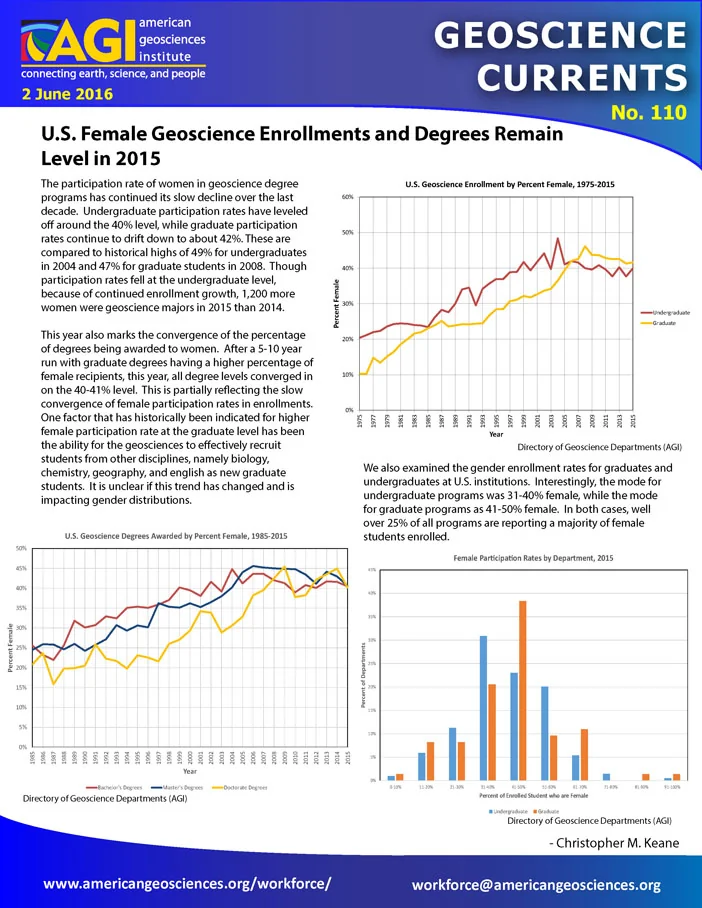
U.S. Female Geoscience Enrollments and Degrees Remain Level in 2015

The participation rate of women in geoscience degree programs has continued to decline over the last decade, with undergraduate rates leveling off at around 40% and graduate rates dropping to about 42%. Despite this decline, more women were enrolled as geoscience majors in 2015 than in previous years due to increased enrollment growth. The gender distribution of graduates and undergraduates varies by program, but overall, over 25% of programs report a majority of female students enrolled.

Profession Data
Brief 2016-05-31

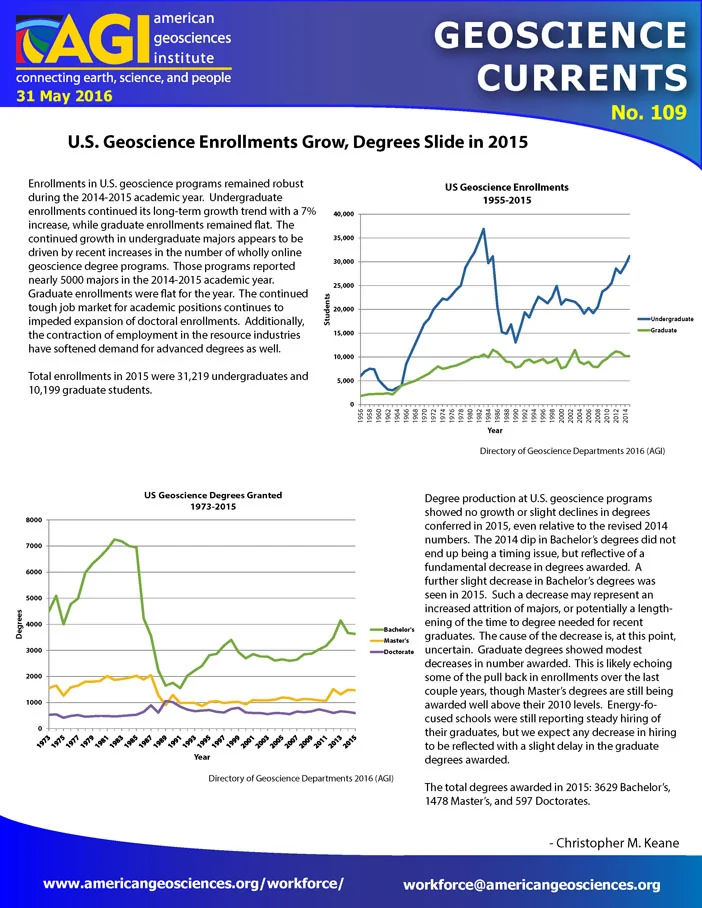
U.S. Geoscience Enrollments Grow, Degrees Slide in 2015

Enrollments in U.S. geoscience programs remained steady in 2015, with undergraduate majors increasing by 7% and graduate enrollments remaining flat. The number of degrees awarded also showed no significant growth, with a slight decrease in Bachelor's degrees and modest decreases in Master's and Doctoral degrees. Despite this, energy-focused schools reported steady hiring of their graduates, indicating that the impact of the decline may be delayed.

Profession Data
Brief 2016-01-19

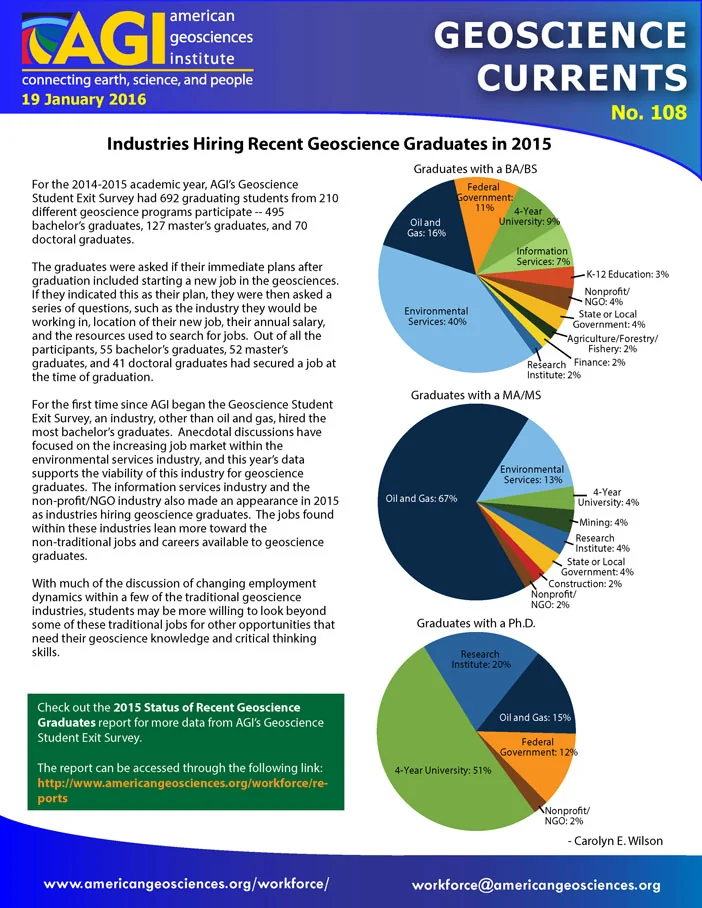
Industries Hiring Recent Geoscience Graduates in 2015

In the 2014-2015 academic year, the American Geosciences Institute's Geoscience Student Exit Survey reported that, for the first time, the environmental services industry hired the most bachelor's-level geoscience graduates, surpassing the oil and gas sector. Additionally, graduates found employment in non-traditional sectors such as information services and non-profit/NGO organizations, indicating a diversification of career paths for geoscience students. This shift suggests that graduates are increasingly exploring opportunities beyond traditional geoscience industries, applying their knowledge and skills in a broader range of fields.

Profession Data
Brief 2015-10-14

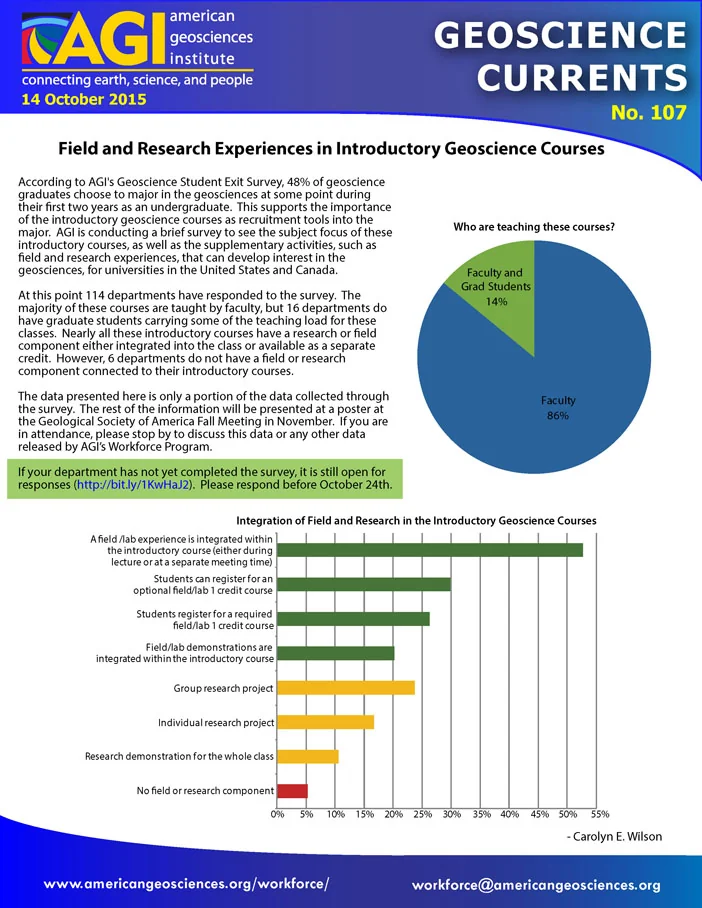
Field and Research Experiences in Introductory Geoscience Courses

According to AGI's Geoscience Student Exit Survey, 48% of geoscience graduates choose to major in the geosciences at some point during their first two years as an undergraduate. AGI conducted a brief survey to examine the characteristics of geoscience introductory courses that can develop interest in the geosciences. Most introductory courses were taught by faculty and included a research or field component either integrated into the class or available as a separate credit.

Profession Data
Brief 2015-09-23

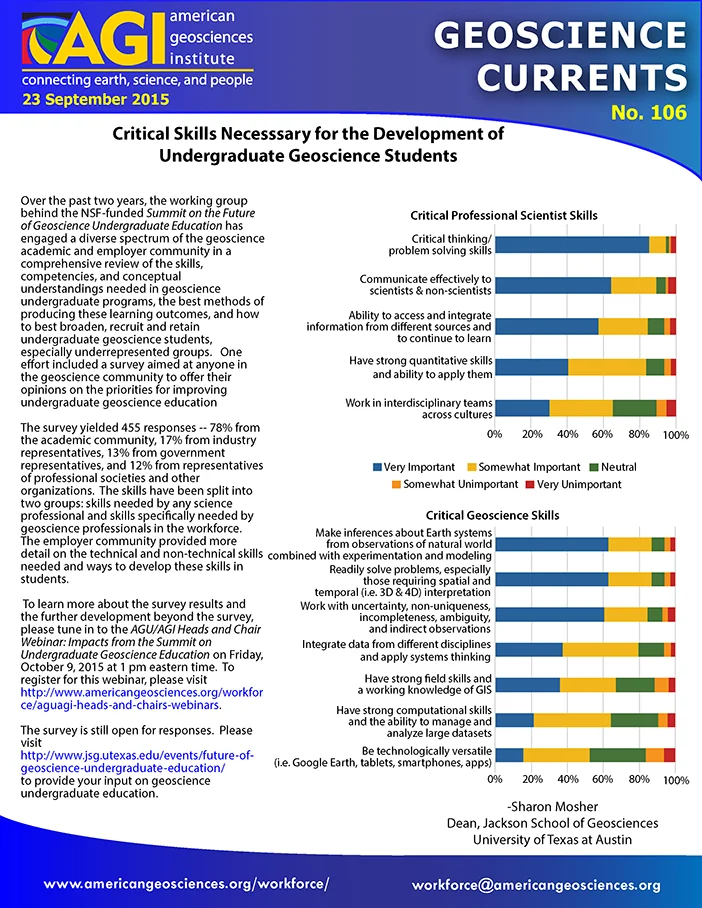
Critical Skills Necessary for the Development of Undergraduate Geoscience Students

The NSF-funded Summit on the Future of Geoscience Undergraduate Education conducted a comprehensive review of skills needed in geoscience programs. A survey with 455 responses from various groups provided insights into technical and non-technical skills required for geoscience professionals. The results will be discussed during an AGU/AGI Heads and Chair Webinar on October 9, 2015.

Profession Data
Brief 2015-08-13

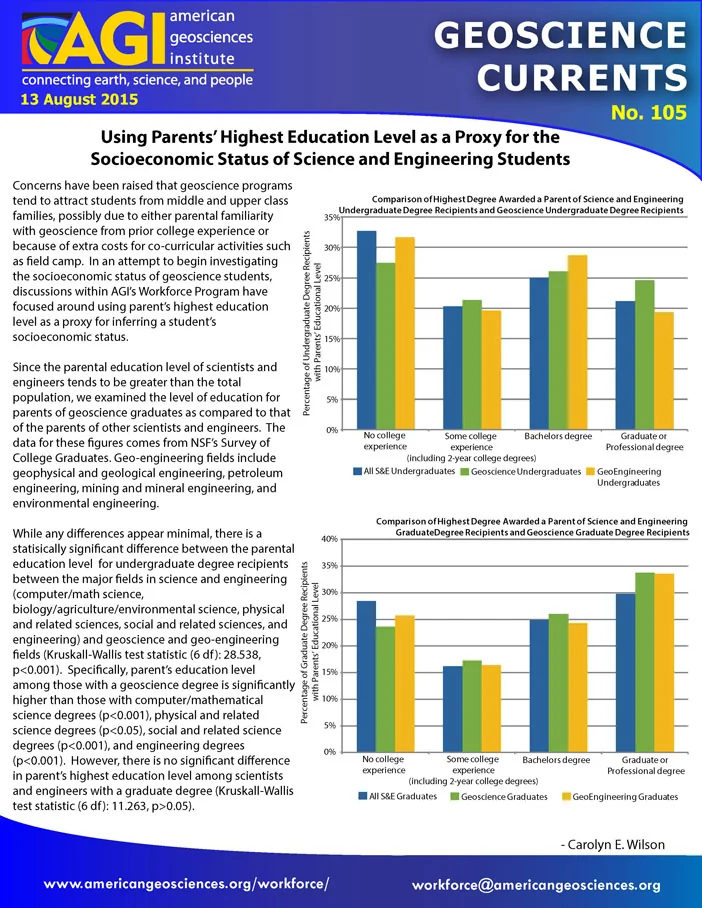
Using Parents' Highest Education Level as a Proxy for the Socioeconomic Status of Science and Engineering Students

Geoscience programs may attract students from middle and upper-class families due to factors like parental familiarity with the field and the costs of activities such as field camps. AGI analyzed parental education levels as a proxy for socioeconomic status, finding that geoscience graduates are more likely to have parents with higher education levels compared to graduates in other science and engineering fields. This trend is significant among undergraduate degree holders but not for those with graduate degrees.

Profession Data
Brief 2015-06-18

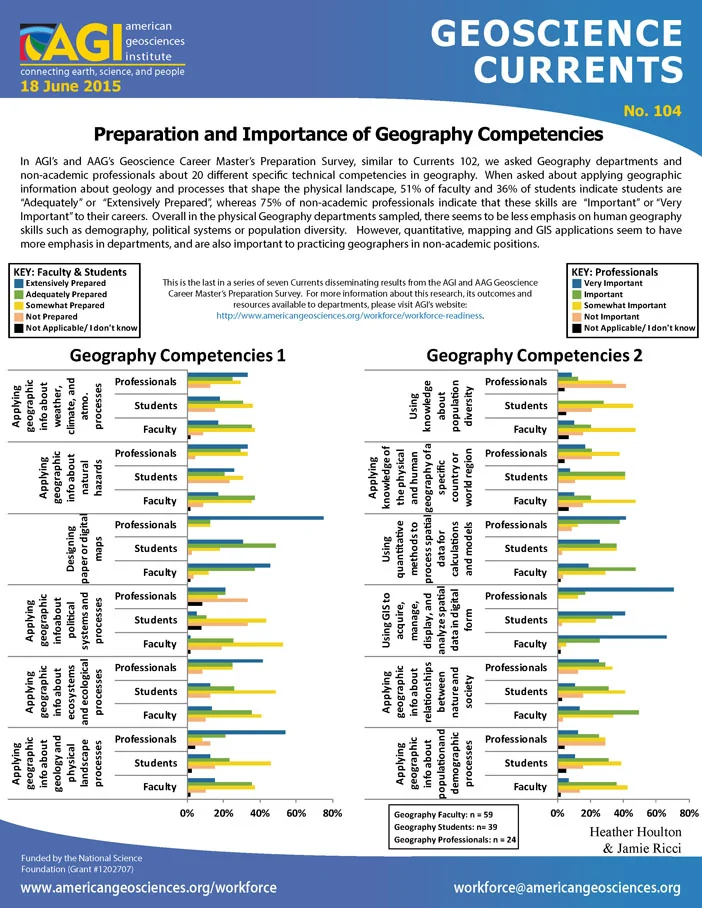
Preparation and Importance of Geography Competencies

The AGI and AAG Geoscience Career Master's Preparation Survey found that students in physical geography departments are adequately or extensively prepared for applying geographic information about geology and processes, but human geography skills such as demography and population diversity receive less emphasis. In contrast, quantitative, mapping, and GIS applications have more emphasis in these departments and are also important to practicing geographers in non-academic positions. The survey results suggest that there is a need for greater emphasis on certain skills in physical geography departments.

Profession Data
Brief 2015-05-29

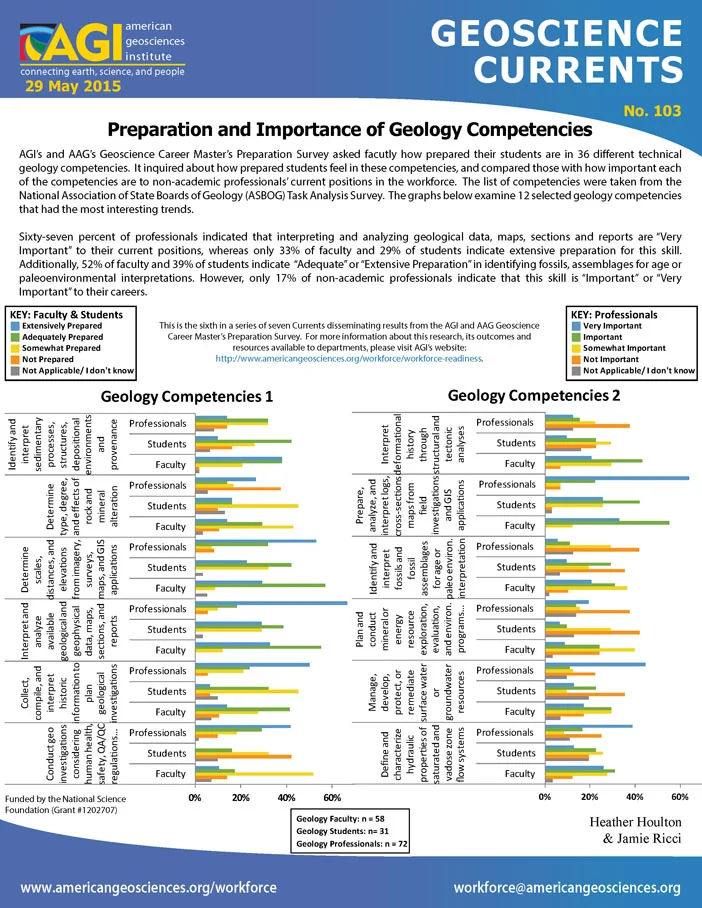
Preparation and Importance of Geology Competencies

The AGI's Geoscience Career Master's Preparation Survey found that professionals highly value skills such as interpreting geological data, but faculty and students may not be adequately prepared for these skills. Only 17% of non-academic professionals consider identifying fossils a key skill in their careers, despite 52% of faculty and 39% of students indicating they have adequate preparation for this skill. The survey is part of a series of seven Currents disseminating results from the AGI and AAG Geoscience Career Master's Preparation Survey.

Profession Data
Brief 2015-05-13

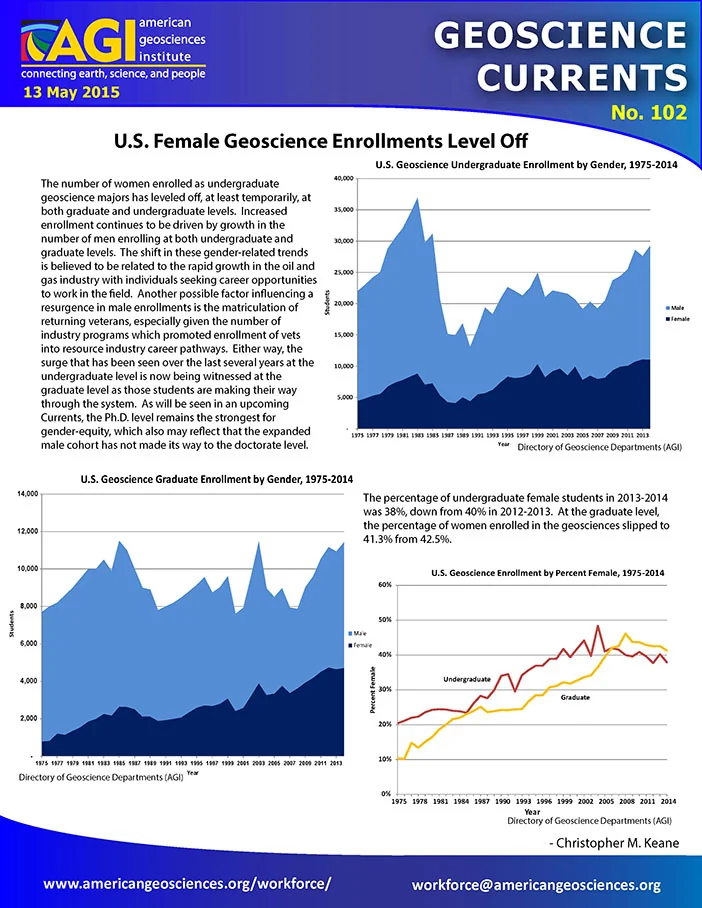
U.S. Female Geoscience Enrollments Level Off

Male enrollment in geoscience programs is increasing due to the growth of the oil and gas industry and the matriculation of returning veterans. The percentage of female students in geoscience programs has decreased over the past few years, with a notable drop from 40% in 2012-2013 to 38% in 2013-2014 at the undergraduate level. At the graduate level, the percentage of women enrolled also declined, from 42.5% in 2012-2013 to 41.3% in 2013-2014.

Profession Data
Brief 2015-04-07

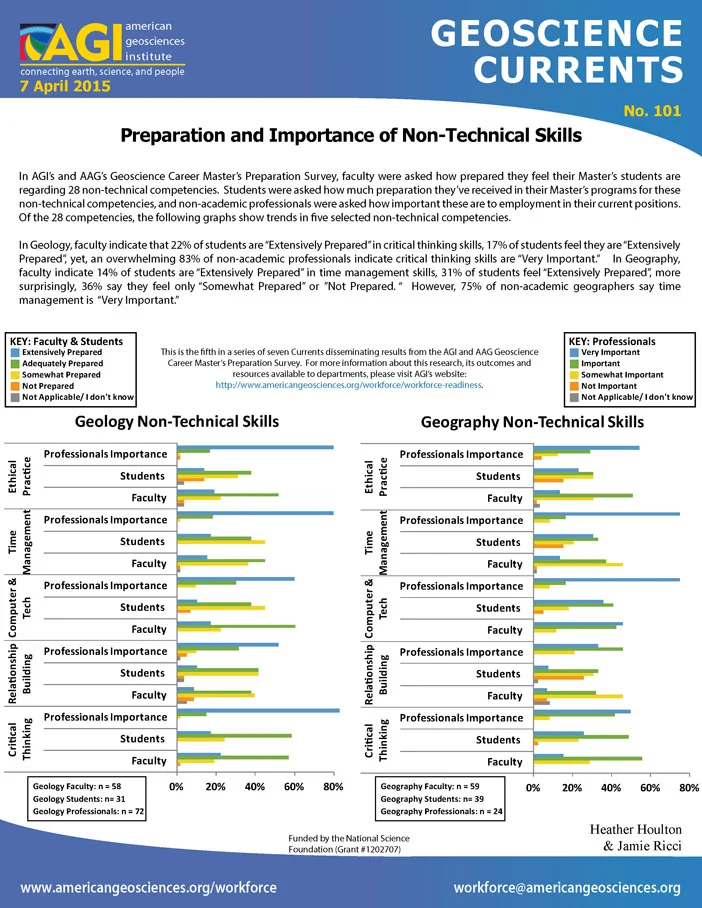
Preparation and Importance of Non-Technical Skills

The AGI and AAG Geoscience Career Master's Preparation Survey found that faculty believe their students are not adequately prepared in certain non-technical competencies, such as critical thinking skills and time management. However, non-academic professionals reported a higher level of importance for these skills in the workplace. The survey results highlight gaps between academic preparation and industry expectations in geoscience careers.

Profession Data
Brief 2015-03-27

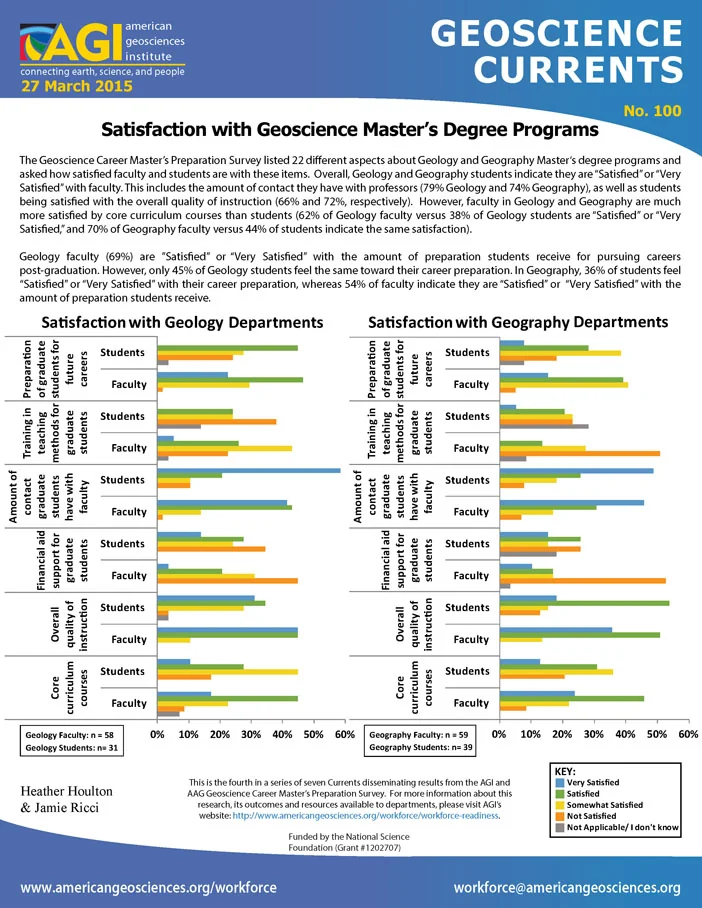
Satisfaction with Geoscience Master's Degree Programs

The Geoscience Career Master's Preparation Survey found that faculty in Geology and Geography are generally more satisfied with their programs than students, particularly with core curriculum courses and career preparation. However, there is a notable gap between faculty and student satisfaction rates, with 45% of Geology students feeling unsatisfied with their career preparation compared to 54% of faculty.

Profession Data
Brief 2015-03-16

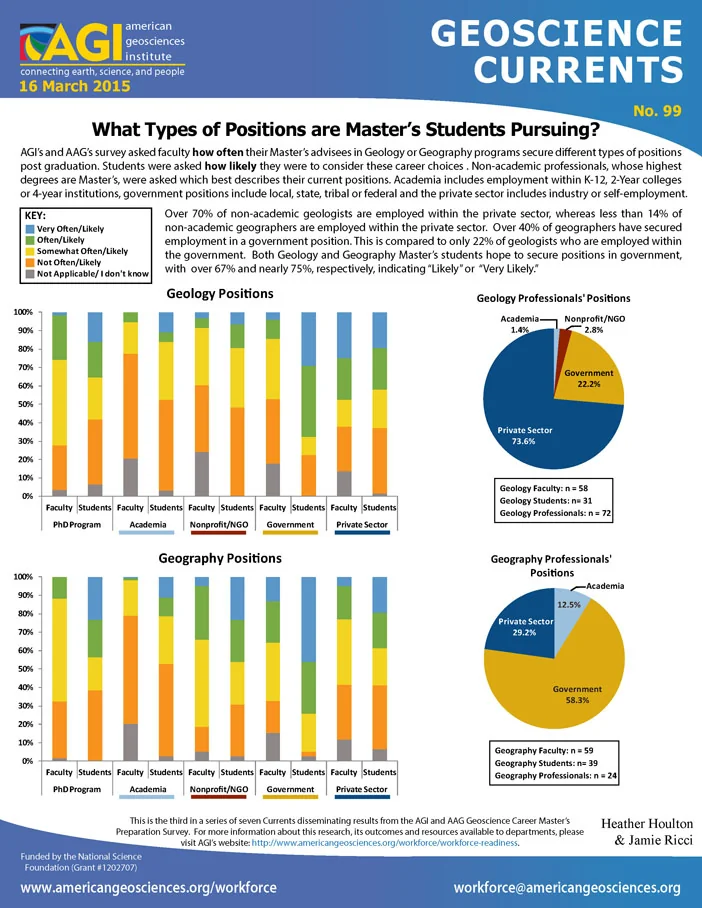
What Types of Positions are Master's Students Pursuing?

The AGI and AAG Geoscience Career Master's Preparation Survey found that non-academic geologists are more likely to be employed in the private sector (over 70%) compared to geographers (less than 14%). Both geology and geography students expressed strong interest in government positions, with over 67% of geology graduates and nearly 75% of geography graduates indicating they were

Profession Data
Brief 2015-03-06

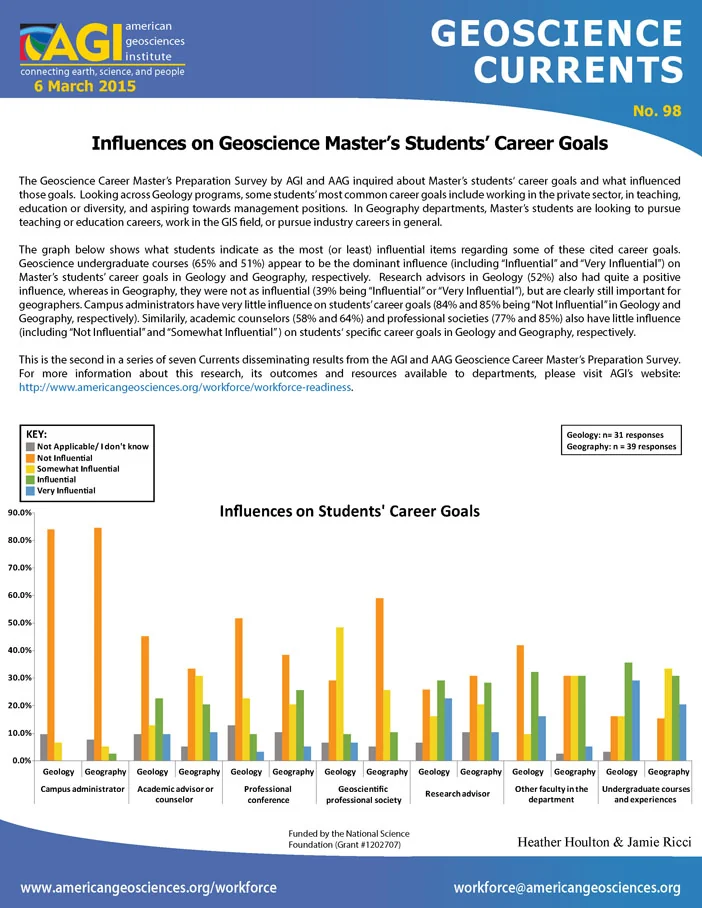
Influences on Geoscience Master's Students' Career Goals

The Geoscience Career Master's Preparation Survey found that students' most common career goals include working in the private sector, teaching, education, or diversity, and aspiring towards management positions. The survey also revealed that geoscience undergraduate courses and research advisors have a significant influence on students' career goals, while campus administrators, academic counselors, and professional societies have little to no impact.

Profession Data
Brief 2015-02-23

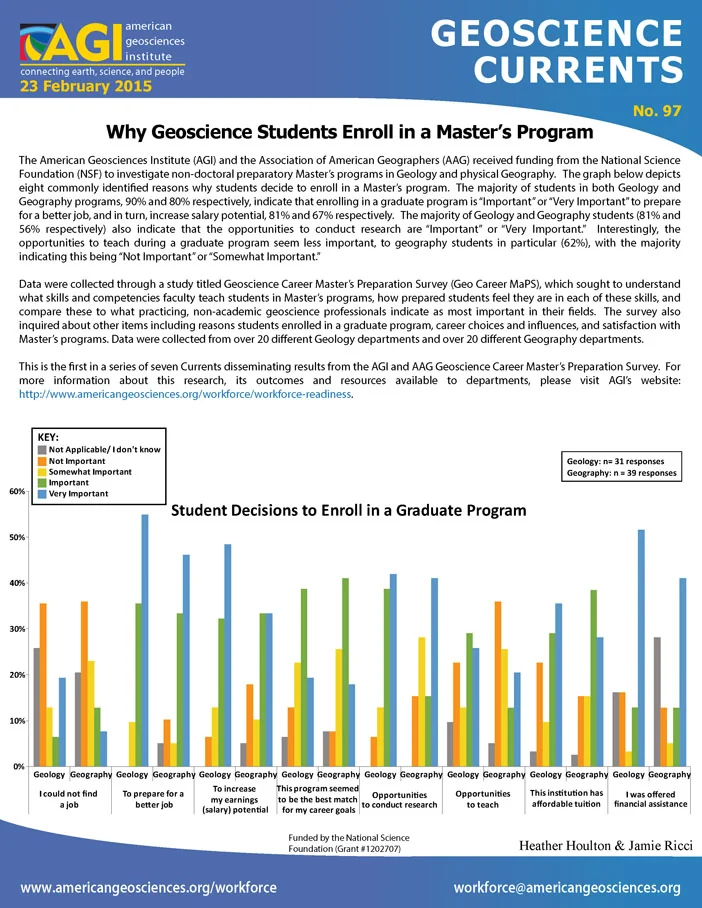
Why Geoscience Students Enroll in a Master's Program

The American Geosciences Institute (AGI) and the Association of American Geographers (AAG) conducted a survey to investigate non-doctoral preparatory Master's programs in Geology and physical Geography. The survey found that students in both fields value research opportunities and career advancement, but place less emphasis on teaching during graduate programs. The results are part of a series of seven Currents disseminating data from the AGI and AAG Geoscience Career Master's Preparation Survey.

Profession Data
Brief 2015-01-28

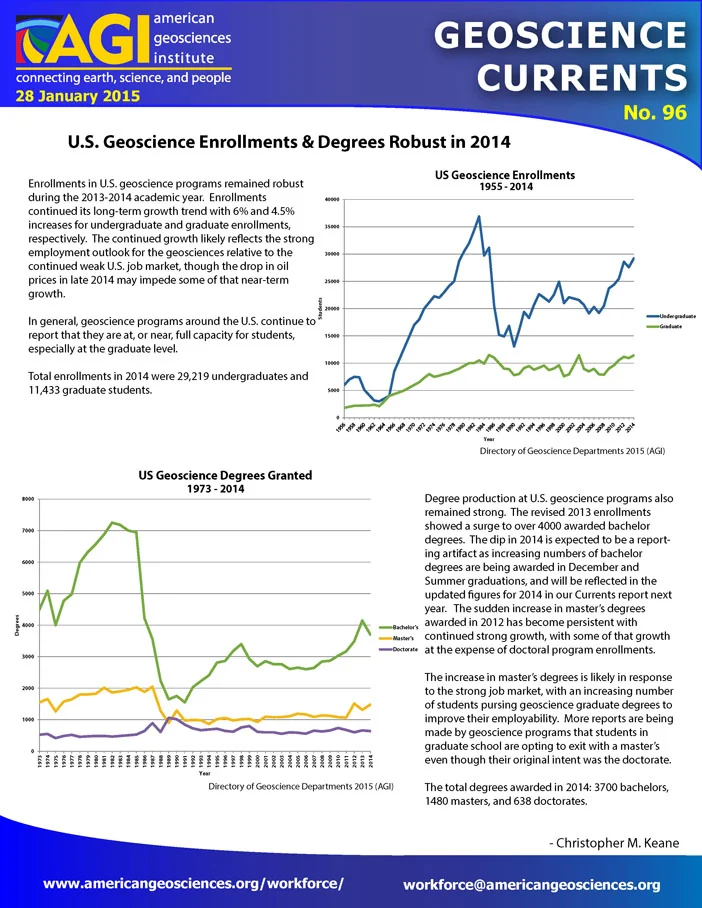
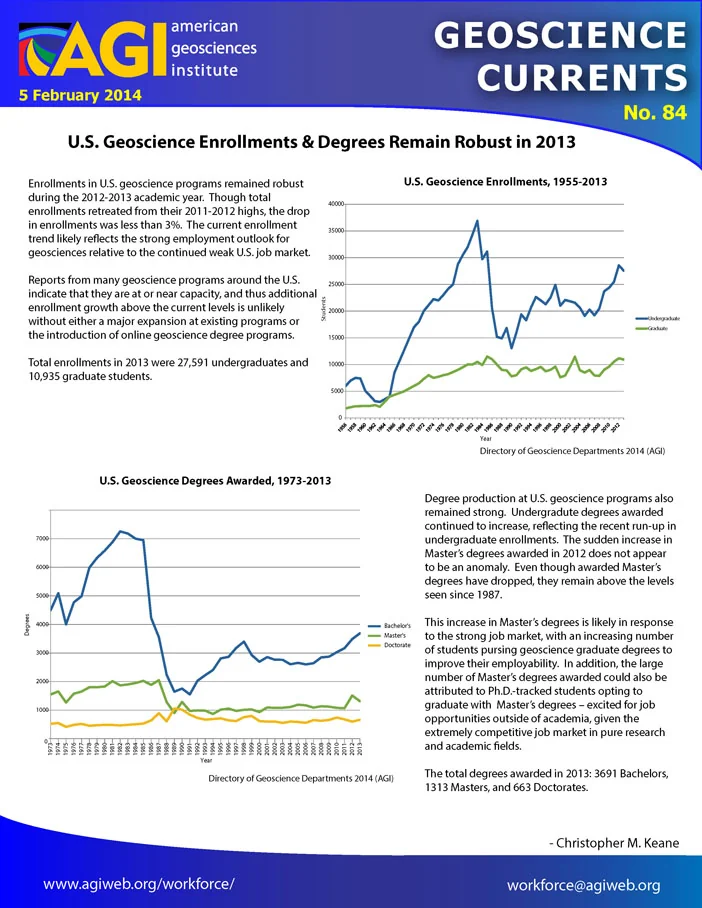
U.S. Geoscience Enrollments & Degrees Robust in 2014

Enrollments in U.S. geoscience programs continued to grow, with 6% and 4.5% increases for undergraduate and graduate enrollments, respectively, in the 2013-2014 academic year. The strong employment outlook for geosciences contributed to this growth, although a drop in oil prices may have impacted near-term growth. Total degrees awarded in 2014 were 3,700 bachelors, 1,480 masters, and 638 doctorates.

Profession Data
Brief 2014-12-11

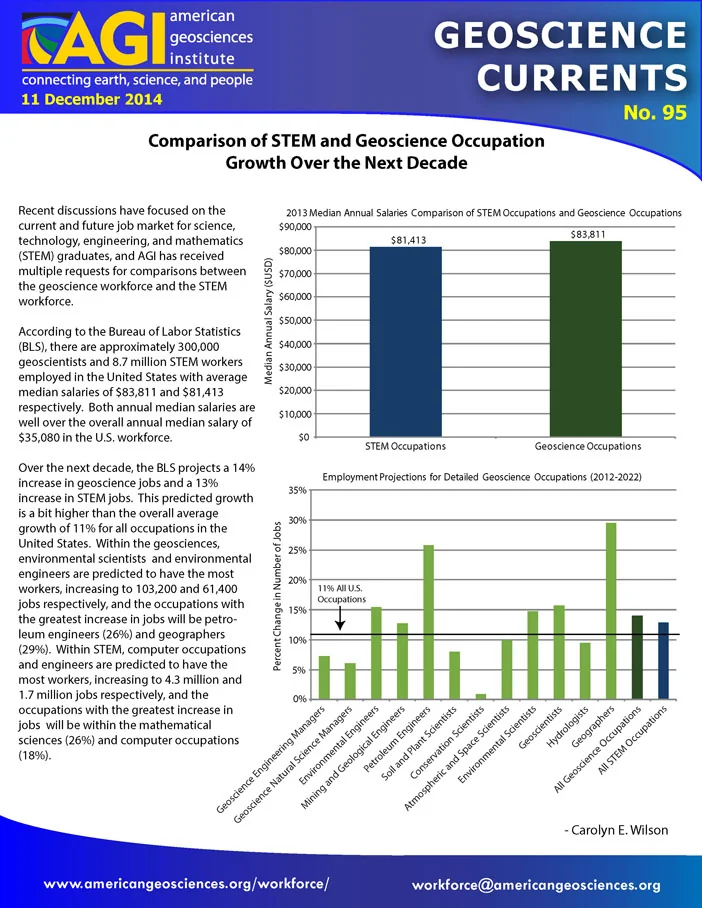
Comparison of STEM and Geoscience Occupation Growth Over the Next Decade

The geoscience workforce is projected to grow by 14% over the next decade, with environmental scientists and engineers expected to see the largest increase in jobs. In contrast, the STEM workforce is also expected to grow, with computer occupations and engineers predicted to see significant increases. Both fields are expected to outperform the overall US workforce growth rate of 11%.

Profession Data
Brief 2014-11-10

Challenges Recent Graduates Overcame to Complete Degree

Recent geoscience graduates reported various challenges that hindered their completion of their degree, including difficulty with specific classes, financial issues, and personal problems. The most common obstacles were related to academic performance, such as struggling with Calculus I, II, and Physics, and balancing school and work.

Profession Data
Brief 2014-10-16

Explanation of the Predicted Geoscience Workforce Shortage

The <em>Status of the Workforce Report 2014</em> projected a shortage of 135,000 geoscientists by 2022, factoring in job growth, retirements, and an estimated 51,000 new graduates. While uncertainties exist due to assumptions about career entry and retirement patterns, the report highlights geoscience as a lucrative field and warns of a potential loss of skills and knowledge due to a large wave of retirements. This emphasizes the need for strategies to address workforce gaps and knowledge transfer.

Profession Data
Brief 2014-08-29

Chosen Degree Fields of Geoscience Graduates in the 2013-2014 Academic Year

AGI distributed its Geoscience Student Exit Survey to 167 geocience departments and received 688 responses from graduating students. The survey found that geology was the most popular degree among geoscience undergraduates, while among geoscience graduate students specialization in different geoscience-related fields was more common than graduate degrees in geology.

Profession Data
Brief 2014-08-12

2013 Median Salaries for Geoscience-Related Occupations

In 2013, median annual salaries for most geoscience-related occupations in the United States had higher median salaries than corresponding broader occupational groups. Since 2011, most geoscience occupations have seen increases in their median annual salaries, with petroleum engineers experiencing the largest jump. The geosciences remain a lucrative employment option within the current workforce.

Profession Data
Brief 2014-07-24

The Industries of Geoscience Graduates' First Jobs by Degree Field

The American Geosciences Institute's Geoscience Student Exit Survey (2013-2014) illustrates the diverse industries that recent geoscience graduates enter, highlighting the versatility of geoscience degrees. Graduates find employment across various sectors, including environmental services, oil and gas, government agencies, and academia. The survey's circular diagram visually represents the connections between specific degree fields and the industries where graduates secure their first jobs, emphasizing the interdisciplinary nature of geoscience education and its applicability to multiple career paths.

Profession Data
Brief 2014-07-08

Federal Grant Funding for the Geosciences for the Different Disciplines and from Various Agencies in 2010

According to NSF's Survey of Federal Funds for Research and Development, in 2010, the federal government spent $3.3 billion on grants for basic and applied research in geoscience. The majority of this investment was spent on projects in the environmental sciences. The major agencies granting funding for geoscience research to universities include the Department of Agriculture, Department of Defense, Department of Energy, NASA, and NSF totaling $1.1 billion.

Profession Data
Brief 2014-06-12

Rankings and Top 10 Degree Granting Institutions for Four-Year University Faculty

Approximately 72% of the geoscience faculty are tenured, while 14% are untenured but in tenure-track positions, and 14% are researcher scientists, adjunct professors, and lecturers. The Massachusetts Institute of Technology has graduated the highest number of current geoscience faculty, accounting for approximately 3% of total geoscience tenured and tenured-track faculty.

Profession Data
Brief 2014-05-23

Underrepresented Minority Participation in the Geosciences at the Two-Year College Level

In 2011, enrollments at two-year colleges were 16% African American, 19% Hispanic, and 2% Native American/Native Alaskan enrollments, compared to 14%, 10%, and 1% respectively at four-year institutions. With over 400 two-year colleges offering geoscience programs or courses, enhancing recruitment and support at these institutions could boost underrepresented minority participation in the geosciences, either through direct graduation or by facilitating transfers to four-year programs.

Profession Data
Brief 2014-02-07

U.S. Geoscience Degrees by Gender

The number of geoscience degrees being awarded to women has continued to increase through time. Of particular note is the recent steady increase in doctorates awarded to women. This trend has not been reflected in the gender distribution in faculty, but it is potentially too early to see this given the fact that over 65% of new doctorate recipients proceed on to a post-doc position.

Profession Data
Brief 2014-02-06

U.S. Female Geoscience Enrollment Continues to Grow

The number of women enrolled as undergraduate geoscience majors increased, but at the graduate level remained steady. The recent trend of lower female participation was largely driven by new male enrollments, which decreased in 2012-2013. Possible reasons for this trend include job opportunities and the draw-down of U.S. military personnel.

Profession Data
Brief 2014-02-05

U.S. Geoscience Enrollments and Degrees Remain Robust in 2013

During the 2012-2013 academic year, U.S. geoscience enrollments remained strong, dropping slightly (less than 3%) from the previous year's peak due to enrollment capacity limits and a strong geoscience job market. Undergraduate degree production continued to rise, reflecting earlier enrollment growth, while the sharp increase in Master’s degrees in 2012 likely resulted from students seeking to enhance employability or shifting from Ph.D. tracks.

Profession Data
Brief 2014-01-27

The Challenges of Comparing Data on Minorities in the Geosciences

The data on underrepresented minorities in geoscience degree programs is often difficult to acquire due to variations in definitions and sources, such as the Department of Education's Integrated Postsecondary Education Data System (IPEDS). The Geoscience Student Exit Survey collects self-identifying data, which can lead to differences in percentages compared to IPEDS data. These discrepancies highlight the need for accurate and consistent tracking of demographic data in geoscience programs.

Profession Data
Brief 2013-12-06

Field Camp Attendance Continues to Steadily Increase

U.S. field camp attendance has increased steadily since 2006, with 2,973 students attending in 2013. The majority of field camps are held in Western states, particularly Montana, Wyoming, Colorado, Utah, and New Mexico.

Profession Data
Brief 2013-10-23

Salaries and Employment Locations of Recent Geoscience Graduates

The National Geoscience Student Exit Survey, conducted by AGI in 2013, gathered data on recent geoscience degree recipients' employment experiences upon graduation. The majority of graduates found jobs in Texas, California, and Oklahoma, with most bachelor's graduates earning salaries between $20,000 and $60,000. Master's graduates tended to earn higher salaries than doctoral graduates, with many petroleum industry jobs paying over $90,000.

Profession Data
Brief 2013-10-18

New Geoscience Graduates' Employment and Education Plans

In Spring 2013, the American Geosciences Institute's National Geoscience Student Exit Survey revealed that 38% of bachelor's geoscience graduates planned to pursue graduate studies, consistent with 2012 figures. However, only 17% of master's graduates intended to continue their education, a decline from 38% in 2012, while 16% of doctoral graduates planned further studies, up from 5% in 2012. Employment prospects varied, with most doctoral graduates securing geoscience positions by graduation, 43% of master's graduates finding jobs in the field, and bachelor's graduates predominantly seeking employment or enrolling in graduate programs.

Profession Data
Brief 2013-10-16

Internship Experiences of Recent Geoscience Graduates

AGI's National Geoscience Student Exit Survey found that 40% of bachelor's students, 63% of master's students, and 35% of doctoral students had at least one internship experience during their postsecondary education. Internships were rated as 'Very Important' by 80% of bachelor's students, 88% of master's students, and 67% of doctoral students for their academic and professional development. Master's students who were employed in the geosciences after graduation were more likely to have been interns at their employer, with 48% reporting this experience.

Profession Data
Brief 2013-10-07

Graduates' Decision Points for Majoring in the Geosciences, Spring 2013

The AGI's National Geoscience Student Exit Survey found that most geoscience graduates chose to major in the field during their undergraduate education, with various reasons cited for this decision. The top reasons included enjoying outdoor experiences, finding entry-level courses stimulating, and being drawn to career opportunities. Other factors such as faculty influence, desire for research, and impact on society also played a role in students' choices.

Profession Data
Brief 2013-10-02

Quantitative Skills and Core Science Courses Taken by Geoscience Graduates, Spring 2013

In Spring 2013, the American Geosciences Institute's National Geoscience Student Exit Survey revealed that over 70% of geoscience graduates had completed Calculus I, with the majority also completing Calculus II. However, enrollment in advanced mathematics courses beyond Calculus II declined significantly among bachelor's and master's students, a trend also observed in graduates planning to pursue further studies. Additionally, nearly all geoscience graduates had taken at least one chemistry course, and the majority had completed at least one physics course during their postsecondary education.

Profession Data
Brief 2013-09-19

Impact of Societies and Professional Development on Early-Career Underrepresented Minority Faculty

The American Geosciences Institute (AGI) and the National Academy of Engineering (NAE) held a professional development workshop that included sessions on teaching techniques, campus leadership, and professional societies. The workshop had a positive impact on attendees' knowledge, skills, and confidence in their careers, with increases in frequency of using effective teaching techniques, mentoring others, and seeking advice from mentors. Overall, respondents found the guidance from professional societies and instructional guidance to be valuable to their careers, both immediately following the workshop and over time.

Profession Data
Brief 2013-09-13

Impact of Federal Agencies on the Professional Development of Early-Career Underrepresented Minority Faculty in the Geosciences

The American Geosciences Institute (AGI) and National Academy of Engineering (NAE) held a workshop for underrepresented minorities in April 2012, which had a positive effect on attendees' confidence and familiarity with federal agencies. Attendees reported increased confidence in meeting with federal agencies, submitting proposals, and attending sponsored events after the workshop, and a decrease in those who had never performed these activities before. The workshop also led to an increase in respondents having done related behaviors at least once in the 13 months following the event.

Profession Data
Brief 2013-06-19

The Community College to University Pathway: Geoscience Majors in the Texas Public University System

According to data from Texas public universities, 69% of geoscience majors transferred from one of 67 Texas community colleges in 2012, with some universities receiving students from a pool of more than 10 community colleges. The largest pool was at Texas A&M University, College Station, which received transfer students from 32 community colleges.

Profession Data
Brief 2013-04-29

New Geoscience Graduates' Employment and Education Plans, Spring 2012

AGI's National Geoscience Student Exit Survey found that 38% of undergraduate geoscience degree recipients planned to pursue a graduate degree, with most intending to work towards their Master's. The survey also revealed that many students were seeking or had found jobs in the geosciences, with 48% of undergraduates and 38% of graduate degree recipients actively looking for geoscience employment. The average salaries for Bachelor's ranged from $30,000 to $40,000 and for graduate degree recipients was between $60,000 and $70,000. Most graduates noted using personal networks or faculty referrals to find geoscience jobs.

Profession Data
Brief 2013-04-04

U.S. Female Geoscience Degree Rates in Atmospheric Science, Geography, Geoscience and Ocean Science, 2000-2012

Between 2000 and 2012, the percentage of geoscience degrees awarded to women in the U.S. varied by subdiscipline and degree level. At the undergraduate level, women consistently earned less than 50% of degrees across geoscience, geography, and atmospheric science, peaking at 45% in geoscience/geology in 2004. Master's degrees showed higher female representation, particularly in ocean sciences, where women earned over 50% of degrees from 2008 to 2012, peaking at 66% in 2010. At the doctoral level, women’s representation peaked at 38% in atmospheric sciences and 59% in ocean sciences, but both declined significantly by 2012.

Profession Data
Brief 2013-02-22

GeoConnection Recruitment Packets - Final Update

Between 2009 and 2011, AGI distributed 2,279 recruitment packets to 82 U.S. geoscience departments to support undergraduate geoscience recruitment and retention efforts. These packets included informational brochures, internship details, a special edition of EARTH Magazine, a "Why Earth Science" DVD, and a grain size ruler. AGI also provided free one-year memberships to up to five professional societies, including access to journals and publications, to encourage student engagement in the geoscience community.

Profession Data
Brief 2013-02-11

U.S. Female Enrollments and Degrees, 2011-2012

Female participation rates in U.S. geosciences have declined at the Bachelor's and Master's levels, but increased at the Doctorate level between 2011-2012. The decline may be attributed to a peak in high-female participation in the mid-2000s. The next two years should indicate if this mid-2000s surge was simply a unique cohort and if this is a new systemic problem for the geosciences.

Profession Data
Brief 2013-02-01

U.S. Geoscience Enrollments and Degrees Grow Robustly in 2011-2012

The 2011-2012 academic year saw strong growth in U.S. undergraduate, but graduate enrollments remaine flat. Geoscience degrees also continued their upward trend, with a 44% increase in Master's degrees awarded and robust growth in environmental science and geology programs nationwide. Doctoral degrees remained steady, continuing their long-term trend.

Profession Data
Brief 2013-01-17

Utilizing NSF's Robert Noyce Teacher Scholarship to Increase Funding for Geoscience Education

The Robert Noyce Teacher Scholarship Program provides funding to institutions to support STEM majors and professionals in becoming K-12 teachers. The program has awarded an average of $51 million per year over the past three years, with a focus on general STEM education and some specific science or math disciplines. It could be a valuable source of funding for quality earth science instructors in K-12 education.

Profession Data
Brief 2012-09-26

AGI's National Geoscience Student Exit Survey, Spring 2012 Decision Points

The AGI's National Geoscience Student Exit Survey collected data from geoscience degree recipients about their experiences and career plans upon graduation. The survey found that over 30% of undergraduate students decided to major in the geosciences due to an introductory course or interest in the subject, while nearly 50% of Ph.D. students made a decision either before college or after completing their undergraduate degree. Most students, regardless of degree level, made their decision to major in the geosciences by their sophomore year.

Profession Data
Brief 2012-09-24

2011 Median and Starting Salaries for Geoscience-related Occupations

Median salaries for geoscience-related occupations were 30% higher than the median salary for all occupations in each state in 2011, with some states reporting data as far back as 2009. Starting salaries for these occupations were also competitive, with most being over 10% higher than the median salary for all occupations in each state. However, geoscience-related technician occupations tend to have lower starting and median salaries compared to other occupations.

Profession Data
Brief 2012-08-07

2011 Median Salaries for Geoscience-related Occupations

Most median salaries for geoscience-related occupations decreased by less than 3% between 2010-2011, yet 2011 salaries for non-technician, geoscience-related occupations outpaced broad occupational category salaries. Over the past five-years most salaries of geoscience-related occupations increased between 1-9%, with Petroleum Engineering salaries seeing the largest growth over the period, and Environmental Engineering salaries seeing the smallest.

Profession Data
Brief 2012-06-08

The Community College to University Pathway: Geoscience Majors in the California Public University System

Community colleges are a key part of many four-year university students post-secondary education pathways. Understanding the flow of students from community colleges to four-year institutions allows faculty to develop closer cross-institutional ties that can foster a stronger pipeline between community college and university programs. We examine data from 2010 for students in California community colleges transferring into geoscience programs in the California public university system (UC and CSU) to understand the robustness of student transfer networks between community college and universities within California.

Profession Data
Brief 2012-05-15

Geoscience Academic Provenance Series II - Assessing Students' Intrinsic Motivation Toward Pursuing the Geosciences

Houlton surveyed students about their intrinsic motivation, perceived competence, effort, importance, interest, and enjoyment towards pursuing geosciences. The results showed that students' perceived competence increased with education advancement, while effort and importance in geoscience activities also rose. Students' interest and enjoyment remained high throughout the studies.

Profession Data
Brief 2012-05-10

Geoscience Academic Provenance - Emigrants: An Additional Population Group

AGI found that only 33% of sophomore geoscience majors graduate with their degree, with most attrition occurring during sophomore and junior years. A follow-up study shed light on the elusive issue of geoscience attrition, by examining pathways of students who switched from geoscience to another discipline. These pathways revealed that perceived lack of job opportunities and flexibility in employment were common reasons for dropping the geoscience major.

Profession Data
Brief 2012-05-02

U.S. Geoscience Enrollments and Degrees Slip Slightly in 2010-2011

Geoscience enrollment numbers have retreated slightly from their peak in the prior year, but remain near record levels. Degrees conferred also declined, with a significant drop in bachelor's degrees awarded. The decline may be due to various factors such as students pursuing employment opportunities before graduation or impacts on state budgets.

Profession Data
Brief 2011-11-01

U.S. Field Camp Attendance Continues Upward Climb

Attendance at U.S. geoscience field camps has been steadily increasing, reaching 2,525 students in 2011, up 10% from 2010. This growth is attributed to both higher overall participation and the inclusion of additional field camps in the U.S. Field Camp database. Over the past five years, attendance has risen by 37%, and over the past decade, it has increased by 53%. Notably, many field camps are located in western states such as Colorado, New Mexico, Wyoming, Utah, and Montana.

Profession Data
Brief 2011-09-30

Employment Projections for Geoscience-related Occupations 2008-2018

Employment in geoscience-related occupations is expected to grow at a rate of 23% between 2008 and 2018. The professional, scientific, and technical services sector and waste management sector are projected to see significant employment growth. Environmental engineers will experience the largest growth in new jobs.

Profession Data
Brief 2011-09-26

Employment Growth in Geoscience-related Occupations Over the Past Decade

Employment in geoscience-related occupations remained relatively steady over the past year, with some slight contractions in certain occupations. Between 2001 and 2010, employment increased by 52,377 (29%) with significant growth in petroleum engineering occupations, and declines in hydrologists and geoscience engineering managers.

Profession Data
Brief 2011-09-19

2010 Salaries for Geoscience-related Occupations by Industry

In 2010, average aggregated salaries for geoscience-related occupations ranged from $137,660 for geoscience-related occupations in the finance and insurance industry to $69,949 for geoscience-related occupations in state government. Salary ranges for the aggregated occupations were as narrow as $26,250 for geoscience-related occupations in the health care industry ($102,640-$76,390) to as wide as $96,960 for geoscience related occupations in the finance and insurance industry ($179,610-$82,650).

Profession Data
Brief 2011-09-14

Salaries for Geoscience-related Occupations vs. Other Science Occupations

Salaries for chemists, physicists, and biological/life scientists have largely followed the trend of geoscience-related occupations over the past decade, with some overlap in salary ranges. However, salaries for these science occupations have grown at a slower rate than those for geoscience-related occupations, with some occupations experiencing significant growth between 2001 and 2010. Overall, physicist and chemist salaries have declined slightly since 2009, while biological/life scientist salaries have remained relatively stable.

Profession Data
Brief 2011-09-07

Salaries for Geoscience-related Occupations Increase by 1.1% between 2009 and 2010

Salaries for geoscience-related occupations increased by 1.1 percent between 2009 and 2010, with top salaries in 2010 being natural science managers, petroleum engineers, engineering managers, and geoscientists. Environmental scientists had higher mean annual salaries compared to other science occupations. The growth rate of salaries varied among different geoscience-related occupations.

Profession Data
Brief 2011-08-09

Geoscience Academic Provenance Series - Mapping Geoscience Student Populations' Pathways

Houlton's pathway model (2010) analyzed geoscience students' experiences to identify reasons for attraction and attrition. The study found similarities in interests, goals, and career attributes among Native and Immigrant students, but differences in entry points into the major, career plans, and pre-college critical incidents. Implementing strategies to engage undergraduate students in outreach activities may help reduce attrition and increase freshmen enrollments.

Profession Data
Brief 2011-07-26

Geoscience Academic Provenance Series - Critical Incidents: Why Students Chose to Pursue the Geosciences

Houlton (2010) identified two types of critical incidents that influence geoscience students' pathways to their career: Supportive Critical Incidents and Behavior Altering Critical Incidents. These incidents can occur before or during college and are distinct from traditional critical incidents. Houlton's study provides insight into the experiences that shape students' career choices in the geosciences.

Profession Data
Brief 2011-07-12

Geoscience Academic Provenance Series - Geoscience Student Populations: Natives, Immigrants and Refugees

Houlton (2010) identified three major and six minor population groups among geoscience students, each with unique pathway trajectories. These populations include native students who majored in geosciences from the start, immigrant students who switched majors to geosciences, and refugee students who used geosciences as a backup career path. Understanding these population groups can help inform recruitment and retention initiatives for geoscientists.

Profession Data
Brief 2011-06-29

Geoscience Academic Provenance - Geoscience 'Pipeline' vs 'Pathway' Model

The pipeline model has limitations in understanding student experiences and decisions, but Houlton's pathway model offers a more detailed perspective on career trajectories in STEM fields. The pathway model identifies six distinct steps in students' career paths, from initial interest to intended career ambitions. This model can inform recruitment and retention efforts by providing a focus for targeted support.

Profession Data
Brief 2011-05-20

College Admissions Survey: Acceptance of High School Earth Science Courses

The American Geological Institute surveyed 262 four-year institutions about their acceptance of high school Earth science courses for college admission. Preliminary results show that 77% of schools accept the course, but many have conditions or require a laboratory-based approach. The top reasons for not accepting the course include lack of lab component, no AP exam, and perceived lower rigor compared to biology, chemistry, and physics.

Profession Data
Brief 2011-03-28

Key Issues from the Earth Systems Science Education Summit

The American Geological Institute (AGI) hosted the First Earth System Science Education Summit in Houston, Texas, to address key issues facing K-12 geoscience education. The summit aimed to establish a formal consensus on challenges and identify initiatives to address them, including the role of creationist movements and the International Earth Science Olympiad. The meeting resulted in five chaired Working Groups, Big Ideas, and Action Items.

Profession Data
Brief 2011-03-11

2010 Geoscience Workforce Demographics

The workforce is aging, with many geoscientists nearing retirement age. There has been a shift in demographics, with more older professors and fewer younger ones. Retirements are expected to accelerate over the next 10-15 years.

Profession Data
Brief 2011-03-04

Declines in Federal Funding of Geoscience Research

The percentage of all federal funding for research and development applied to the geosciences decreased from nearly 11% in 1996 to 6% in 2007, where it has held steady ever since. Since 2004, federal funding of geoscience research in universities continues to remain near 30% of total federal geoscience research funding.

Profession Data
Brief 2010-12-10

Geoscience Starting Salaries for 2010 Graduates

In 2010, starting salaries for geoscience graduates varied widely by degree and specialization. Bachelor's degree recipients in geological sciences averaged $37,431, while those in geoscience-related engineering fields, like petroleum engineering, earned significantly more, ranging from $55,491 to $77,278. Advanced degree holders saw higher averages, with master's recipients in geological sciences earning $56,689 and engineering fields up to $96,000, and doctorates averaging $58,625.

Profession Data
Brief 2010-09-10

USGS EDMAP Program - Training the Next Generation of Geoscientists

EDMAP is an interactive grant program that supports geologic mapping projects at universities, training the next generation of geologic mappers and contributing to the national effort to map all of the United States. The program has supported over 850 students from 144 universities since its inception in 1996, with a high level of satisfaction among participants, including near universal satisfaction with knowledge gained and job market preparation. EDMAP graduates have gone on to secure jobs as research geologists, analysts, and project managers, or pursue further degrees in geosciences.

Profession Data
Brief 2010-08-18

Geoscience NSF Graduate Fellowships Quadrupled in 2009

The NSF Graduate Fellowship program awarded an average of 927 graduate fellowships per year between 2000 and 2008, with approximately 31 fellowships going to geoscience students each year. In 2009, the number of geoscience fellowships increased by nearly quadrupling, from 26 to 94, and accounted for 8% of total NSF graduate fellowship awards, with a total value of $3.8 million.

Profession Data
Brief 2010-07-06

Geoscience Salaries Increase by 3.1% between 2008 and 2009

Geoscience salaries increased by 3.1% between 2008 and 2009, outpacing other science occupations and all US occupations. The top geoscience salaries in 2009 were for management positions, petroleum engineers, and geoscientists. Geoscience professions experienced higher salary growth than the national average for other science occupations.

Profession Data
Brief 2010-06-11

Student Perceptions of Geology and Implications for Choosing Among Different Science Majors

A survey of 783 students at Northern Arizona University found that geology was perceived to be low in prestige, difficulty, and pay compared to other science fields like biology, chemistry, and physics. The data also showed that students tend to associate higher pay with greater prestige and difficulty, which may contribute to the misperceptions about geology. To aid recruitment of science-inclined students into geoscience degree programs, providing accurate information on salary data and program difficulty is recommended.

Profession Data
Brief 2010-05-24

Underrepresented Minorities in Geoscience Occupations

Participation of underrepresented minorities in geoscience occupations varies by job-type and race/ethnicity. Effective recruitment and retention efforts are needed to boost diversity in geoscience academic programs and the workforce. The trend is closely linked to participation rates in geoscience academic programs.

Profession Data
Brief 2010-05-21

Underrepresented Minorities in the U.S. Workplace

The participation of underrepresented minorities in the US workforce increased from ~23% to ~25% between 2003 and 2009, with growth driven by Hispanic participation rates. However, the participation of underrepresented minorities in geoscience and environmental science occupations remains low, peaking at 8.1% in 2008 before dropping to 2.2% in 2009.

Profession Data
Brief 2010-05-14

Participation of Women in Geoscience Occupations

The percentage of women earning geoscience degrees has increased to 43% in 2009, but their representation in geoscience occupations remains lower than expected. According to data from the U.S. Bureau of Labor Statistics and NSF's SESTAT 2006 dataset, only 30% of women are employed in environmental science and geoscience occupations, with significant variation within geoscience occupations. The highest percentage of women is found in oceanography (28%), while mining and geological engineering occupations have the lowest representation (2%).

Profession Data
Brief 2010-05-04

Non-U.S. Resident Graduates from U.S. Geoscience Programs

The percentage of geoscience graduate degrees conferred from U.S. institutions to non-U.S. residents has increased from ~25% during 1995-2000 to almost 30% in the past few years. In comparison to other science and engineering disciplines, U.S. geoscience graduate programs confer only a slightly higher percentage of degrees to non-U.S. residents than the biological and social sciences.

Profession Data
Brief 2010-04-27

Geoscience Enrollments & Degrees Continue their Sharp Rise in 2009-2010

The number of geoscience undergraduates in US institutions increased to 23,983 majors in 2009-2010, with a 7% rise from the previous year. Graduate enrollments also rose for the first time in five years, driven by high commodity prices and improved recruitment. Degree production increased across all levels, with Bachelor's degrees up 7%, Masters degrees up 3%, and Doctorate degrees up 6.2%.

Profession Data
Brief 2010-04-23

Minority Participation in University Programs

In 2008, underrepresented minorities (URMs) constituted 23% of total enrollment at four-year U.S. universities but only 18% of graduates. Within the geosciences, the disparity is more pronounced: the percentage of geoscience degrees awarded to Hispanics was 41% below national graduation trends, and for African Americans, it was 82% below.

Profession Data
Brief 2010-02-19

Mega-Trends in the Australian Mining Industry

The Australian mining industry faces challenges from declining ore grades, increasing waste rock, and inconsistent success in expanding economically viable mineral resources. These trends result in higher energy consumption, greater water usage, and increased environmental and production costs. This will impact not only the demand for minerals and metals, but also drive the search for alternative technologies across exploration, mining, milling, smelting and refining.

Profession Data
Brief 2010-01-29

K-12 Teachers and Geoscience Degrees

A study found that only 1-2% of elementary school teachers have a geoscience degree, while 3% of secondary school computer, math, and science teachers do. This low representation can lead to a lack of exposure to earth science curriculum in high schools, resulting in lower enrollments in geoscience undergraduate programs. Increasing the number of well-trained K-12 teachers with geoscience degrees is crucial for bolstering interest in geoscience degree programs.

Profession Data
Brief 2009-11-23

Trends in Geoscience Degrees Conferred to Women

The percentage of women receiving geoscience doctorates has increased by 5% since 2007, while bachelor's and master's degrees have remained steady. The geosciences rank ahead of other physical science and engineering fields in terms of gender parity degree trends. Geoscience degrees saw the largest increase in female recipients between 1993 and 2006 among all science and engineering fields.

Profession Data
Brief 2009-08-18

Catchment Areas for Geoscience Program Student Recruitment

Geoscience departments tend to recruit students from their parent institution's local catchment area. Departments in the Northeast have higher percentages of out-of-region recruits compared to other regions, and in the South, geoscience departments have a higher percentage of bachelor degree recipients who graduated from high schools within their own region.

Profession Data
Brief 2009-07-22

Earth Science Outreach Program Recruits New Majors

The State University of New York College at Oneonta has implemented an Earth Science Outreach Program (E.S.O.P.) to provide high school students with exposure to geosciences. The program has resulted in over 400 students participating and a significant increase in the number of students choosing to major in geosciences. Recent data shows that 19.4% of E.S.O.P. participants have decided to pursue a degree in geosciences.

Profession Data
Brief 2009-07-06

U.S. Geoscience Salaries Continue Upward Climb

Salaries for geoscience-related professions continue to exceed the national mean salary for other science occupations in 2008. Petroleum engineering and geoscientist salaries are driven by the oil and gas industry, while atmospheric and space science salaries track federal funding increases. Geographer salaries have risen due to the increased use of GIS technology in the private sector.

Profession Data
Brief 2009-06-22

Geoscience Enrollments Jump Sharply in 2008-2009

In the 2008-2009 academic year, U.S. undergraduate geoscience enrollments increased by 8% to 22,191 students, reflecting heightened interest in energy and environmental issues. Graduate enrollments remained steady at 7,846, likely due to limited funding for graduate positions. Degree completion rates stayed constant, with the impact of increased undergraduate enrollments expected to manifest in degree production by the 2010-2011 academic year.

Profession Data
Brief 2009-06-19

Student Debt by Degree Field

Geoscience graduates have high student debt loads compared to other STEM fields. Master's degree holders in geoscience owe more than those in other STEM fields, except for life sciences. The average debt load is over $10,000 for both Bachelor's and Master's programs.

Profession Data
Brief 2009-06-08

Percentage of Bachelor Degree Recipients with Disabilities

Science, technology, engineering, and mathematics (STEM) have relatively low percentages of bachelor degree recipients with physical disabilities, between 5% and 7%. The percentage of bachelor degree recipients with physical disabilities in the geosciences is on par with other STEM fields.

Profession Data
Brief 2009-05-11

Geoscience and Science & Engineering Employment by State

Science and engineering employment comprises 1 to 3 percent of total state employment. On average, geoscience employment comprises 12 percent of science and engineering employment. States with the highest geoscience employment (as a percentage of total state science and engineering employment) are Wyoming, Alaska, New York, Montana, South Dakota and Nevada.

Profession Data
Brief 2009-03-30

Effects of the Global Economic Crisis on Geoscience Departments

From the end of 2008 through the early part of 2009, an increasing number of representatives from academic institutions began expressing concerns about the viability of their geoscience programs in the face of cutbacks due to the economic downturn. This report provides a snapshot of these impacts as of March 2009 both internationally and within the United States. A regional analysis for U.S. eoscience departments for all institutions and by institution type is also provided.

Profession Data
Brief 2009-01-15

Employment Trends of New Geoscience Ph.D. Recipients

The majority of new geoscience Ph.D. graduates have entered academic positions since 1996, with an increase in postdoctoral positions since 2000 due to factors such as federal funding and changes in job search focus. The dot-com bust led to a decrease in job opportunities, causing more faculty to work later into their careers, while the increase in federal funding for geoscience research created new opportunities for Ph.D. graduates. Most new geoscience Ph.D. recipients plan to work in academia within 10 years and have a high employment rate, with over 80% finding jobs within 6 months of job searching.

Profession Data
Brief 2008-11-25

Geoscience Degree Completion Rates, 1973-2007

The relationship between the number of geoscience degrees granted and oil prices is often asserted but requires a lag greater than oil price change velocity. Degree completion rates historically showed sensitivity to economic factors, such as the decline in oil prices in the 1980s and the end of U.S. conscription. However, recent increases in oil prices have not influenced geoscience degree completion rates, suggesting a decoupling between geoscience enrollments and oil prices.

Profession Data
Brief 2008-10-09

Geoscience Workforce Age Distribution

The geoscience workforce is experiencing a significant age imbalance, with a substantial portion nearing retirement. Data from federal sources, professional societies, and industry indicate that the percentage of geoscientists aged 31 to 35 is less than half that of those aged 51 to 55. This trend is evident even in the oil and gas sector, which typically offers the highest salaries within geoscience industries. The number of younger geoscientists in their early 30s is approximately half the number of those nearing retirement age, highlighting a potential future shortage of experienced professionals in the field.

Profession Data
Brief 2008-09-26

Under-represented Minorities and Geoscience Departments

States with higher percentages of underrepresented minorities often have more four-year institutions, but less than half of those institutions offer geoscience degrees. In contrast, rural states with lower underrepresented minority populations, like Wyoming, have a higher proportion of schools offering geoscience programs, though they may have fewer institutions overall.

Profession Data
Brief 2008-09-15

Federal Research Funding of Geoscience

Total federal funding for geoscience research has remained stable since 2003, but there has been an increase in funding for interdisciplinary geosciences since the mid-1980s. Interdisciplinary geoscience research has consistently received the highest percentage of geoscience research funds since 2000. In 2005, federal funding of geoscience research in universities, colleges, and non-profit organizations was 30% of the total funding of geoscience research.

Profession Data
Brief 2008-07-22

Geographic Distribution of U.S. Geoscience Departments

California, New York, and Pennsylvania have the highest number of geoscience departments in four-year universities, offering students in these states a wider range of options to pursue geoscience majors. Low student to tenure-track faculty ratios have be linked to enhanced educational experiences of university students by allowing more contact hours between students and faculty members. This ratio, interestingly, does not strongly mirror the number of departments per state.

Profession Data
Brief 2008-07-09

Geoscience Faculty Age Distribution, 2008

Geoscience faculty progress through academic ranks with some working later in their career. The low number of faculty under 40 likely reflects taking post-doctoral fellowships before entering the faculty ranks. Adjunct professors comprise a consistent percentage across age groups, reflecting multiple academic appointments.

Profession Data
Brief 2008-06-27

Prior Degrees of Terminal Geoscience Master's and Doctorates

Individuals with terminal geoscience degrees share similar academic backgrounds, with comparable percentages of bachelor degrees in various fields. Most geoscience doctorate holders (79%) have a master's degree, while 14% of those with a terminal master's degree have a second master's degree. The data also shows that there is a higher percentage of individuals with an associate's degree among geoscience master's degree recipients compared to doctoral degree recipients.

Profession Data
Brief 2008-05-02

Geoscience Faculty Ranks and Degree Origins

The number of geoscience faculty at US colleges and universities has decreased over time, with 56% currently being tenured and 19% untenured but in tenure-track positions. The top ten schools that account for a quarter of geoscience faculty have provided Ph.D.s to only 97 different universities. This indicates a concentration of geoscience expertise among a small number of institutions.

Profession Data
Brief 2008-04-10

Crude Oil Pricing Impacts by Currency Fluctuations

The price of crude oil has increased significantly in the US, causing concern among oil-producing countries due to its impact on their economies. The rise in oil prices is partly attributed to the decline of the US dollar's value, which would have kept oil prices around $65 per barrel if the dollar had remained strong. This complex feedback loop between resource economics and currency values highlights the need for continued monitoring by geoscientists.

Profession Data
Brief 2008-03-26

U.S. Geoscience Enrollments and Degrees Remain Steady in 2007

The number of students enrolled in the geosciences in US colleges and universities remained relatively steady in 2007 based on preliminary numbers. Degrees granted in 2007 remained steady, except for new doctorates, which increased sharply due to the influx of entering graduate students in 2003 and 2004 following the collapse of the dot-com boom. However, given the graduate enrollment profile since 2003, this increase in doctorate production will be short-lived.

Profession Data
Brief 2008-03-10

Geoscientist Salaries, by Years of Experience

The average salaries for geoscientists in 2005 varied by years of experience, with those employed for 0-2 years earning $74,000 and those after 25 years earning $138,100. Even Bachelor's degree recipients can out-earn Ph.D. and Master's degreed scientists due to the premium on experience and small population of mid-career geoscientists in the US. Geoscientists with higher education levels generally earn more, but the difference is not always significant, as seen in the comparison between Bachelor's and doctoral degree holders.

Profession Data
Brief 2008-02-12

California and Texas Lead the Nation in Geoscience Student Enrollments

In 2006, there were approximately 20,560 undergraduate geoscience students in the United States, with California having the highest enrollment. The number of graduate geoscience students also increased to 9,257 in 2006, with over 13% enrolled in Texas. State-level enrollment trends are influenced by local factors such as economy and education systems.

Profession Data
Brief 2007-12-14

Competitive Starting Salaries for Geoscience Graduates

Geoscience starting salaries were competitive in 2007. Bachelors geoscience graduates earned $31,366 p.a., while Masters recipients saw a higher average salary of $81,300 p.a. in the Oil and Gas industry. Doctorate recipients commanded an average of $62,059 p.a. in the private sector.

Profession Data
Brief 2007-12-03

Geoscience NSF Graduate Student Fellowships Decline

Between 2005 and 2007, the number of NSF Graduate Fellowships awarded to geoscience students declined by 22%, despite the program's stable budget of $40.5 million. Nevertheless, geoscience students continued to receive over 3% of the total awards, surpassing their 2.5% representation among all Ph.D. students. These fellowships were distributed across 38 institutions, with the top 11 schools accounting for 64% of the awardees.

Profession Data
Brief 2007-11-29

Student Aid for Geoscience Students to top $2.7 Million in 2008

Direct support for geoscience students is expected to increase by 6% in 2008-2009, with government agencies and non-profit societies providing the majority of funding. Graduate student support accounts for 91% of all awards, with the NSF Graduate Student Fellowship program providing the largest student support program. Several programs have seen significant growth in recent years, including a 65% increase in awarded support from the Society of Exploration Geophysicists scholarship program since 2006-2007.

Profession Data