

Geoscience FAQ
What happens before, during, and after mining?
Information preserved from American Geosciences Institute.
Material adapted from: Hudson, T.L, Fox, F.D., and Plumlee, G.S. 1999. Metal Mining and the Environment, p. 10-11. Published by the American Geosciences Institute Environmental Awareness Series. Click here to download the full handbook.
This answer refers specifically to metal mining, but the mining of other Earth materials follows a very similar pattern.
The mining cycle involves three main phases:
Exploration
The geologic evolution of the Earth controls the quantity and the very uneven distribution of metal resources in the Earth’s crust. Discovering metal-rich deposits commonly requires extensive searching, and exploration is the first step in the mining cycle. Once exploration geologists find an area with metals, they determine whether it is of sufficient size and richness to be mined profitably. If the deposit is rich enough, activities to extract the metals from the Earth begin.
Extraction
Extraction, the next part of the cycle, involves mining to remove the metal-bearing minerals from the Earth, mineral processing (beneficiation) to concentrate the metal bearing minerals, and smelting to liberate metals from the minerals that contain them. Although beneficiation and smelting are the most common processes, other processes such as chemical leaching are used for some types of metal extraction.
Mine Closure
Mine closure is the final step in the mining cycle. Mining eventually depletes the metal-rich material that could be economically removed at a specific mine. When mining can no longer be profitably conducted, the mine and related facilities used in beneficiation or smelting will be closed. Closure involves many activities specifically conducted to prevent or mitigate undesired environmental and social impacts. These activities involve reclaiming disturbed areas, removing facilities, mitigating safety hazards, cross-training employees, and other activities that lead to environmentally benign and safe conditions where mining once took place.
Learn More
- Metal Mining and the Environment (Booklet), American Geosciences Institute
Provides basic information about the mining cycle, with a thorough explanation of exploration for economic mineral deposits, mining, metal extraction processes (beneficiation, smelting, leaching), and mine closure activities. The booklet also illustrates the ways science and technology assist in preventing or reducing environmental impacts.
- Regulatory Information by Sector: Mining (Except Oil and Gas) (Webpage), Environmental Protection Agency
Links to information on laws and regulations that regulate mining activities related to air quality, asbestos, waste, and water.
- Contact your state mining agency: Links to State Mining Agencies, Mine Safety and Health Administration
Explore Related FAQs
Can we mitigate environmental impacts from mining?
American Geosciences Institute
Open FAQHow can metal mining impact the environment?
American Geosciences Institute
Open FAQHow do we use rare earth elements?
U.S. Geological Survey
Open FAQHow much copper has been found in the world?
U.S. Geological Survey
Open FAQWhat is biomining?
American Geosciences Institute
Open FAQWhat role does recycling play in our metal supply?
American Geosciences Institute
Open FAQWhere can I find statistics about the supply and demand of metals?
American Geosciences Institute
Open FAQWhich mineral commodities used in the United States need to be imported?
American Geosciences Institute
Open FAQExplore Geoscience Intersections
Browse related geoscience intersections pages connected to the topics covered in this FAQ.
Metals
Metals are found in many different places around the world. Many natural Earth processes affect their distribution and abundance. Metals are essential to our economy and lifestyle, and the global demand for metals continues to rise.
Learn more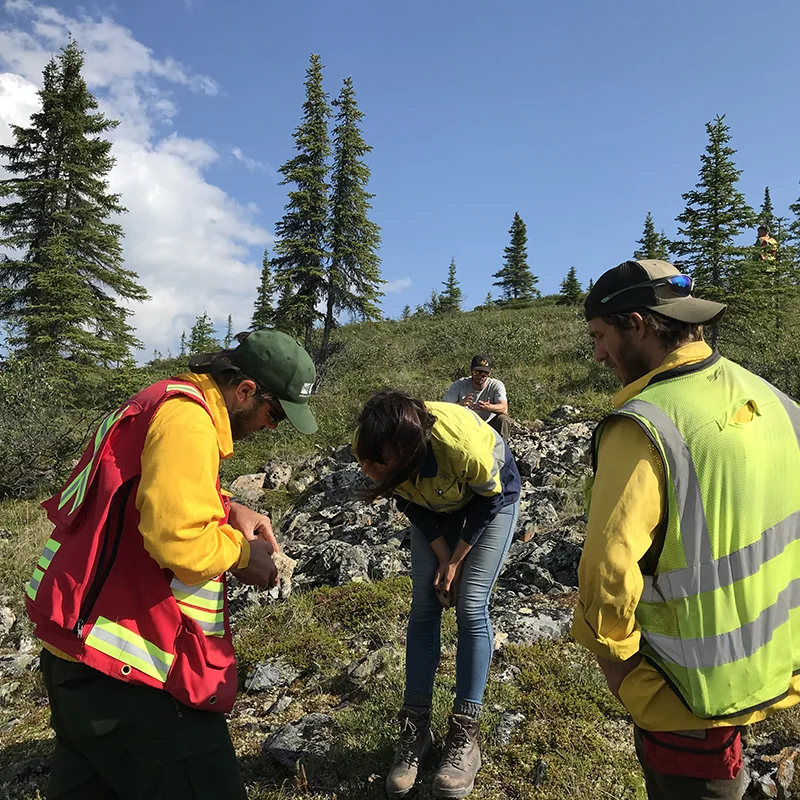
Mineral Resources
Global demand is rising for mineral resources of all kinds, including metals, industrial minerals, and solid fuels like coal. Mineral resources are unequally distributed around the globe, reflecting the vast differences in geology of different parts of the Earth. Geoscientists play an essential role in locating mineral resources and designing processes for their safe extraction.
Learn more