


Intersection Topic
Critical Minerals
Critical minerals are those that are essential to the economy and whose supply may be disrupted. Critical minerals also tend to be those on which a country is heavily import-reliant, so the minerals that are deemed critical will vary from country to country. Demand for many of these minerals has skyrocketed in recent years with the spread of high-tech devices that use a wide variety of materials.
The Basics
Critical minerals are mineral resources that are essential to the economy and whose supply may be disrupted. The “criticality” of a mineral changes with time as supply and society’s needs shift. Table salt, for example, was once a critical mineral. Today, many critical minerals are metals that are central to high-tech sectors. They include the rare earth elements and other metals such as lithium, indium, tellurium, gallium, and platinum group elements.
Why do critical minerals matter?
By definition, critical minerals are essential for society. Demand for critical minerals such as rare earth elements has increased in recent years with the spread of high-tech devices for personal and commercial use such as wind turbines, solar panels, and electronics such as smartphones and tablets.
How does geoscience help inform decisions about critical minerals?
Geoscientists study the formation of critical minerals; explore for and locate them; help determine how to mine them economically, safely, and with minimal environmental impact; help protect water and ecological resources around the mines; and help reclaim disturbed land after mining.
Learn More
Introductory Resources
-
Rare Earth Elements Background, Wyoming State Geological Survey
A precise definition of rare earth elements (REEs) and in-depth discussion of how common REEs are, worldwide REE production, and current REE production. -
Minerals, Critical Minerals, and the U.S. Economy, National Research Council
2008 report that provides background on what defines a “critical” mineral and proposes a strategy for defining and tracking critical minerals at the federal level. -
Critical Materials Strategy Summary, U.S. Department of Energy
2010 Summary of the U.S. Department of Energy’s Critical Materials Strategy, assessing the criticality of mineral resources necessary for advancing clean energy technologies. -
Comparison of U.S. Net Import Reliance for Nonfuel Mineral Commodities - A 60-Year Retrospective (1954-1984-2014), U.S. Geological Survey
2015 factsheet describing how U.S. import reliance has increased since the 1950s, and showing how the countries on which the U.S. relies for mineral imports have changed or become more or less important.
Resources for Educators
-
Education GeoSource Network (EGS), AGI
Search for critical mineral resources related to professional resources, curricula & instruction, teaching media, outreach programs, and other EGS collections. -
NGSS Performance Expectations, Next Generation Science Standards
K-ESS3-1, 4-ESS3-1, MS-ESS3-1, HS-ESS3-1, HS-ESS3-2 -
NGSS Disciplinary Core Ideas, Next Generation Science Standards
ESS3.A
Additional Resources
Geoscience in Society Webinars
See how geoscience informs our understanding of societal issues.
Watch webinarsPolicy Resources
Search related case studies, factsheets and other policy resources.
Browse policy resourcesFAQs
Browse frequently asked questions related to the intersection of geoscience and society.
Browse FAQsEARTH Magazine
Browse related articles from EARTH magazine.
Browse EARTH MagazineEnvironmental Awareness Series
Read our reports showcasing how geoscience is used to address societal concerns.
Browse reportsExplore Related Topics

Industrial Minerals
Industrial minerals are non-metals including crushed rock, sand, and gravel. They are essential for construction of buildings and highways, and are used in many household products and industrial processes.

Metals
Metals are found in many different places around the world. Many natural Earth processes affect their distribution and abundance. Metals are essential to our economy and lifestyle, and the global demand for metals continues to rise.
Mineral Resources
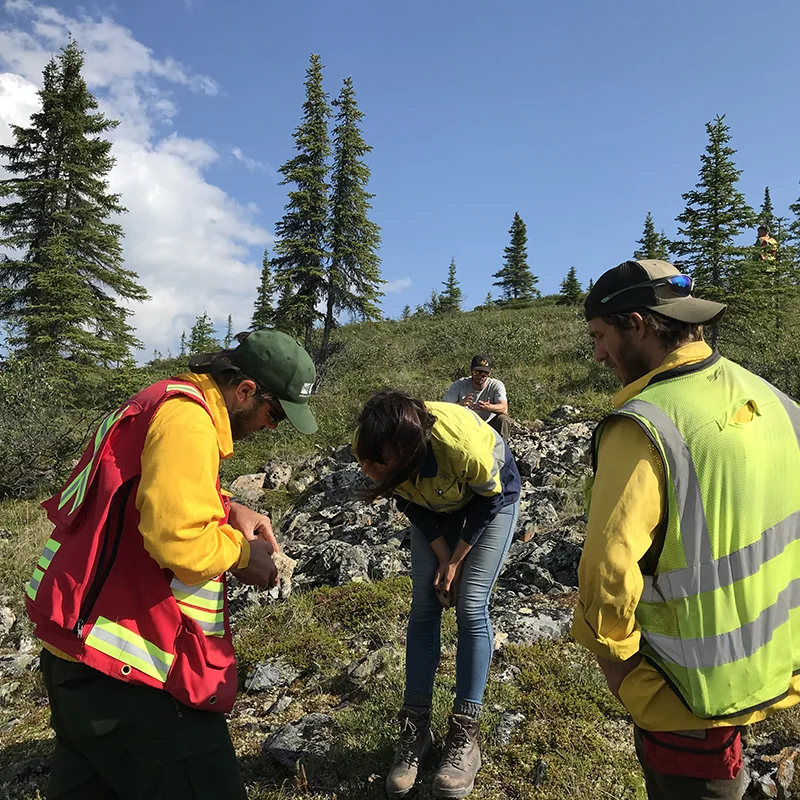
Global demand is rising for mineral resources of all kinds, including metals, industrial minerals, and solid fuels like coal. Mineral resources are unequally distributed around the globe, reflecting the vast differences in geology of different parts of the Earth. Geoscientists play an essential role in locating mineral resources and designing processes for their safe extraction.
Mining
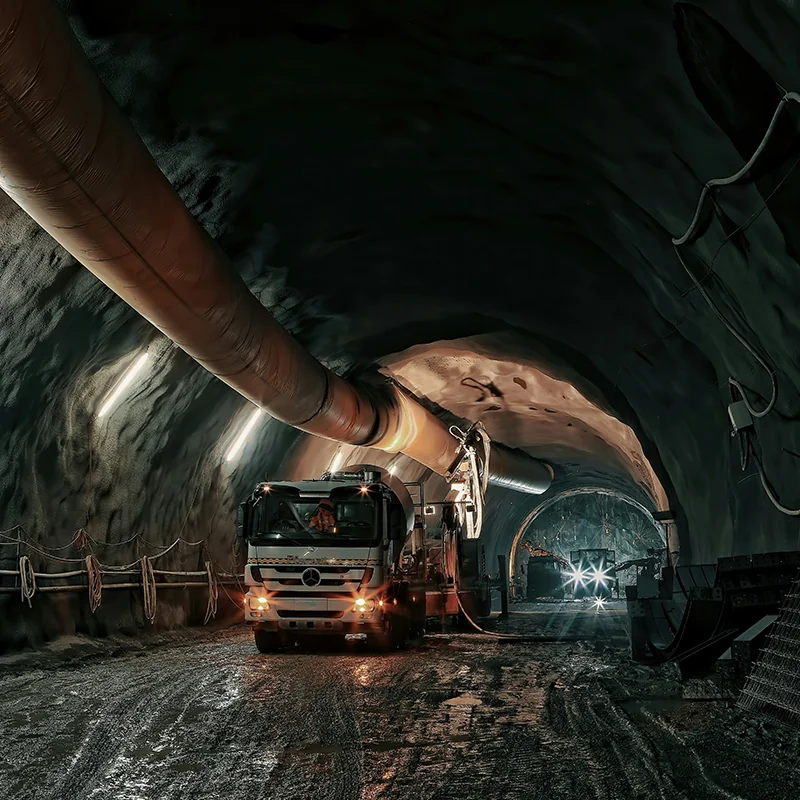
Mining is essential to meet rising global demand for minerals. Geoscientists locate mineral resources and figure out how to extract them economically while minimizing health and environmental impacts. The method of mining, as well as potential environmental impacts, depends on the type of resource being mined.