
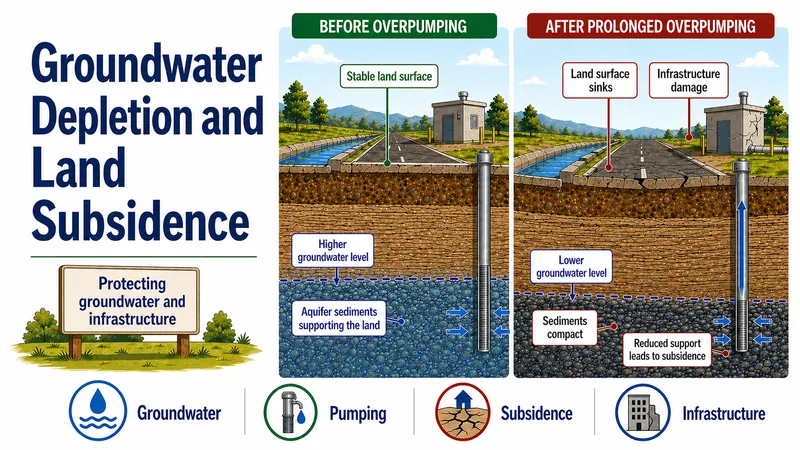
Groundwater Depletion and Land Subsidence
Clarifies how excessive groundwater pumping can compact aquifer sediments, cause land subsidence, and damage infrastructure.


Working, learning, and living in the geosciences.
Explainer Collection
A collection of practical guides that explain aquifer recharge, groundwater planning, drought resilience, and long-term water supply decisions.
This collection explains aquifer recharge concepts that are often important in policy and planning discussions, including what aquifers are, how groundwater recharge works, how managed aquifer recharge stores water underground, why geology and water quality matter, and how governance shapes long-term project success.
Use these guides to support briefings, groundwater planning, drought-resilience discussions, stormwater and land-use decisions, infrastructure planning, and clearer communication about managed aquifer recharge.
15 results
Clarifies how excessive groundwater pumping can compact aquifer sediments, cause land subsidence, and damage infrastructure.
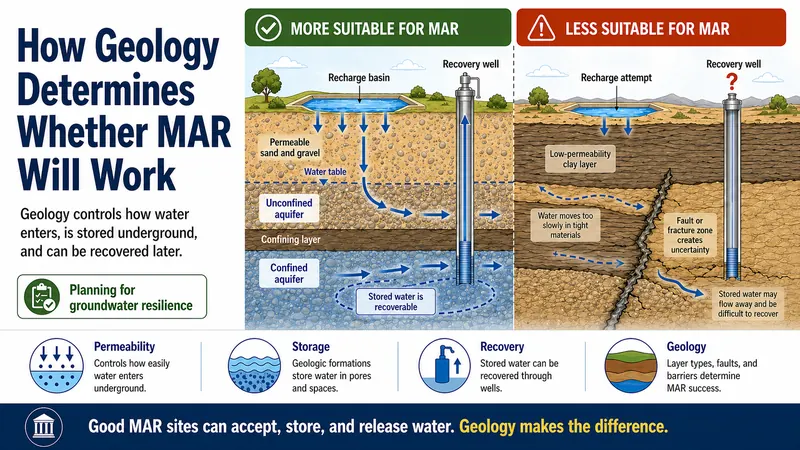
Walks through why managed aquifer recharge depends on aquifer suitability, permeability, confinement, faults, and recovery potential.
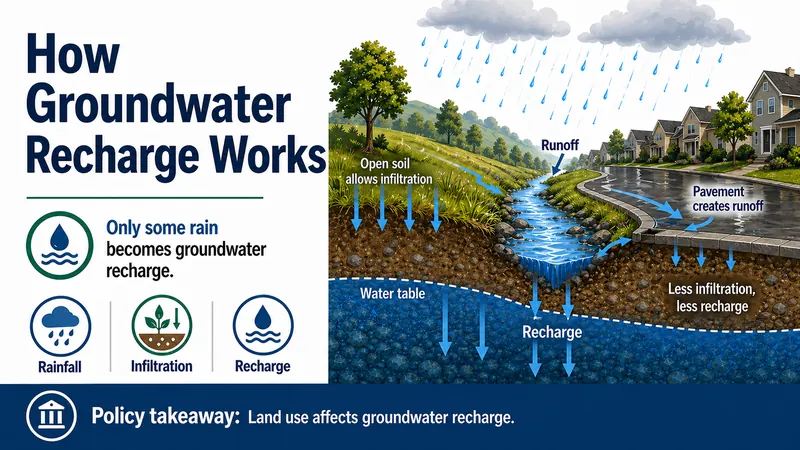
Discusses how water moves from the surface into groundwater and why only some precipitation or surface water becomes aquifer recharge.
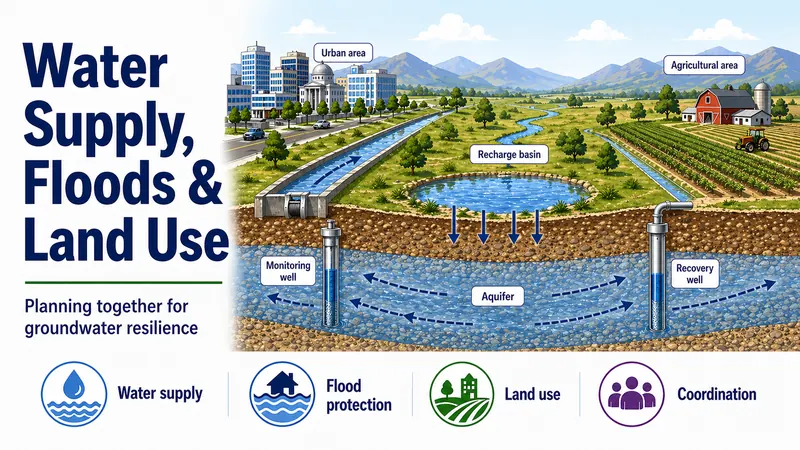
Explains why managed aquifer recharge depends on coordinated planning across water supply, flood management, land use, stormwater systems, infrastructure, and groundwater governance.
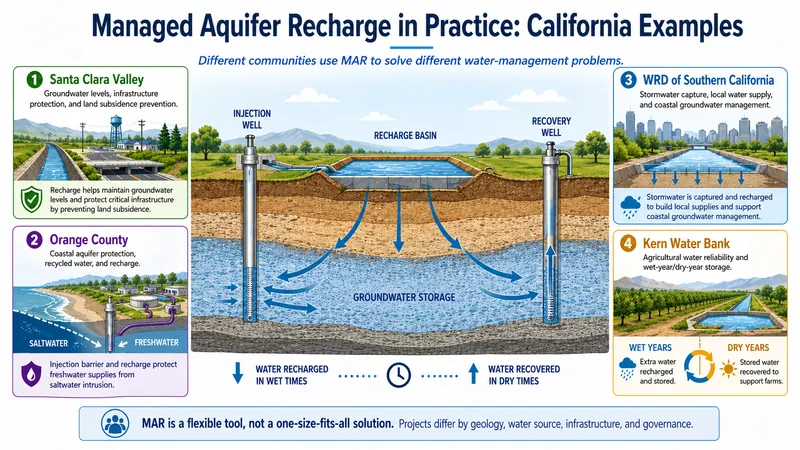
Shows how four California managed aquifer recharge examples address different water-management problems.
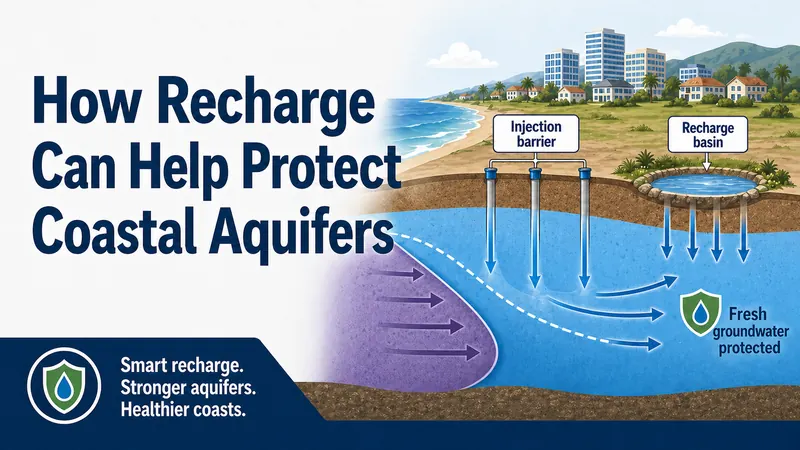
Shows how groundwater pumping near the coast can allow saltwater to enter freshwater aquifers, and how recharge can help protect coastal groundwater supplies.
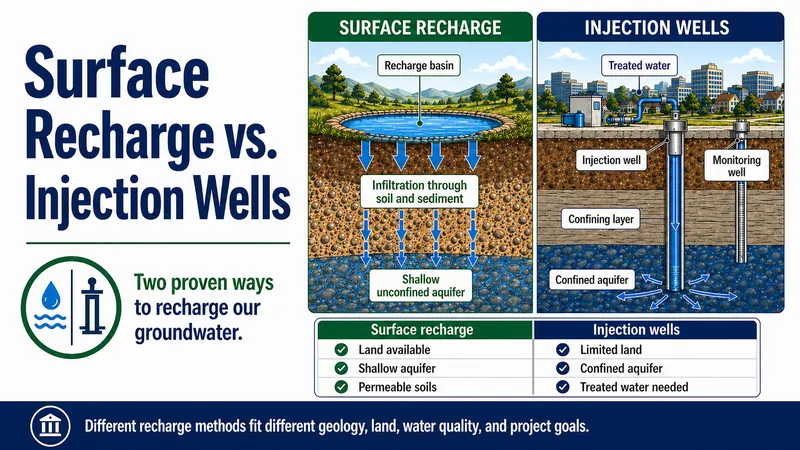
Compares surface recharge and injection wells as two managed aquifer recharge approaches.
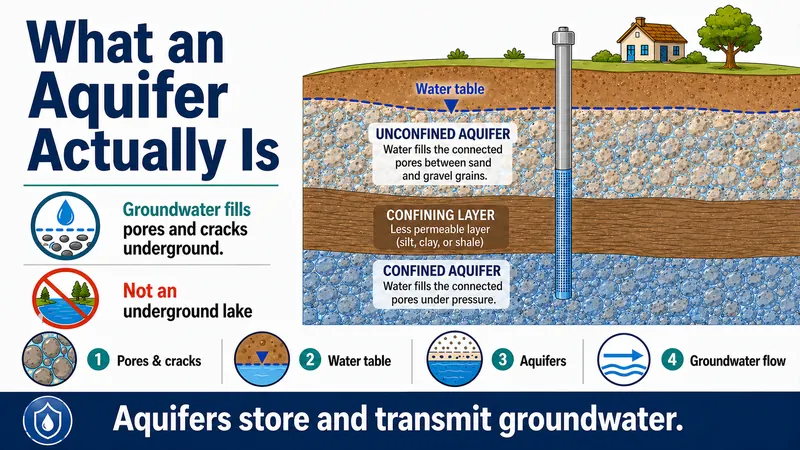
Explains what aquifers are, how they store groundwater, and why geology determines whether underground water storage is possible.
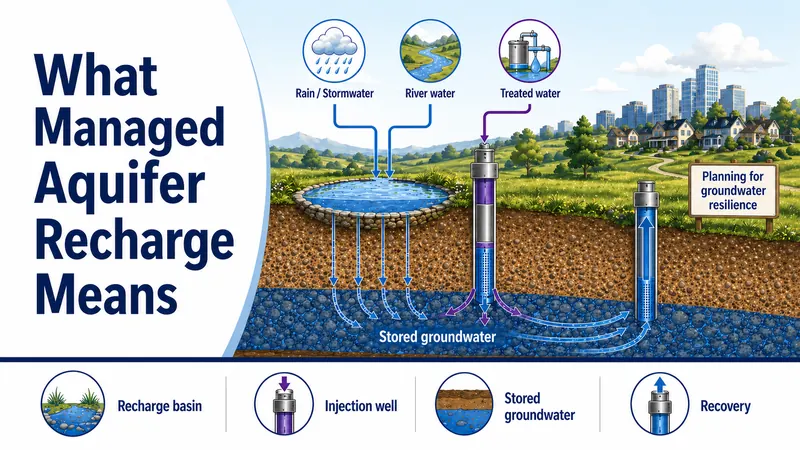
Explores how managed aquifer recharge depends on suitable geology, source water, infrastructure, monitoring, and governance.
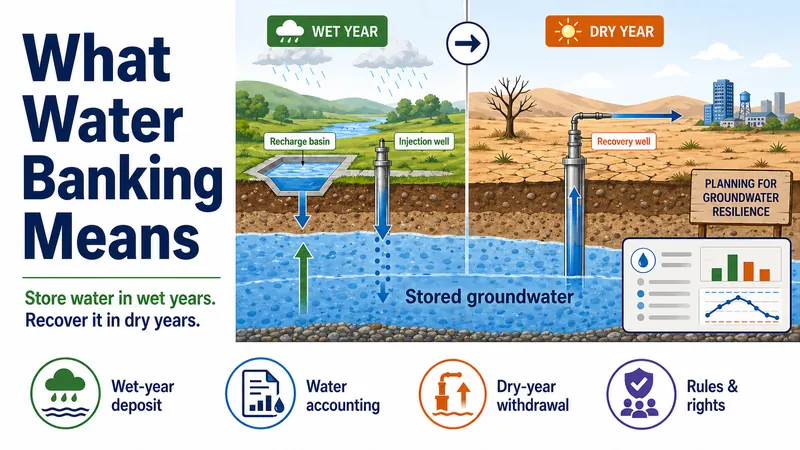
Discusses water banking as storing water underground and managing deposits, withdrawals, ownership, recovery rights, and operating limits.
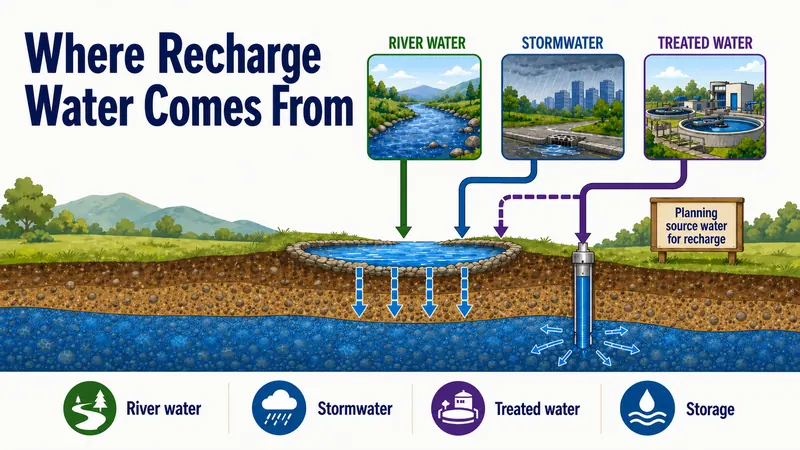
Breaks down common water sources for managed aquifer recharge and the tradeoffs associated with river water, stormwater, and treated wastewater.
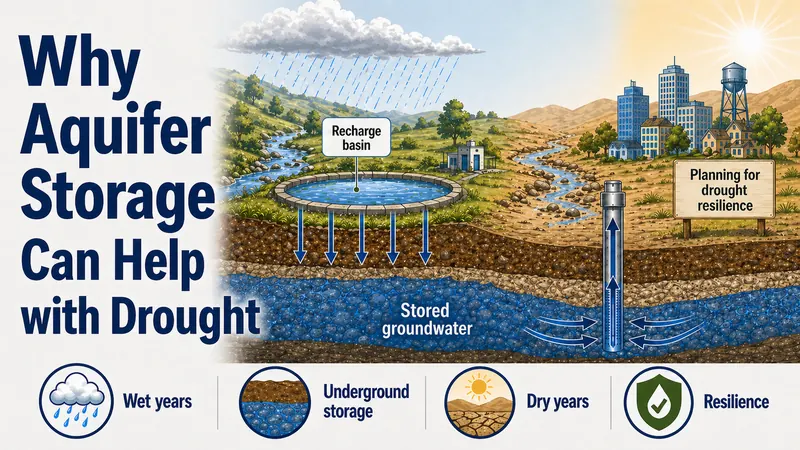
Explores how managed aquifer recharge can support drought resilience by storing water underground when it is available and recovering it during dry periods.
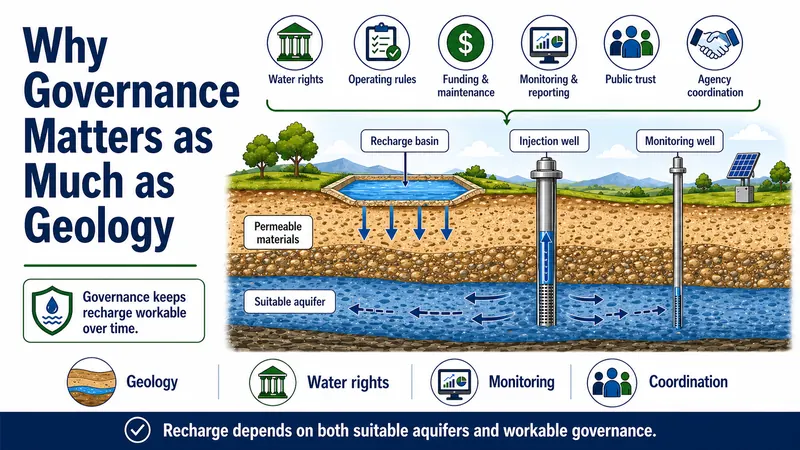
Discusses why managed aquifer recharge success depends on suitable geology as well as regulation, management, funding, monitoring, water rights, and public trust.
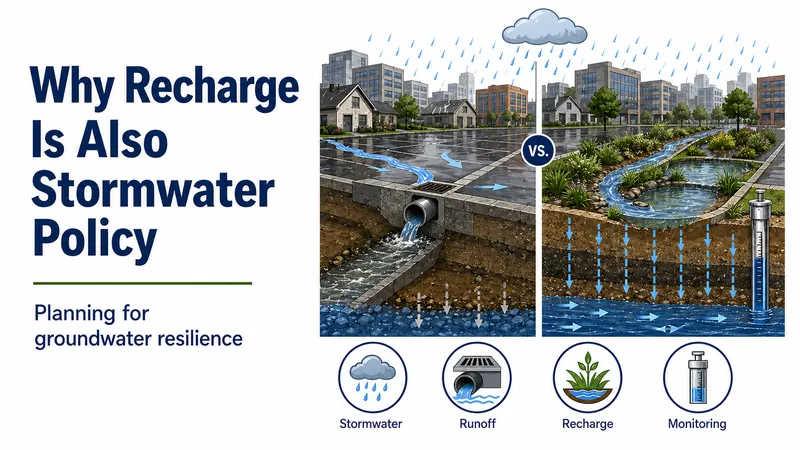
Describes how stormwater management and managed aquifer recharge can overlap when runoff is captured, treated, and directed into suitable aquifers.
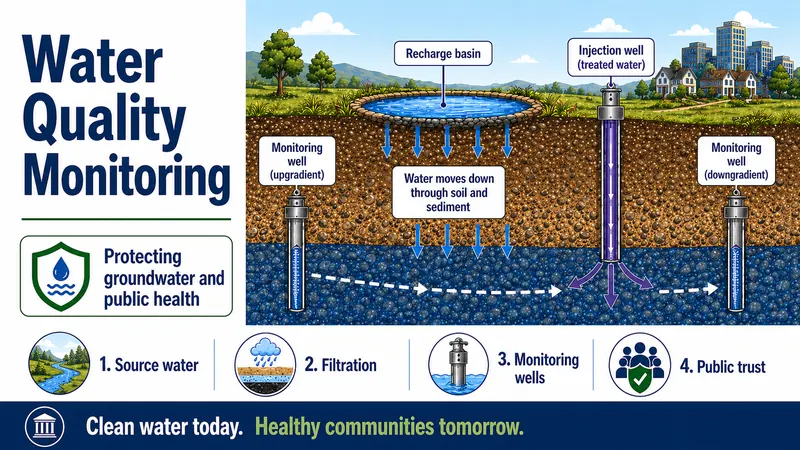
Explains why managed aquifer recharge projects need source-water assessment, treatment where needed, groundwater monitoring, and public communication.
No items matched that search.