

Geoscience FAQ
Are rare earth elements the only critical mineral resources?
Information preserved from U.S. Geological Survey.
From the U.S. Geological Survey news release "Going Critical". Accessed from: https://www2.usgs.gov/blogs/features/usgs_top_story/going-critical-being-strategic-with-our-mineral-resources/:
"Although currently no U.S. Government-wide definition exists, broadly speaking, if a vital sector of the economy requires a mineral in order to function, that mineral would likely be deemed “critical".
Rare earth elements are hardly the only critical minerals. They’re not even the only minerals critical to the high-end technology sector. Another mineral vital to the functioning of your smart phone is gallium, a soft, silvery metal. Without gallium, the semiconductors that power smartphones and data-centric networks would not be possible. Unlike rare earths, gallium is not a common metal in the Earth’s crust, but it does occur regularly alongside aluminum in a mineral known as bauxite. One of gallium’s other claims to fame is that it has such a low melting point that it will melt if held in your hand.
Another critical mineral is manganese, which is an important metal alloying ingredient. Without manganese, stainless steel would not be possible. In addition, it helps other metals resist rust and corrosion, such as iron and aluminum. Manganese is a fairly common element in the Earth’s crust, and exists in many concentrations easily mineable."
Learn More:
- Tracking the Global Supply of Critical Materials (Webinar), American Geosciences Institute
2018 webinar detailing efforts from the U.S. and European Union to monitor the global production, trade, and usage of critical raw materials; identify and quantify vulnerabilities in supply; and support co-operation on production, recycling, and substitution of key mineral resources.
- Underpinning Innovation: The Science and Supply of America's Critical Minerals and Materials (Webinar), American Geosciences Institute
2016 webinar addressing efforts being taken on the federal level to ensure a steady supply of critical minerals and materials.
- Wyoming's Rare Earth Elements (REEs) (Webpage), Wyoming State Geological Survey
A precise definition of rare earth elements (REEs) and in-depth discussion of how common REEs are, worldwide REE production, and current REE production.
- Rare Earths Statistics and Information (Website), U.S. Geological Survey
Portal for information on annual production, price, and use of rare earth elements since 1997, plus links to further information.
- Minerals, Critical Minerals, and the U.S. Economy (Report), National Research Council
A 2007 report that provides background on what defines a "critical" mineral and proposes a strategy for defining and tracking critical minerals at the federal level.
- Critical Materials Innovation Hub (Website), U.S. Department of Energy
Website of the Critical Materials Institute (CMI), an energy innovation hub operated by the Ames Laboratory for the U.S. Department of Energy. The CMI brings together people from government, academia, and industry, to develop new technologies that make better use of critical minerals or use alternative resources to decrease supply risk.
Explore Related FAQs
How do we use rare earth elements?
U.S. Geological Survey
Open FAQWhat are critical minerals, and why are they important?
U.S. Geological Survey
Open FAQWhat are rare earth elements, and why are they important?
U.S. Geological Survey
Open FAQWhich mineral commodities used in the United States need to be imported?
American Geosciences Institute
Open FAQExplore Geoscience Intersections
Browse related geoscience intersections pages connected to the topics covered in this FAQ.

Critical Minerals
Critical minerals are those that are essential to the economy and whose supply may be disrupted. Critical minerals also tend to be those on which a country is heavily import-reliant, so the minerals that are deemed critical will vary from country to country. Demand for many of these minerals has skyrocketed in recent years with the spread of high-tech devices that use a wide variety of materials.
Learn more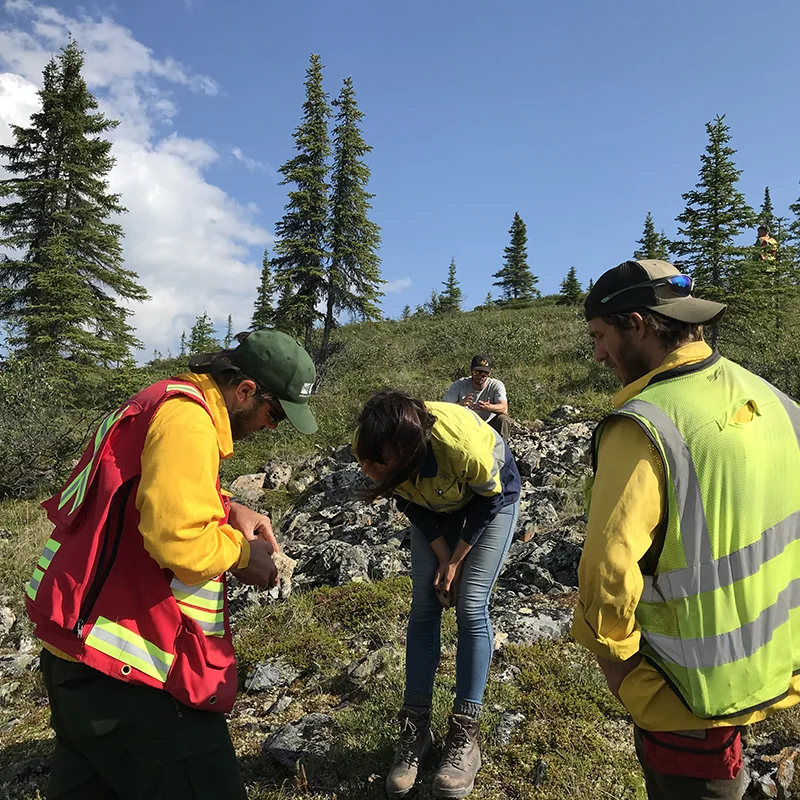
Mineral Resources
Global demand is rising for mineral resources of all kinds, including metals, industrial minerals, and solid fuels like coal. Mineral resources are unequally distributed around the globe, reflecting the vast differences in geology of different parts of the Earth. Geoscientists play an essential role in locating mineral resources and designing processes for their safe extraction.
Learn more