

Geoscience FAQ
Why is geothermal energy a renewable resource? Can it be depleted?
Information preserved from Drew L. Siler, PhD, Geothermal Geologist.
Drew L. Siler, PhD, Geothermal Geologist:
"Geothermal energy is renewable because the Earth has retained a huge amount of the heat energy that was generated during formation of the planet. In addition, heat is continuously produced by decay of radioactive elements within the Earth. The amount of heat within the Earth, and the amount that is lost though natural processes (e.g. volcanic activity, conduction/radiation to the atmosphere), are much, much more than the amount of heat lost through geothermal energy production. At any one geothermal field, however, the temperature of the geothermal reservoir or the fluid levels/fluid pressure in the reservoir may decrease over time as fluids are produced and energy is extracted. Produced fluids can be re-injected to maintain pressures, although this may further cool down the reservoir if care is not taken. Over time, it is commonly necessary to drill additional wells in order to maintain energy production as temperatures and/or reservoir fluid pressures decline."
Learn More:
- Assessment of Moderate- and High-Temperature Geothermal Resources of the United States (Factsheet), U.S. Geological Survey
Summarizes the USGS assessment of identified geothermal systems, potential from undiscovered geothermal resources, and potential geothermal energy that could be extracted from enhanced geothermal systems.
Explore Related FAQs
How much of world energy consumption and electricity generation is from renewable energy?
American Geosciences Institute
Open FAQHow much U.S. electricity is generated from renewable energy?
U.S. Energy Information Administration
Open FAQWhat are the major sources and users of energy in the United States?
U.S. Energy Information Administration
Open FAQWhat is an Enhanced Geothermal System?
American Geosciences Institute
Open FAQWhat is the potential for geothermal energy production in the United States?
U.S. Geological Survey
Open FAQExplore Geoscience Intersections
Browse related geoscience intersections pages connected to the topics covered in this FAQ.
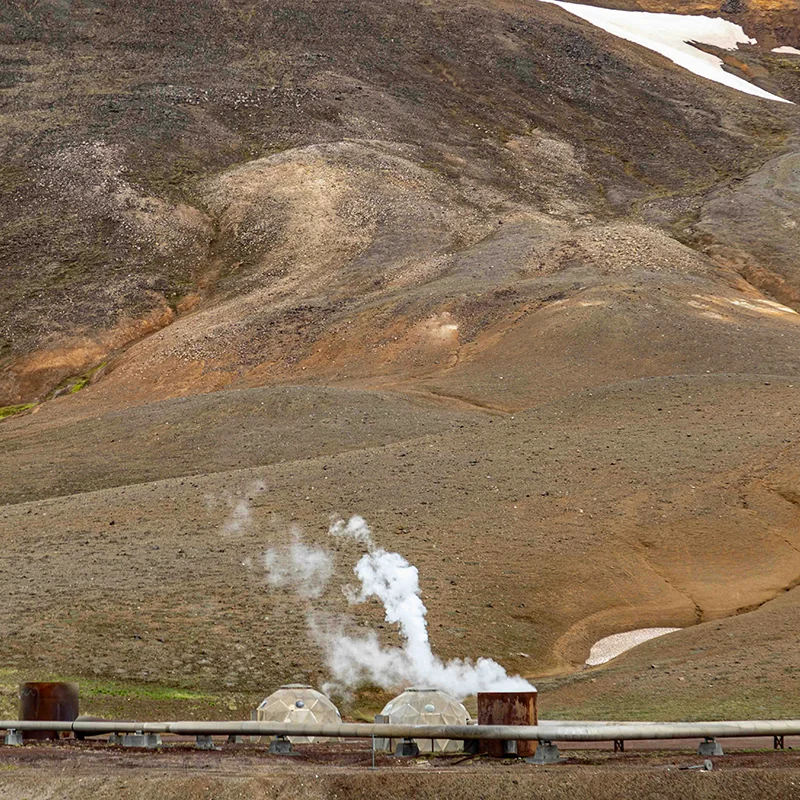
Geothermal Energy
Geothermal energy is harvested by drilling into underground reservoirs of steam or water heated by the Earth. While western states like California and Nevada lead the country in geothermal energy production, emerging technologies may make it possible to extract geothermal energy throughout the United States.
Learn more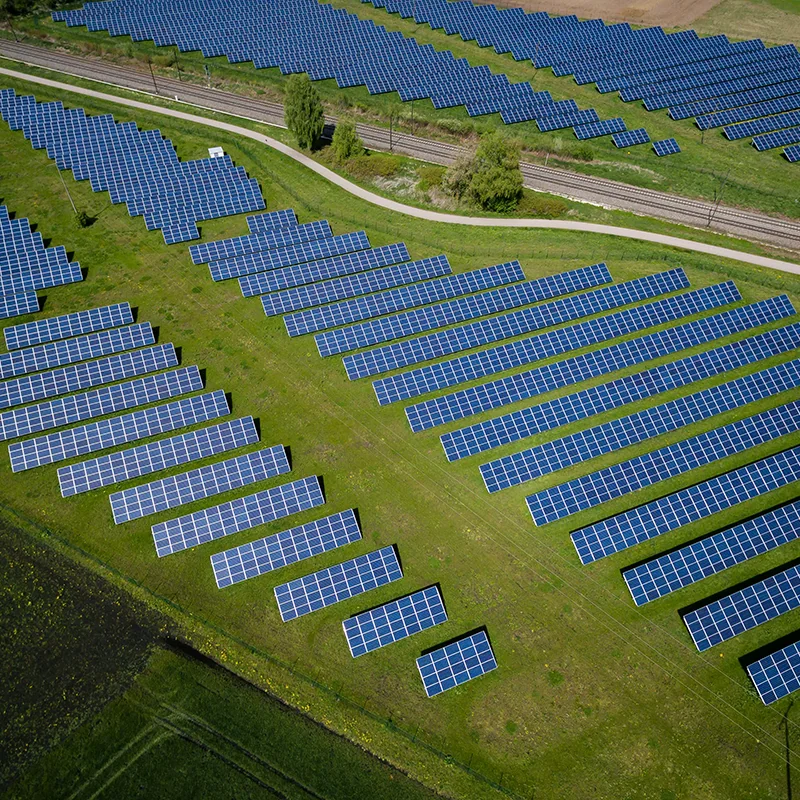
Renewable Energy
Renewable energy comes from sources that are constantly replenished, like running water, the heat of the Earth, the Sun's light, or wind. Renewables account for around 11% of U.S. energy consumption and 17% of electricity production.
Learn more