

Geoscience FAQ
How much of world energy consumption and electricity generation is from renewable energy?
Information preserved from American Geosciences Institute.
The U.S. Energy Information Administration (EIA) estimates that, in 2015, around 12% of world marketed (bought and sold) energy consumption came from renewable sources (biomass, geothermal, hydropower, solar, and wind).[1] EIA projections suggest that this will increase to 17% by 2040.
The EIA estimates that roughly 23% of world electricity generation came from renewable sources in 2015, 71% of which came from hydropower. EIA projections suggest that renewable sources will account for 31% of world electricity by 2040, roughly half of which will be from hydropower, as wind and solar power will grow rapidly in the coming decades.[1]
Note: EIA estimates do not include non-marketed energy (energy that is not bought or sold). Much non-marketed energy comes from biomass (a renewable energy source) in the form of wood, charcoal, agricultural waste and animal dung, so the EIA statistics slightly underestimate the contribution of renewable energy sources to global energy consumption.
References
1 International Energy Outlook 2017 Energy Information Administration
Learn More:
- International Energy Outlook (Report) Energy Information Administration
Assessments and projections of international energy needs, production, and sources up to the year 2040.
- International Energy Statistics: Total Renewable Electricity Net Generation by Country (Data) Energy Information Administration
Yearly statistics on electricity generation from renewable sources for all countries.
- Flow diagram of energy production and consumption globally and by country, 1973-2014 (Web Tool) International Energy Agency
Flow diagram ("Sankey") of energy production and consumption by source and end-use, including electricity generation efficiency, globally and for most individual countries around the world.
- 2015 Renewable Energy Data Book (Report), Department of Energy
Report on the state of renewable energy in the United States and worldwide, with lots of data, maps, and charts for each renewable energy source.
Explore Related FAQs
How much U.S. electricity is generated from renewable energy?
U.S. Energy Information Administration
Open FAQWhat are the advantages and disadvantages of offshore wind farms?
American Geosciences Institute
Open FAQWhat are the major sources and users of energy in the United States?
U.S. Energy Information Administration
Open FAQWhat is renewable natural gas?
American Geosciences Institute
Open FAQWhy is geothermal energy a renewable resource? Can it be depleted?
Drew L. Siler, PhD, Geothermal Geologist
Open FAQExplore Geoscience Intersections
Browse related geoscience intersections pages connected to the topics covered in this FAQ.
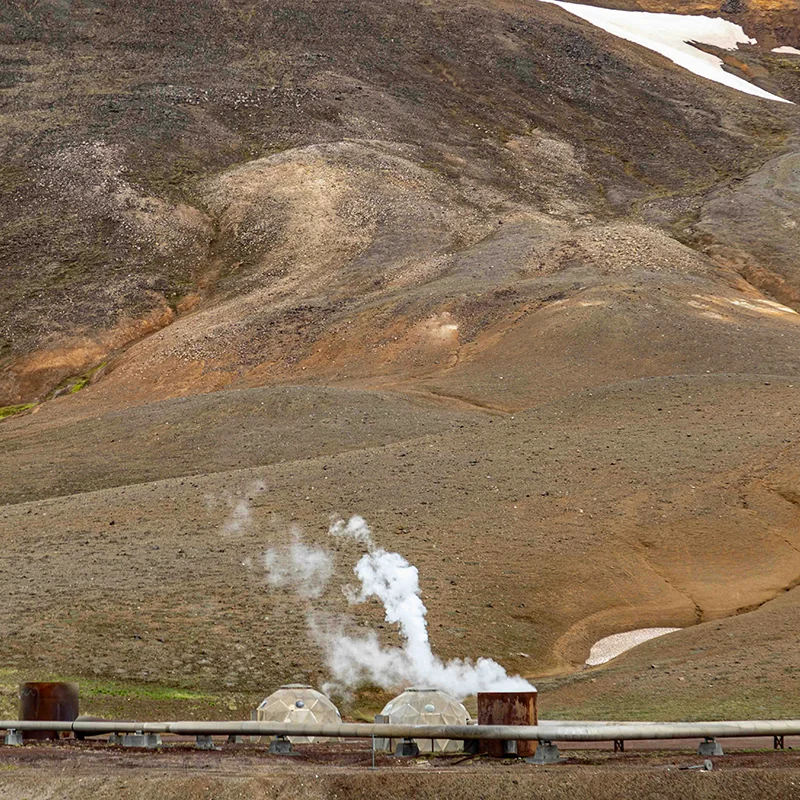
Geothermal Energy
Geothermal energy is harvested by drilling into underground reservoirs of steam or water heated by the Earth. While western states like California and Nevada lead the country in geothermal energy production, emerging technologies may make it possible to extract geothermal energy throughout the United States.
Learn more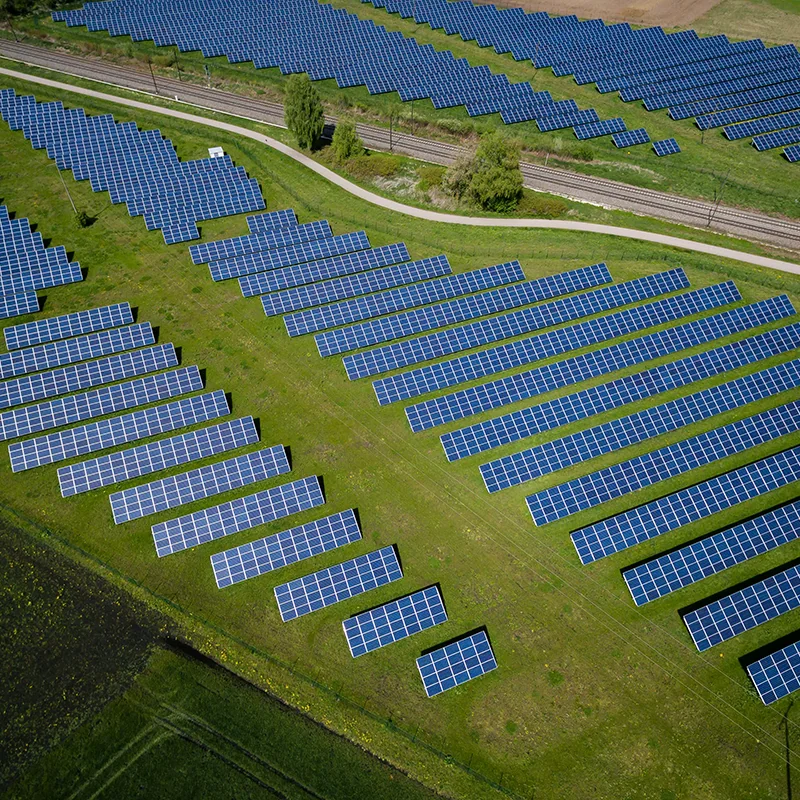
Renewable Energy
Renewable energy comes from sources that are constantly replenished, like running water, the heat of the Earth, the Sun's light, or wind. Renewables account for around 11% of U.S. energy consumption and 17% of electricity production.
Learn more