
Land Instability Concepts
A collection of practical guides that explain how ground movement, subsidence, erosion, slope failure, and hidden underground conditions affect land-use, infrastructure, and public safety decisions.
This collection explains land-instability topics that are often misunderstood in policy and public discussions, including landslides, rockfall, subsidence, sinkholes, riverbank erosion, earth fissures, unstable slopes, hidden voids, and the difference between hazard, exposure, and risk.
Use these guides to support briefings, planning conversations, infrastructure siting, development review, hazard communication, mitigation planning, and clearer discussion of ground-movement risks.
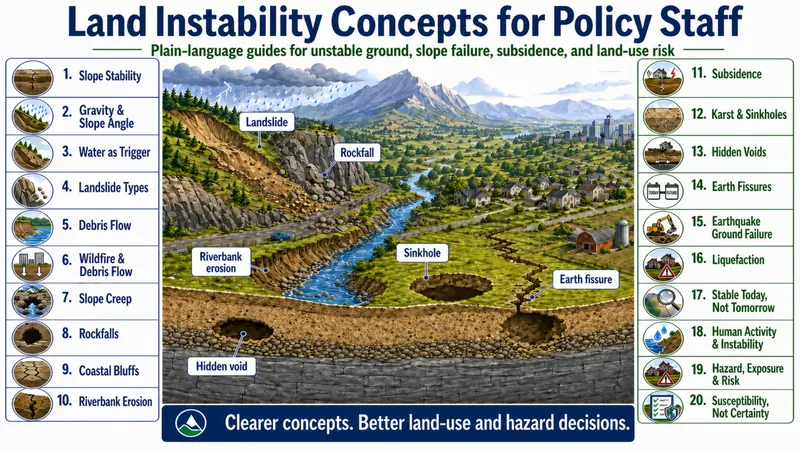
Land Instability Concept Guides
Browse the collections of plain-language guides that support planning, communication, and resilience discussions.
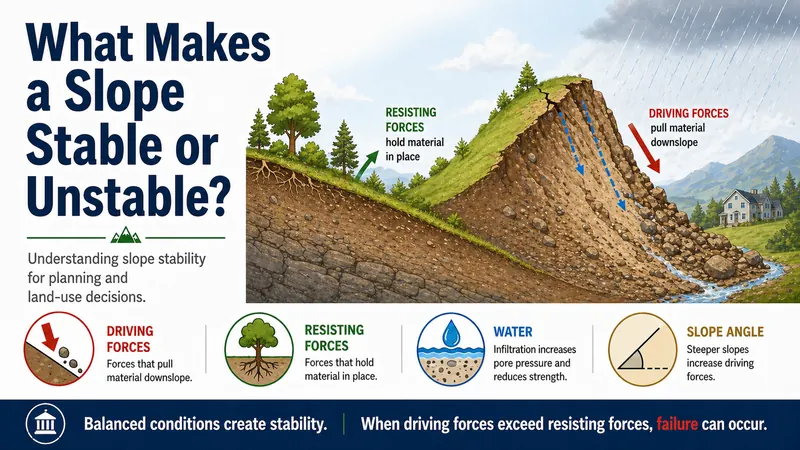
What Makes a Slope Stable or Unstable?
Explains how slope stability depends on the balance between driving forces that pull material downslope and resisting forces that hold soil and rock in place.
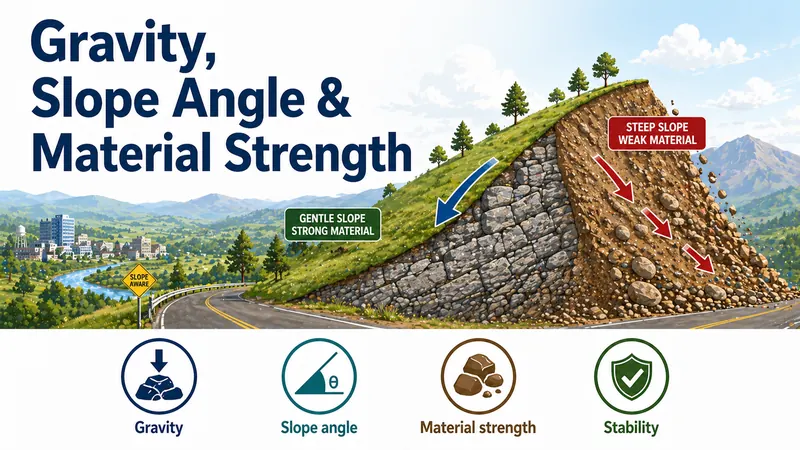
The Role of Gravity, Slope Angle, and Material Strength
Describes how gravity, slope angle, and material strength work together to influence whether slopes are more likely to remain stable or move.
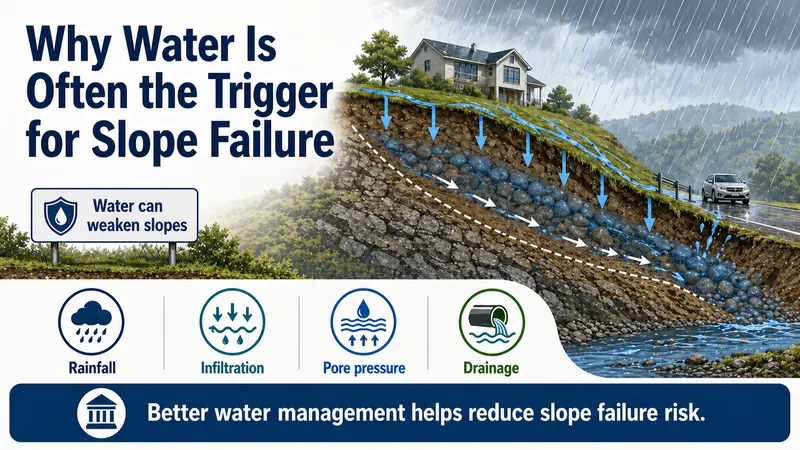
Why Water Is Often the Trigger for Slope Failure
Shows how water can trigger slope failure by adding weight, reducing friction, and increasing pore pressure inside soil and rock.
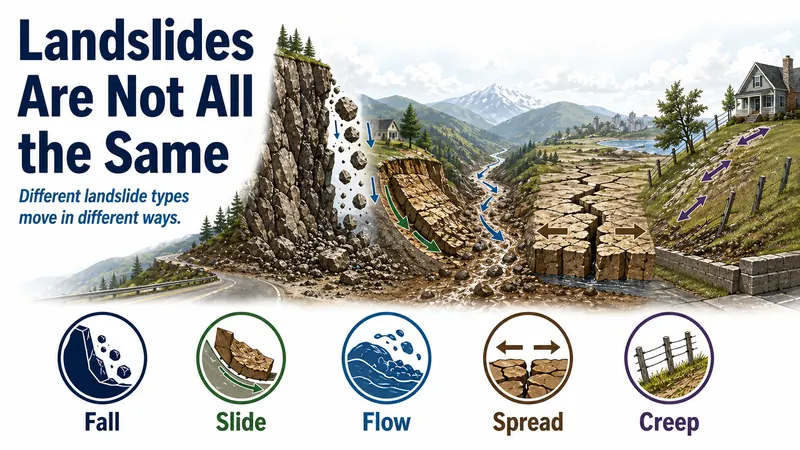
Landslides Are Not All the Same
Explores the several kinds of ground movement which fall under the term landslide, including falls, slides, flows, spreads, and creep.
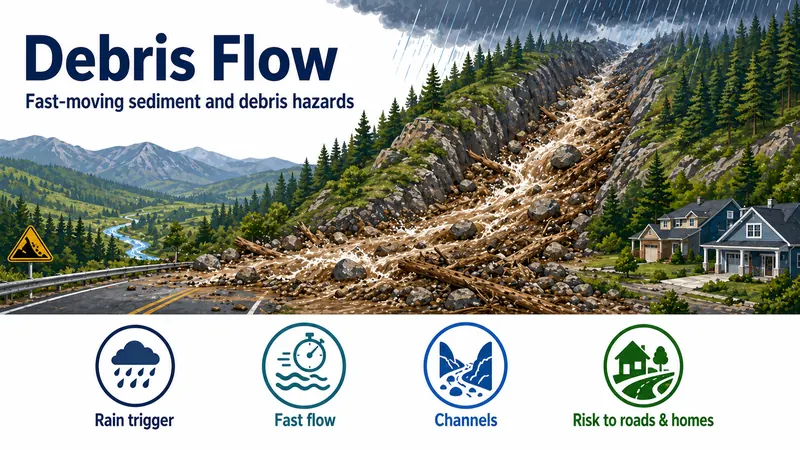
What Is Debris Flow and Why It Moves So Fast?
Explains that debris flows are fast-moving mixtures of water, sediment, rock, vegetation, and debris that can travel quickly through channels and threaten people and infrastructure downslope.
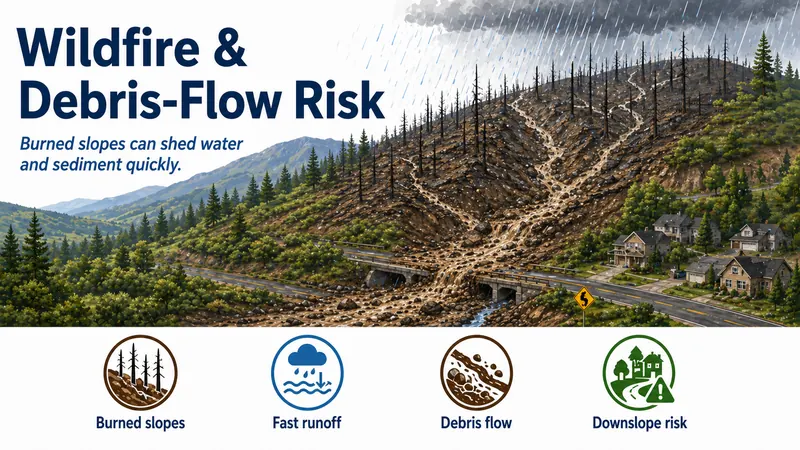
Why Wildfire Increases Landslide and Debris-Flow Risk
Explains how wildfire can increase landslide and debris-flow risk by removing vegetation, weakening roots, exposing soil, increasing runoff, and mobilizing sediment and debris during storms.
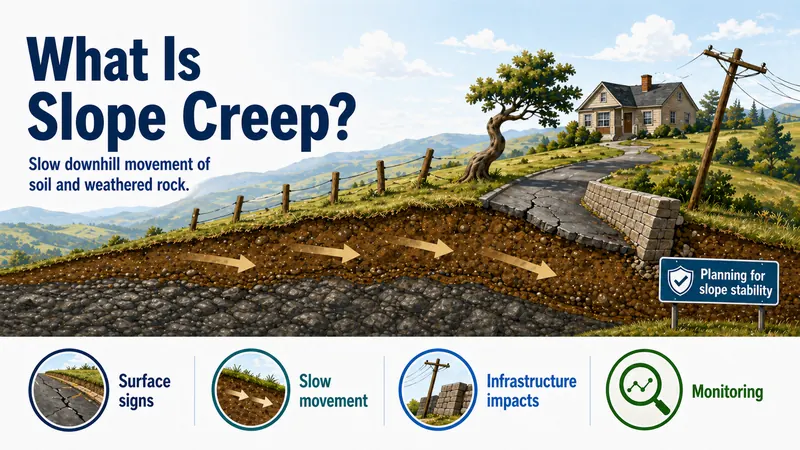
What Is Slope Creep?
Explains that slope creep is very slow downslope movement of soil and weathered rock that can cause long-term damage to roads, foundations, retaining walls, pipelines, and utilities.
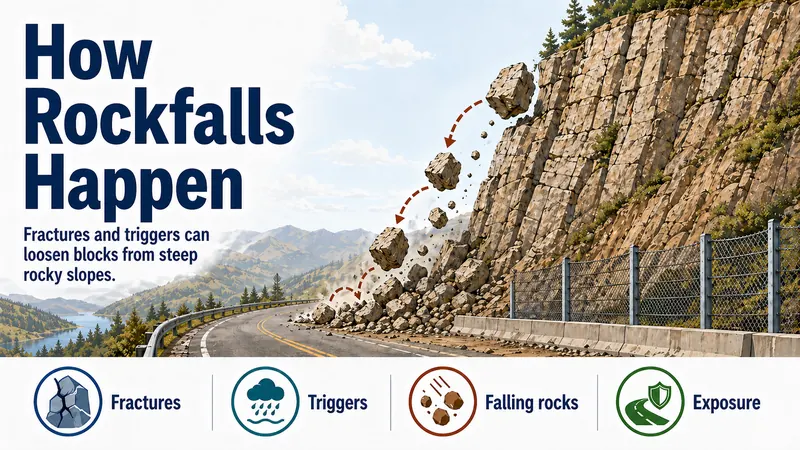
How Rockfalls Happen
Explains how rockfalls occur when fractured rock blocks detach from steep slopes, cliffs, bluffs, or road cuts and fall, bounce, or roll downslope.
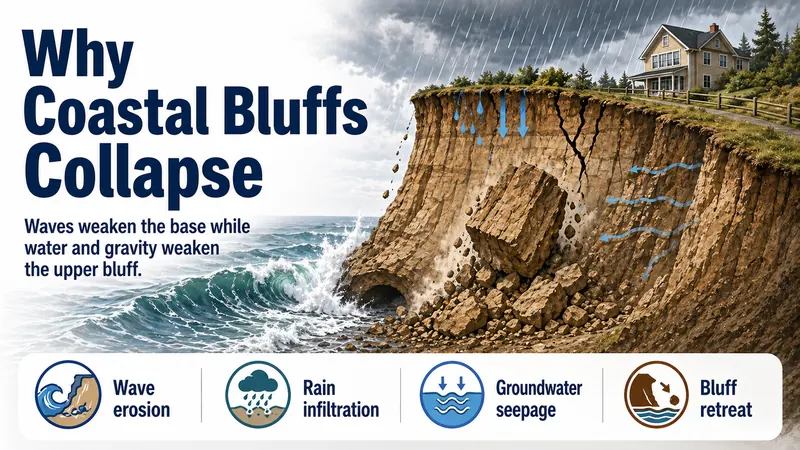
Why Coastal Bluffs Collapse
Explains how coastal bluffs can collapse when waves erode the base while rainfall, groundwater, fractures, and gravity weaken the upper bluff.
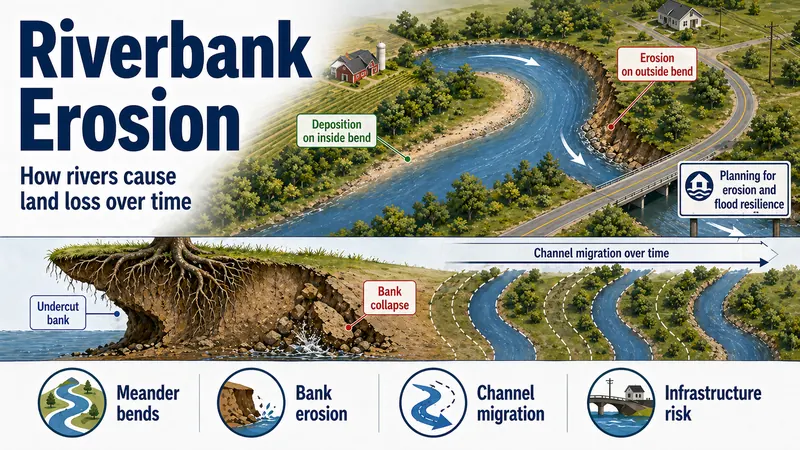
How Riverbank Erosion Causes Land Loss
Explains how rivers naturally erode and reshape their banks, especially during high flows, along outside bends, and as channels migrate across floodplains.
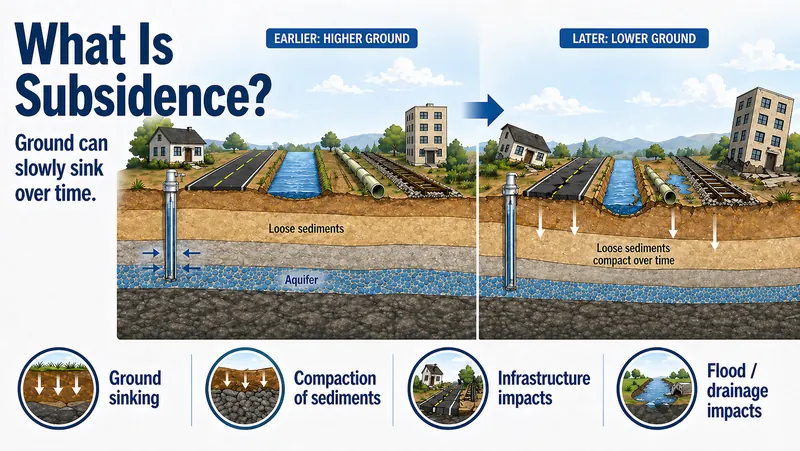
What Is Subsidence?
Explains that subsidence is the sinking of the land surface and can be caused by groundwater withdrawal, deeper fluid extraction, mining, drainage of organic soils, or compaction of soils and sediments.
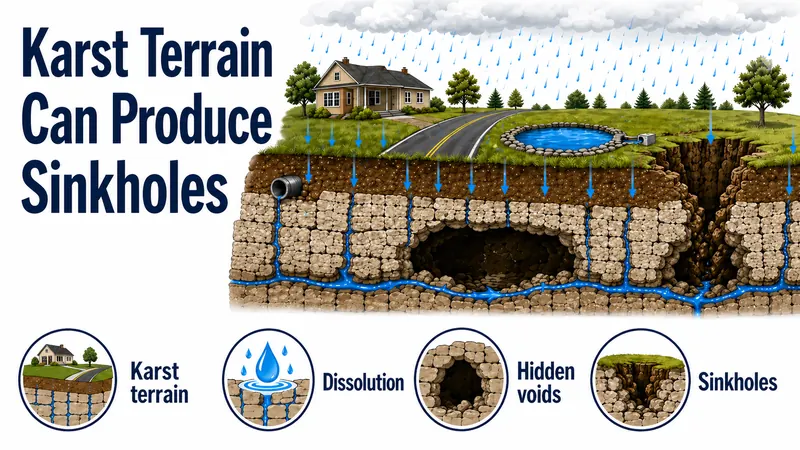
Why Karst Terrain Can Produce Sinkholes
Explains how karst terrain forms where soluble rocks such as limestone dissolve underground, creating cavities, conduits, voids, and sinkhole hazards.
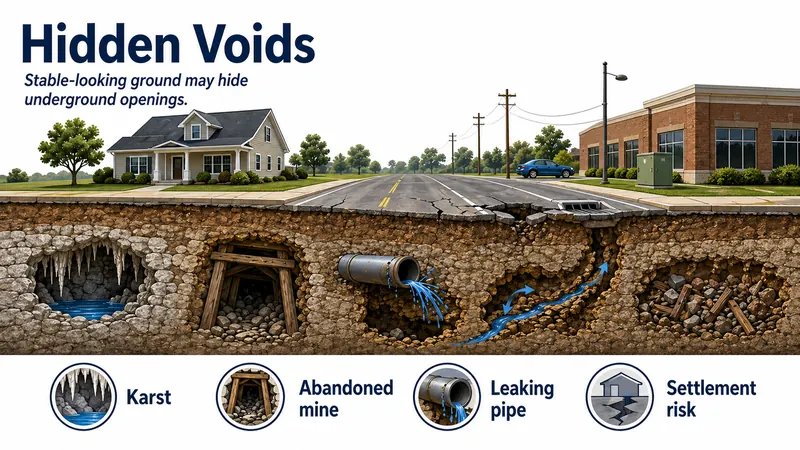
When the Ground Has Hidden Voids
Explains how hidden underground voids can form naturally or through human activity and lead to settlement, cracking, or collapse at the surface.
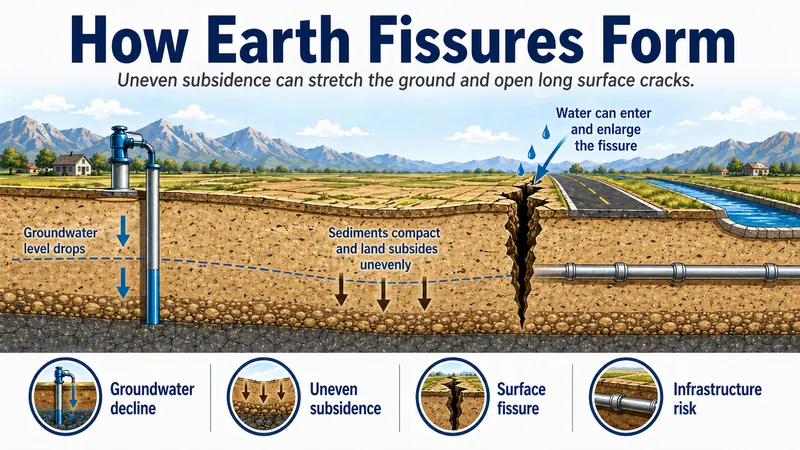
How Earth Fissures Form
Explains how earth fissures can form where uneven subsidence stretches basin-fill sediments, and why these cracks matter for infrastructure and land-use planning.
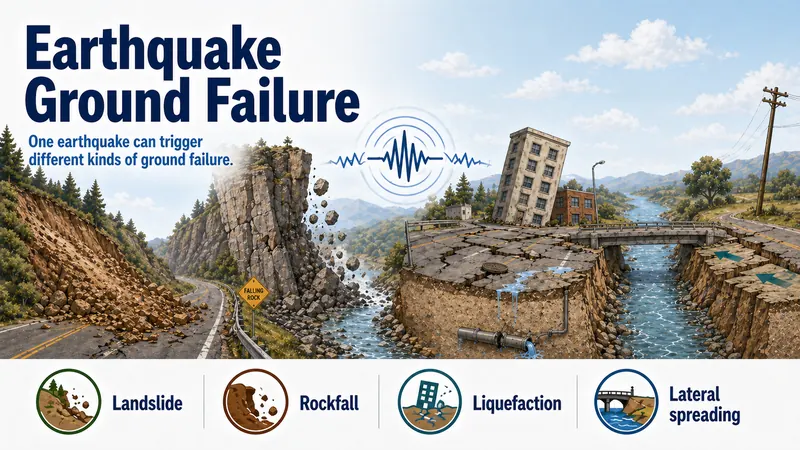
How Earthquakes Trigger Ground Failure
Explains how earthquake shaking can trigger several kinds of ground failure, including landslides, rockfalls, liquefaction, and lateral spreading.
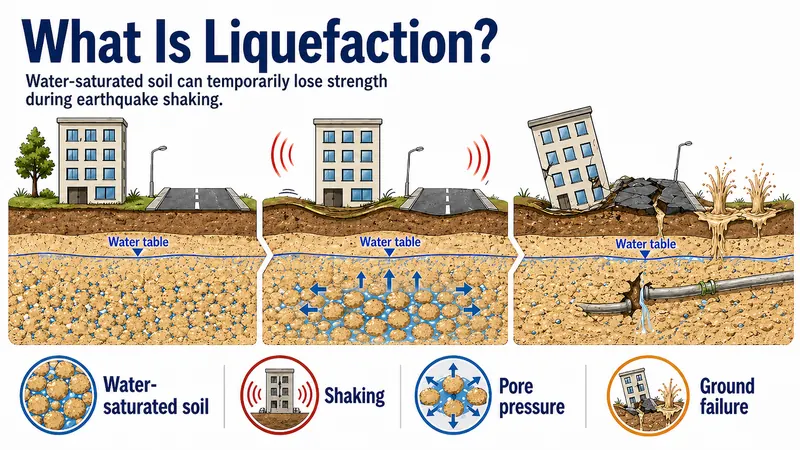
What Is Liquefaction?
Explains how liquefaction occurs when loose, water-saturated sandy or silty soils temporarily lose strength during earthquake shaking.
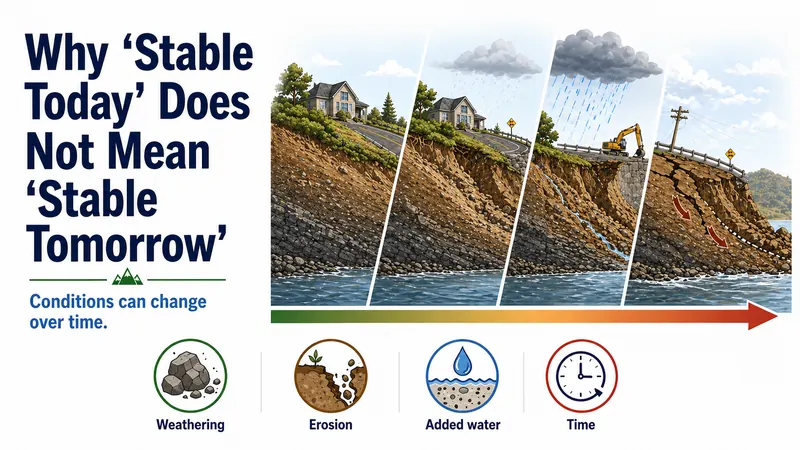
Why ‘Stable Today’ Does Not Mean ‘Stable Tomorrow’
Explains why slope stability is dynamic and how weathering, erosion, water, vegetation loss, earthquakes, and human activity can change ground conditions over time.
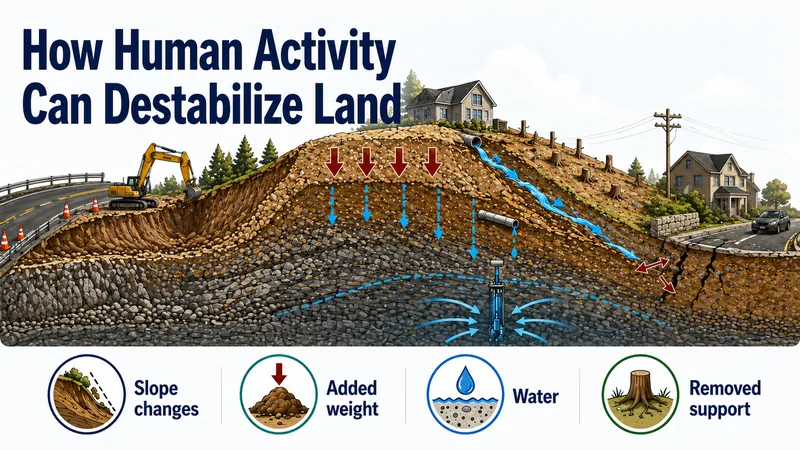
How Human Activity Can Destabilize Land
Explains how human activities such as grading, excavation, added fill, drainage changes, vegetation removal, mining, and groundwater pumping can increase land instability.
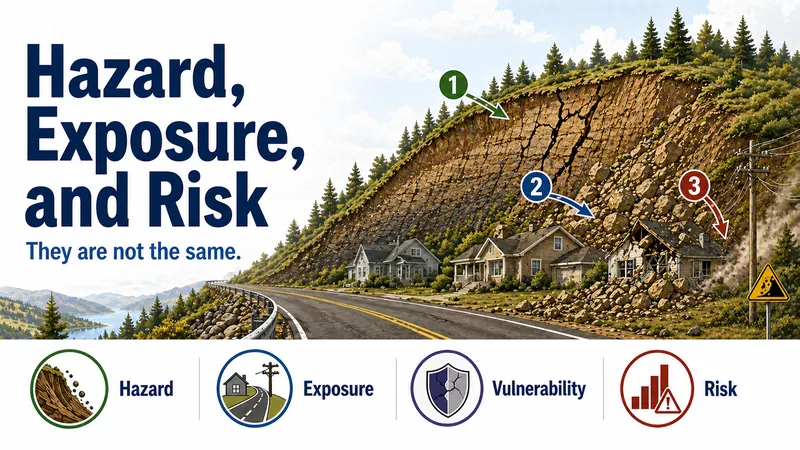
Hazard, Exposure, and Risk Are Not the Same
Explains the difference between hazard, exposure, vulnerability, and risk using land-instability examples.
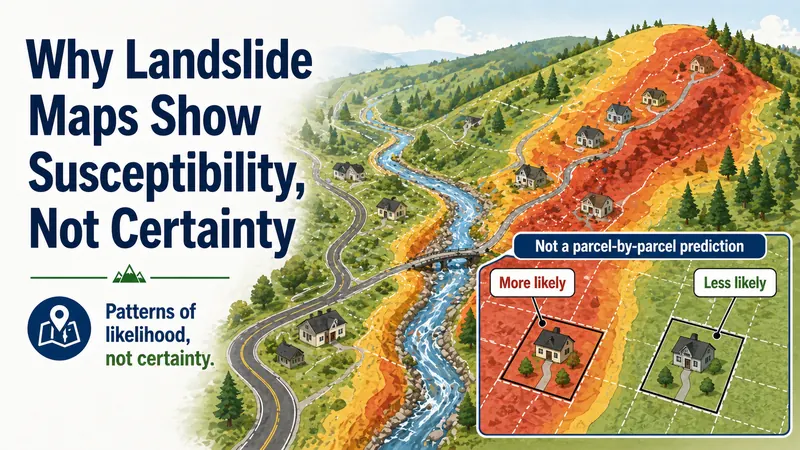
Why Landslide Maps Show Susceptibility, Not Certainty
Explains why landslide susceptibility maps show relative likelihood, not exact predictions of when or whether a specific site will fail.
Related Resources
Explore related resources for broader context and deeper background.

Geoscience Intersections
Explore how geoscience connects to societal challenges including hazards, water, energy, climate, and resource management.

Geoscience and Policy Tracker
Track recent U.S. and EU policy actions that intersect with the geoscience enterprise with concise AI-assisted summaries.

Critical Needs: Geosciences Meeting the Needs of the Nation
Understand the ways the geosciences can support the nation’s needs.